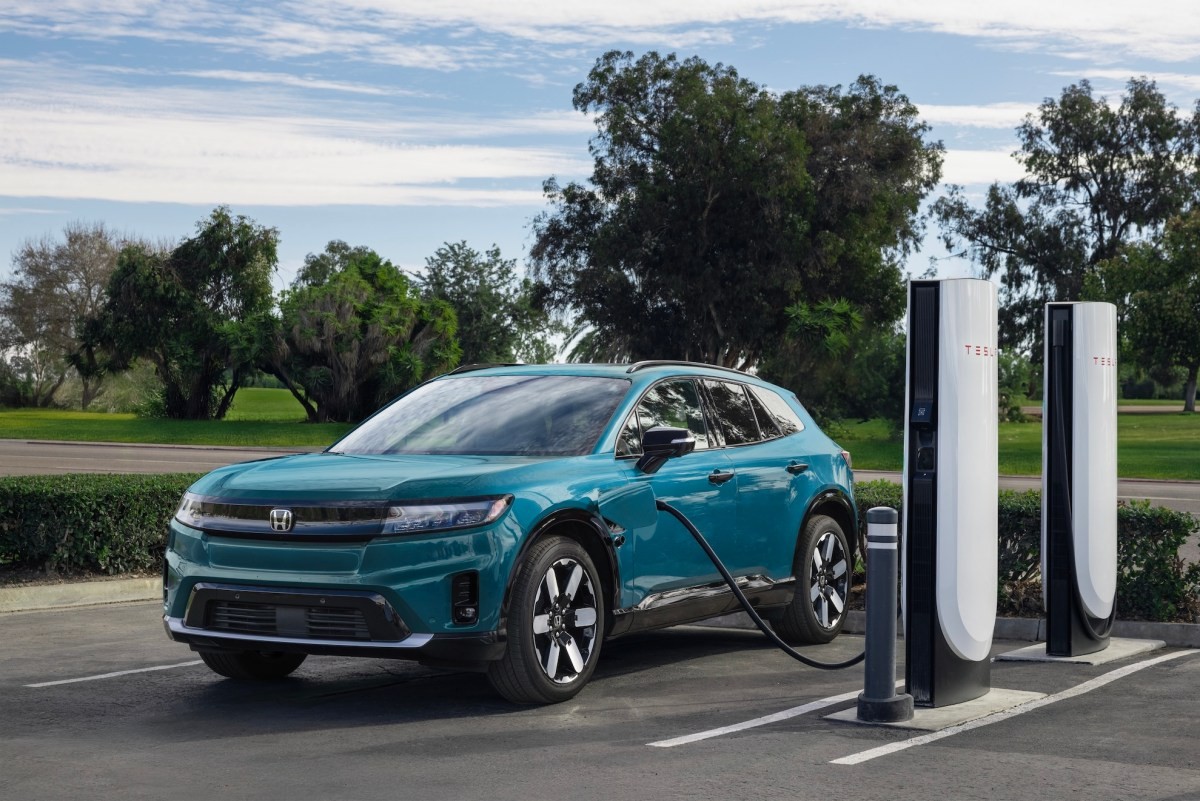
The Honda Prologue is officially dead. Honda confirmed the news to TechCrunch, pulling the plug on what remained of its all-electric lineup in the United States. This isn’t just a Honda problem. It’s a symptom of a much deeper retreat by automakers from the US EV market—a retreat that looks starkly different from the push for electrification happening elsewhere in the world.
The Prologue’s exit begs a question that matters right now: what other electric vehicles are disappearing from American showrooms this year, and why is the market shifting so fast?
The Tax Credit Hangover
The end of the $7,5,000 federal tax credit hit EV sales hard. But it wasn’t the only factor. Tariffs. Changing consumer tastes. Rising costs. Shifting company priorities. Even regulatory actions played a part.
According to July data from Kelley Blue Book and Cox Automotive, Q2 sales totaled just 247,226 units. That’s about 5.8% of total car sales in the US. Sales grew from Q1 to Q2 in 2026, but they’re still down compared to last year. Specifically, the credit ended in fall 2024, leading to a drop in Q3/Q4.
The Prologue represented grounded goals. It sold. But it never escaped the gravity of unaffordable premiums and vanishing subsidies.
Americans are still buying EVs. New models like the Rivian R2 are arriving. Q4 2025 sales were down 36% from the same period in 2023. This year, the gap narrowed. Q2 2026 sales were down only 20.5% year-over-year. Slow recovery? Yes. But automakers are still cutting models left and right.
Afeela: The Ghost in the Machine
Afeela never really lived.
It started as the Vision S, a Sony prototype announced in 2020. Big reveal. High hopes. Honda joined the party in 2022. Two tech giants. One joint venture. They showed off a branded prototype the next year. It was everywhere in the press. And nowhere in showrooms.
In March 2026, Honda and Sony gave up. They canceled two Afeela EVs. This move came two weeks after Honda cancelled three other US-bound EVs. The marketing blitz meant nothing. No production. Just silence.
Honda and Acura: Canceling the O Series
Just a few years ago, Honda was all-in. The “O Series.” Mid-sized SUVs. Futuristic sedans. Concepts debuted at CES 2025 and earlier. The SUV was supposed to roll out of Ohio’s “EV Hub” factory in early 2026.
March 2026 changed everything. Honda halted development of the Acura RDX EV, the Honda O sedan, and the O SUV. The reason? U.S. tariffs and competition from China.
There were rumors the Prologue would go next. CarBuzz broke the news in July. Honda confirmed it later. The Prologue was a GM partner play. Built in Mexico. Shared platform with the Chevrolet Blazer EV. It sold 33,000 units in late 2024/2025 seasons. Then sales dropped. Hard. The O Series never went into production anyway. Harder to measure its failure because it never existed.
Hyundai: The Ioniq 6 Exits
Hyundai actually does well in the US. They sell EVs. But economics forced changes. In March, Hyundai announced the Ioniq 6 was leaving the US. Tariffs were likely the cause.
The Ioniq 6 is built in South Korea. Imported to the US. Not here. Other models like the Ioniq 5 and the newer Ioniq 9 are made in Georgia. Local. Safe from import tariffs.
Hyundai will keep importing the high-performance, low-volume N model of the Ioniq 6 for enthusiasts. But the main seller is gone.
Nissan: Ariya Retires Early
Nissan killed the 2026 model of the all-electric Ariya for the US market. It’s not coming back.
Unveiled in 2020, the Ariya was Nissan’s first true EV since the Leaf. They planned to sell it in Japan in 2021. Now, it’s history. No 2026 Ariya. Just memory and existing inventory.
Polestar: Banned by Politics
Polestar is owned by Geely. Chinese.
The US banned vehicles connected to Chinese technology without authorization. Polestar needed a specific permit from the Department of Commerce to keep selling here.
They didn’t get it. Effectively banned.
Polestar will sell its existing stock of Polestar 3s and 4s. It will support customers. Service networks remain open. The Polestar 3 was made in South Carolina and Chengdu, China.
Volvo? Volvo is also owned by Geely. Volvo got the authorization. Why Polestar didn’t remains murky. Political pressure? Compliance issues? The result is the same: Polestar is out of the new car market in the US.
Tesla: Focusing on Robots, Not Sedans
Tesla announced in January it was killing the Model S and Model X. The reason? The future is AI. Autonomy. Robots. Not traditional sedans or SUVs.
Sales of the S and X had been falling for years. Buyers shifted to the cheaper, higher-volume Model 3 and Model Y. The luxury EV segment dried up.
Last spring, the last Model S and X rolled off the line. Tesla tore up the assembly lines in Fremont, California. They’re making room for Optimus robots now. Industrial efficiency over luxury transport.
Volkswagen: Pausing the ID.4 and Buzz
Volkswagen backed off the ID.4 and ID Buzz.
In April, VW said it stopped producing the ID.4 in Chattanooga. They’re shifting to high-volume gas vehicles like the Atlas SUV. The ID.4 won’t be made here anymore. You can still buy existing inventory. It should last until 2027.
The ID Buzz? On hiatus. No 2026 model. It will return in 2027, VW says. Meanwhile, self-driving microbuses based on the ID Buzz are being tested in LA by MOIA and Uber. Robotaxis launching late 2026? With human safety drivers for now.
Volvo: Cutting the EX30
Volvo pulled the EX30 subcompact EV from the US in March. Production ends after summer 2024? Wait, the source says production ended after summer of the announcement year. The EX30 started strong. Promising. Affordable. The gateway drug to electric Volvos.
It got attention. It entered the US in 2025. Now it’s gone.
Volvo is keeping the bigger guns. The EX60 and EX90. Larger. All-electric. Staying in the US.
The market is clearing out. The cheap models go first. The imported models get hit by tariffs. The risky bets get cut. Honda is left with nothing electric. Tesla is building robots. Polestar is banned.
Americans still need cars. The EVs available are shifting toward larger, local, or specialized models. Is this a correction? Or a permanent retreat from electrification in the US? The Prologue’s death might be the quietest sign of the biggest change yet.