
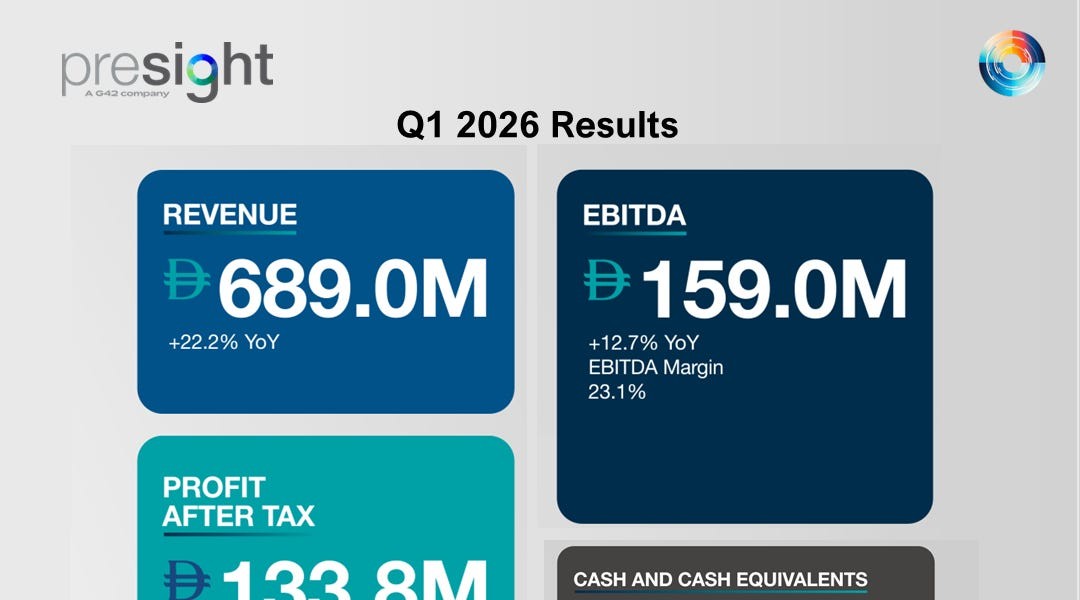
The Middle East’s artificial intelligence sector is demonstrating robust commercial traction, highlighted by significant financial gains from regional leaders. In its latest quarterly report, Presight AI, a prominent Israeli-based AI company with deep roots in the Middle East market, announced a 22.2% increase in revenue for the first quarter. This growth underscores a broader trend: AI is transitioning from experimental pilots to core operational infrastructure for enterprises and governments across the region.
Key Developments in the Regional AI Landscape
Beyond Presight’s financial performance, two other significant developments illustrate the diversification and localization of AI technologies in Africa and the Middle East and North Africa (MENA) region.
1. Presight’s Financial Momentum
Presight’s quarter-over-quarter growth reflects strong demand for its “AI Ops” platform, which helps organizations manage and optimize AI models in production. The 22.2% revenue jump suggests that companies are no longer just building AI models but are actively scaling them to drive business efficiency. This validates the investment thesis for AI infrastructure in markets that were previously skeptical of rapid technological adoption.
2. Intella Expands Voice AI to Swahili
In a move toward greater linguistic inclusivity, Intella, an AI-powered search and analytics platform, has launched Swahili AI voice services. This development is critical for Africa, where Swahili is one of the most widely spoken languages. By integrating voice capabilities, Intella lowers the barrier to entry for users who may not be comfortable with text-based interfaces or who operate in low-literacy environments. This signals a shift from English-centric AI solutions to locally relevant, multilingual tools that can serve broader demographic segments.
3. MENA Consumers Ready for AI Shopping Agents
A new wave of consumer readiness is emerging in the MENA region, with data indicating that shoppers are increasingly open to using AI shopping agents. These automated assistants can handle product research, price comparison, and purchase execution. This trend raises important questions about privacy and trust, but early adoption metrics suggest that convenience and personalized recommendations are outweighing initial hesitations. For retailers, this presents an opportunity to integrate AI directly into the customer journey, moving beyond simple chatbots to autonomous purchasing aids.
Why This Matters
The convergence of these three stories—financial growth at Presight, linguistic expansion by Intella, and consumer adoption in MENA—paints a picture of a maturing AI ecosystem.
- For Investors: Presight’s growth provides a benchmark for the viability of AI-as-a-Service models in emerging markets.
- For Developers: Intella’s Swahili launch highlights the untapped potential of non-English language markets, urging developers to prioritize localization.
- For Businesses: The readiness of MENA consumers for AI agents suggests that the time to invest in conversational commerce is now.
Key Takeaway: The Middle East and Africa are not just passive consumers of global AI technology; they are becoming active drivers of innovation through local adoption, linguistic customization, and significant commercial investment.
Conclusion
The first quarter of 2026 marks a pivotal moment for AI in the Middle East and Africa, characterized by strong revenue growth, inclusive technological expansion, and evolving consumer behavior. As companies like Presight and Intella lead the charge, the region is positioning itself as a key player in the global AI economy.