A company buys advertising for one of two reasons: branding or direct sales. Branding is the process of impressing a company name or product name onto society’s collective brain. If you launch a new soda or open a restaurant, you want that name planted firmly in people’s heads. It works for new products and existing ones. See a billboard that just says “Coke”? That is branding. See a NASCAR car with “Tide” on the hood? That too. You don’t expect the driver to buy detergent right now. You just want Tide on their mind.
Direct sales ads are different. They want action. Today. Now. Click the link. Call the number. Drive to the store. Advertisers measure success by these responses.
Banner ads failed at both jobs.
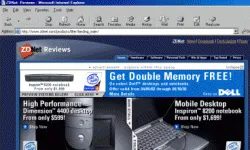
Branding advertisers realized banners are small and easily ignored. A magazine ad or a TV spot has impact. A banner ad is background noise. Direct sales advertisers found the response rate pathetic. Industry averages hover between two and five clicks per 1,000 impressions. If a banner ad appears on 1,000 web pages, only two or five people click.
Five clicks per thousand impressions holds little value. Not all clicks turn into sales. Out of 100 clicks, maybe one person buys the product. The math doesn’t work for most advertisers.
The Math Doesn’t Add Up
Consider a publisher trying to sell books. They budget $3.00 per copy for advertising. They buy 100,000 banner ad impressions for $3,000. That is $30 per 1,000 impressions.
Here is the breakdown:
- The ad runs 100,000 times.
- At five clicks per 1,000 impressions, 500 people click.
- If two percent of those 500 buyers purchase the book, that is only 10 sales.
- The publisher paid $3,000 for those 10 books.
- Cost per sale: $300.
Paying $300 to sell a $3 profit item is a terrible economic model. To make sense, the publisher needed to pay 30 cents per 1,000 impressions, not $30.
The New Normal for Banner Rates
Banner ad rates collapsed. Today, you can buy banner ads from thousands of websites or brokers for about 50 cents per thousand impressions. This price point matches what direct sales advertisers will actually pay.
Some sites charge more. The top 100 websites command a premium due to sheer size. Targeting also drives up costs. Selling a GPS device? Advertise on a GPS article site. You get a targeted audience. Click-through and response rates jump. Search engines like Yahoo target banner ads to specific search queries. They charge more for this precision.
For most other websites, there is very little money in banner ads.
To charge over 50 cents per thousand impressions, a site must offer ads with massive branding power or significantly higher click-through rates. This pressure has fueled a variety of new advertising formats and experiments on the web. The old model is dead. The hunt for better metrics continues.