
Imagine a room full of people from different countries where everyone speaks only their native language. Chaos. No communication happens unless everyone agrees on a standard set of rules and vocabulary. That is exactly what makes the internet so remarkable. It is a system that allows different computer networks to talk to each other using standardized rules. Without those rules, your laptop in Tokyo couldn’t send an email to a server in London.
Think about the sheer scope. The internet is a collection of inter-networked computer systems that spans the entire globe. It depends on several sets of rules called protocols. These protocols make it possible for computer communication across networks. But rules alone don’t move data. The system relies on a massive infrastructure of routers, Network Access Points (NAPs ), and computer systems. Then there are the satellites, miles of cable, and hundreds of wireless routers that transmit signals between computers and networks.
It is a truly global system. Cables crisscross countries and oceans, crossing borders and linking some of the world’s most remote locations to everyone else. The network is still growing. More computers link to it every day. Various organizations and companies are working to extend internet access to countries that are not yet connected.
The internet is a giant system made up of much smaller systems. If it is one thing, does it have a single owner? Is there some person or entity that controls the internet? Is it possible for someone to own something that spans nations and oceans?
Who Owns the Internet?
There is no single person or entity that owns the internet. It is not a product you can buy or a building you can lock down. The question of ownership is complicated because the infrastructure is distributed globally.
Who actually owns the Internet?
The answer depends entirely on how you look at it.
Nobody.
Lots of people.
If you view the Internet as one giant, unified machine, it has no owner. No government holds the deed. No corporation signs the title. It’s more like the telephone network: a massive infrastructure where no single entity claims the whole system. Organizations manage the rules, but they don’t own the thing itself.
But zoom in. The Internet is a patchwork quilt. Thousands of entities own pieces of it. These owners don’t hold the global map, but they can throttle your speed or block your access. They control the experience you get.
The physical layer that moves data between systems is the Internet backbone. In the early days, ARPANET was that backbone. Now, it’s a web of routers and cables run by large corporations. These are upstream Internet Service Providers (ISPs ). You can’t bypass them. If you want online access, you eventually route through one of these major players:
- UUNET
- Level 3
- Verizon
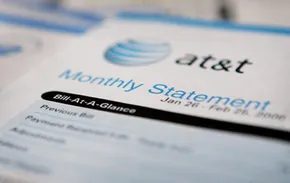
- AT&T
- Qwest
- Sprint
- IBM
Then there’s the rest. Smaller ISPs serve individual homes and businesses. They aren’t part of the backbone themselves. Instead, they negotiate with the upstream giants for access. Cable providers and DSL companies fit here. Their focus is the last mile, the stretch of connection between your house and the wider web.
Inside the backbone, you’ll find Internet Exchange Points (IXPs ). These are physical hubs where separate networks meet to swap data. Sprint, Verizon, and AT&T build distinct infrastructure. They don’t merge their systems. They link up at IXPs. Companies and non-profits run these exchanges.
Every network node has an owner. ISPs own their segments. Governments oversee national networks. Companies run local area networks (LANs ) that plug into the global system. Each of these is its own entity, yet part of the whole. Local laws determine what those owners can restrict or allow for their users.
What about you?
You own a device. A laptop, a phone, a tablet. That hardware is part of the inter-networked system. Technically, you own a sliver of the Internet. It’s a tiny piece, but it’s yours.
So if nobody owns it, who keeps the lights on?
From ARPANET to the open web
It started with ARPANET. A network of computers scattered across universities, government buildings, and research labs. The engineers who built it created the protocols that still run the Internet today. As ARPANET linked up with other networks, the Internet emerged.
The agency behind it was DARPA, the Defense Advanced Research Projects Agency. A branch of the U.S. Department of Defense. Since it began as a government-funded project, some argue the U.S. government once owned the Internet. That era is over, but the infrastructure remains.
The Internet’s Caretakers
If ownership is fragmented, responsibility is shared. Several organizations step in to keep the global system functional. They don’t own the Internet, but they manage its essential identifiers and standards.

How domain names replace messy IP addresses
Remember those protocols we talked about? They handle the traffic. But protocols also need a naming convention that humans can actually use. Enter the Domain Name System.
Picture the Internet as a giant map. Every connected device has a location. Technically, that location is an IP address : a string of numbers. Trying to memorize 192.168.1.1 is a hassle. The engineers who built the early web knew this. They wanted a way to type words instead of numbers.
That is why you type example.com instead of a random sequence of digits.
Who keeps the naming rules in order?
If protocols change, someone has to update the rulebook. No single person owns the Internet, but a few groups hold significant sway over its infrastructure.
- The Internet Society : A nonprofit focused on standards, policy, and education.
- The Internet Engineering Task Force (IETF) : An open international group with working groups targeting specific issues like security. They keep the architecture stable.
- The Internet Architecture Board (IAB) : A committee within the IETF that oversees protocol design.
- The Internet Corporation for Assigned Names and Numbers (ICANN) : A private nonprofit that manages the DNS. Its job is ensuring every domain name points to the correct IP address.
The Internet Society and the IETF operate with open membership. Anyone with expertise can chip in. They shape how the network evolves.
ICANN is different. It is private. Some people get uneasy about that. They argue ICANN holds too much power over domain registration. ICANN makes money by accrediting registrars. Those registrars sell domain names to you and me. If you want a specific name, ICANN is the gatekeeper.
Why the structure matters more than the content
None of these organizations own the Internet. They just maintain the plumbing. The structure is carefully designed. The content? That is still the wild west we all navigate.
The rules keep the map usable. The map itself is a mess of creativity and chaos.