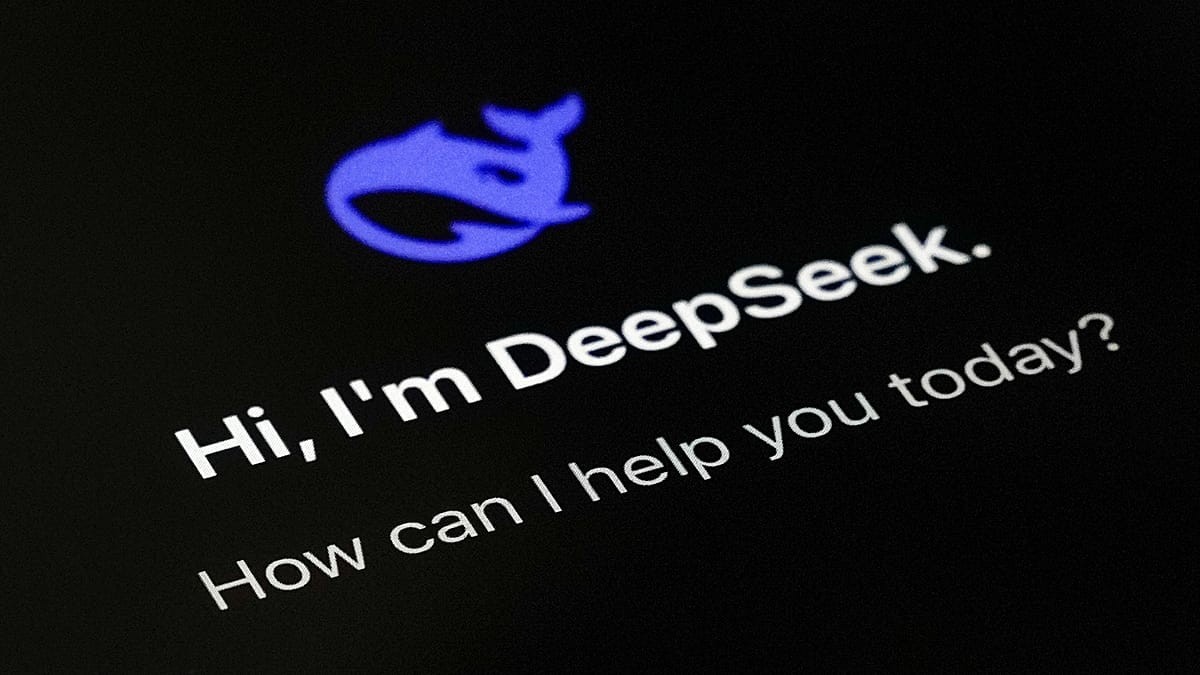
The global competition for artificial intelligence supremacy has reached a new fever pitch. China-based startup DeepSeek has officially released a preview of its latest large language model, V4, signaling its intent to challenge the dominance of US-based tech giants like OpenAI and Google.
The release comes at a moment of intense geopolitical and industrial friction, arriving just one day after OpenAI launched its GPT-5.5 model and amid escalating accusations of intellectual property theft between Washington and Beijing.
The V4 Lineup: Power vs. Efficiency
DeepSeek has opted for a dual-model approach with the V4 release, catering to different user needs:
- DeepSeek V4-Pro: A heavy-duty model designed for complex, high-reasoning tasks. According to the company, it significantly outperforms other open-source models and holds its own against top-tier closed-source models like Google’s Gemini-3.1-Pro.
- DeepSeek V4-Flash: A streamlined, lightweight version optimized for speed and cost-efficiency, making it ideal for high-volume, real-time applications.
A standout technical feature of the new release is the one-million token context length. In practical terms, “context length” refers to the amount of information an AI can “read” and consider at once. A million-token window allows the model to process massive datasets—such as entire books, extensive codebases, or lengthy legal documents—in a single prompt, providing more coherent and contextually aware answers.
Breaking the “Closed Model” Monopoly
DeepSeek is distinguishing itself through an open-source philosophy. Unlike the “closed” models from OpenAI or Anthropic, which are kept behind proprietary walls, DeepSeek has made V4 available for download and testing on Hugging Face.
This openness allows developers to integrate the model into various third-party AI agents, such as Claude Code and OpenClaw, fostering a broader ecosystem of use cases beyond DeepSeek’s own chatbot.
Context: The Growing Friction in AI Development
To understand why this release matters, one must look at the broader trends currently shaping the industry:
1. The Efficiency Revolution
DeepSeek has built its reputation on disruptive efficiency. Previous models, like the V3 and R1, shocked the industry by delivering high-level reasoning at a fraction of the cost and computational power required by US rivals. This ability to perform well on less powerful chips is a significant strategic advantage in an era of hardware constraints.
2. Intellectual Property and “Distillation”
The release is shadowed by serious allegations of “model extraction attacks,” also known as distillation. Major US players like OpenAI and Google have warned that some Chinese firms use these methods—feeding a large model thousands of prompts to collect its outputs—to “teach” smaller, cheaper models how to mimic high-end intelligence. This has led to recent accusations from the White House regarding the large-scale theft of American AI intellectual property.
3. National Security and Data Privacy
The rapid rise of DeepSeek has met with significant regulatory pushback. Several nations, including the United States, Italy, and South Korea, have restricted government use of the platform due to national security concerns. Furthermore, Germany has banned the app from major stores, citing risks regarding the transfer of user data to China.
As AI models become more capable, the line between technological innovation and national security becomes increasingly blurred, turning every model release into a geopolitical event.
Summary
DeepSeek’s V4 release demonstrates that Chinese AI firms are successfully narrowing the performance gap with US leaders while prioritizing cost-efficiency and open access. However, this progress is occurring against a backdrop of intense regulatory scrutiny and deepening distrust over data privacy and intellectual property.