It’s a me, Mario! Today, fans celebrate Mario Day, marking the date that looks like his name in leetspeak: Mar10. Nintendo officially adopted this holiday in 2016, hosting events to honor the world’s most famous plumber. But despite his global fame, many younger gamers don’t know where his career actually started. It began over 40 years ago as a pixelated enemy in a different game entirely. How did he become a household name? Who created him? And why the red hat? Here are the facts behind the legend.
The Donkey Kong Connection
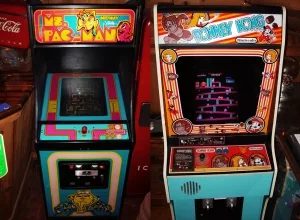
The story starts with the 1981 arcade release of Donkey Kong. It was the most successful video game of its era, moving 65,000 units. In the game, a giant ape kidnaps a woman and throws barrels at her rescuer. That rescuer was Mario.
He wasn’t called Mario then. He was simply “Jumpman.”
His profession was also different. While we know him as a plumber, Jumpman was originally a carpenter. He started in the shadow of Donkey Kong, not as the hero we know today, but as the only obstacle standing between the ape and his prize.
The Landlord Who Stole a Name
Two years later, in 1983, the agile Jumpman finally stepped out from behind his goofy colleague. He wasn’t just a sprite anymore. He had an iconic name.
The game was Mario Bros.. It hit arcades first. Then it landed on the Nintendo Entertainment System (NES). The premise? Simple. Mario and his brother Luigi hunted creatures in the New York City sewers.
But why “Mario”?
Most assume the name belongs to Mario Segale. He was the landlord of Nintendo’s facilities at the time. Reports say he looked a lot like the character. The resemblance was striking.
Others think the name came from a local pizza place. It sat near Nintendo’s headquarters. The shop was called Mario and Luigi’s.
The name stuck because it sounded right. Even if the origin story is fuzzy.
The truth is likely a mix of both. Nintendo loved local references. They used street signs and landmarks in early games. Naming the plumber after a demanding landlord makes sense. It was a quick fix. A way to give the character personality.
It also solved a branding problem. “Jumpman” was generic. “Mario” was personal.
Why the Name Matters for SEO and Branding
This shift wasn’t just about character design. It was about brand identity.
Before 1983, Nintendo had no recognizable human characters. They had shapes. Colors. Mechanics.
With Mario Bros., they introduced a duo. A brother dynamic. This allowed for:
- Cooperative gameplay
- Distinct visual designs
- Personality-driven marketing
The name “Mario” became a trademark asset. It was easily searchable. Easy to remember. Hard to mispronounce.
Compare this to later attempts at character naming. Many fail because they’re too abstract. Or too long. “Mario” works because it’s short. Punchy. Familiar.
The pizza shop theory adds flavor. Literally. It ties the character to everyday life. Pizza was universal. It made the game feel accessible.
The Legacy of the Sewer Level
The NYC sewer setting wasn’t random. It reflected the urban environment where Nintendo operated.
It grounded the fantasy.
Players weren’t fighting in space. They were fighting in their own city’s infrastructure.
This local connection helped the game resonate with audiences. It felt close to home.
Today, when we think of Mario Bros, we think of the platforming era. The jumping. The kicking. The mustache.
But the name came first. The landlord. The pizza place. The human touch.
That’s why the character still matters. Not just because he jumps well. But because he started as a person. A real person’s name on a screen.
It’s a small detail. But it shaped everything.

The Accidental Voice and Pixelated Design of Mario
Shigeru Miyamoto didn’t just build a game. He built a universe. When Super Mario Bros. dropped in 1985, it wasn’t just a platformer. It was the launchpad for Bowser, Princess Peach, and eventually Yoshi and the Toads. Mario stopped being just a jump-and-run character. He became a kart racer, a tennis pro, and a golfer. But who exactly created him?
Miyamoto.
He is the face of Nintendo. His influence stretches to Donkey Kong, Star Fox, and The Legend of Zelda. What made his approach revolutionary wasn’t just the high scores. It was the narrative. He wanted games to have a story. Not just points. A plot.
Why Pixel Count Dictated Fashion
Mario’s iconic look wasn’t a random choice. It was an engineering constraint.
Think about the hardware limits of the 8-bit era. Characters could only be 18 by 12 pixels wide. That is tiny. If you try to animate detailed hair and a mouth at that resolution, it looks like garbage. So Miyamoto made a workaround.
He gave Mario a mustache and a hat. These features hid the mouth and the hair, which couldn’t be animated. They also made the character instantly readable. The red shirt against the blue overalls created high contrast. It popped on the screen. The thick shoes and blue overalls subtly suggested his job. He was a plumber. The design solved a technical problem while creating an icon.
The Brooklyn Accent That Wasn’t
“It’s a me, Mario!”
The voice feels natural now. But Charles Martinet didn’t audition to be Mario. He stumbled into it.
Martinet is an American actor. In 1992, he showed up for an audition. The brief was specific. Play an Italian plumber from Brooklyn. Talk like you’re speaking to children. It was a random encounter. He got the part. He also took Luigi, Wario, and Waluigi.
The catchphrase isn’t just a line. It’s a cultural touchstone. The voice defined the character for decades. Martinet’s delivery turned a pixelated plumber into a personality.
Now the plumber is going global. Not just through games. A new animated film hits theaters this year. The journey from arcade cabinets to living rooms is almost complete. But will the animation capture the pixel-era soul? We’ll see.