
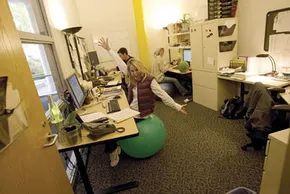
The tech world’s most famous headquarters sits in Mountain View, California, just a few miles south of the San Francisco Bay. This isn’t just an office park. It’s the Googleplex, the brain and body of Google, the search engine that rewired how humans access information. The campus is a strange mashup. You have the sterile efficiency of a high-tech giant mixed with the chaotic creativity of a think tank and the whimsy of a Willy Wonka factory. The name itself is a pun. It blends “Google” with “complex.” It also references a googolplex, a number so vast it breaks the human mind.
To understand the scale of what Google built, you have to understand the math. A googol is 10 to the 100th power. That is a 1 followed by 100 zeros. A googolplex is 10 raised to the power of a googol. It is incomprehensibly large. Carl Sagan once noted that there are fewer elementary particles in the observable universe than the number represented by a googolplex. Google’s founders liked the idea of organizing that much information.
The physical site tells a different story. Google bought the land from Silicon Graphics (SGI). SGI was a pioneer in computer graphics. They built the digital dinosaurs for Jurassic Park. A statue of a Tyrannosaurus Rex still stands on the grounds. It’s a nod to the previous tenants. It’s also a reminder that this land has seen major shifts in technology.
The Architecture of Collaboration
The workspaces were designed by Clive Wilkinson of Clive Wilkinson Architects. Wilkinson is known for inventive, whimsical designs. He didn’t just build offices. He built environments meant to force interaction. The goal was clear. Break down silos. Foster teamwork. Spark creativity.
As of 2008, Google employed more than 19,000 people. The company had offices globally, but not everyone worked in Mountain View. Only about 8,000 of those employees were based at the Googleplex. The campus covered more than 2 million square feet of office space. Expansion was already on the horizon. Google was acquiring a 42-acre campus adjacent to the main site. That deal would add another 1 million square feet soon. The company was growing faster than the buildings could contain it.
Perks That Lock You In
Does the Googleplex have rivers of chocolate? No. Are there Oompa Loompas wandering the halls? No. But the perks are designed to keep you there. You don’t need to leave the campus to survive. Or to thrive.
Hunger strikes? Walk into a cafeteria. Eat a free meal. The food is high quality. It’s abundant. It’s part of the strategy. You need to burn off those complimentary snacks? The gym is close. Hit the treadmill for half an hour. Everything is within arm’s reach. The design removes friction. It keeps employees on site. It keeps them working. It keeps them thinking in the Google ecosystem.
The buildings and grounds reflect this philosophy. The open spaces aren’t accidental. The amenities aren’t just generosity. They are tools. Tools to keep the best minds in the building. And the building is massive.
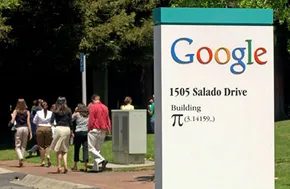

Navigating the Mountain View headquarters feels less like entering a corporate campus and more like wandering through a sprawling, high-tech college dorm. With over 20 distinct structures, the scale is deceptive. Most staff joined straight from university, reinforcing that academic, youthful energy. The core of this labyrinth is the cluster of Buildings 40 through 43, a tight-knit group that serves as the intellectual heartbeat of the complex.
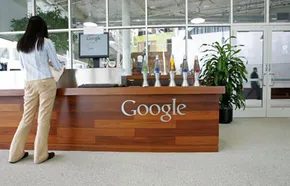
Step inside any lobby, and the corporate sterility vanishes. Lava lamps pulse. Pianos sit idle, waiting for someone with the right fingers. But the real spectacle is on the screens: a live feed of global search queries, filtered in real time to scrub out offensive terms before they can cause awkward office moments. It is a constant reminder of the company’s reach.
The decor tells a similar story. You might bump into an enormous whiteboard covered in brilliant ideas alongside irreverent jokes. A replica of SpaceShipOne looms in a corner. Hallways are lined with bicycles, reflecting Google’s push for a green-conscious, healthy lifestyle. It is not uncommon to see employees cycling to work, parking their bikes right inside the building.
The Architecture of Collaboration
The workspace layout defies traditional corporate design. Workstations are grouped in tight clusters of three to four people who collaborate closely. This was a deliberate choice by architect Clive Wilkinson, who faced a tricky problem: how do you encourage interaction without creating a noisy, distracting hive? How do you avoid turning the office into a labyrinth of cubicles?
Wilkinson’s solution was glass. Glass walls divide the space into distinct clusters. This design choice achieves two things. First, it dampens ambient noise, allowing for focus. Second, it lets sunlight flood the entire office, keeping the space bright and open. Each glass enclosure features a tent-like roof made of acrylic-coated polyester. This structure hides lighting and sprinkler systems, keeping the lines clean.
Executives believe this proximity fuels innovation. The hope is that by bouncing ideas off one another, workers find greater job satisfaction and stumble upon the next big Google product. Personalization is encouraged. You can decorate your desk as you wish. You can even bring a dog to work (cats are strictly forbidden).
Beyond the Perks
These workspaces are attractive, but they are just the surface level of the Googleplex perks. Some benefits come with hidden costs. A specific condition, known as the “Google 15,” haunts many new hires. It is a dreaded phenomenon that strikes when employees first arrive. We will look at what causes this threat and how to avoid it in the next section.
Building 42 and the Myth of the Name
Building 42 was the first structure Google moved into at the Googleplex. Many assume the name is a nod to Douglas Adams’ The Hitchhiker’s Guide to the Galaxy. In the book, 42 is the answer to life, the universe, and everything. It fits the tech culture perfectly. Others argue the building already carried that name when Silicon Graphics owned the site. Google has since added its own quirky nomenclature, such as Building ‘Pi’, continuing a tradition of playful naming conventions.
Google Food for Breakfast, Lunch and Dinner


The cafeteria perks at the Googleplex aren’t just a headline grabber. They are a daily reality that fundamentally alters how engineers operate. If you are on-site, you have access to breakfast, lunch, and dinner at zero cost. There are multiple cafés scattered across the campus, and the policy is simple: you can eat at any of them. The central hub is Charlie’s Place. It is named after Charlie Ayers, the company’s first lead chef. Before he was plating meals for software developers, Ayers cooked for the Grateful Dead.
He departed in 2005. The name stuck.
The menu at Charlie’s Place is expansive. You find stations dedicated to vegetarian options. Others serve sushi. There is also a wide array of ethnic foods sourced globally. The culture pushes for fresh, organic ingredients. Healthy eating is the stated goal. But there is a flaw in the economics of infinite free calories. When food is free and available around the clock, restraint vanishes.
This leads directly to the “Google 15.”
This is slang for the fifteen pounds many new hires gain in their first few months. It happens because the temptation to graze is constant. Other locations on the campus offer similar menus. The Pacific Café operates with the same logic. So does the Charleston Café. Café 150 is another option. Even a spot called the No Name Café fits the pattern. Each location provides choices for every meal of the day.
Google rotates through more than 200 recipes daily across these cafés. The variety is staggering. But the result is often the same. A side effect of the tech giant’s generosity is weight gain.


The Cost of Free Food
Hungry at 3 PM? You don’t need to leave the campus. Google’s snack rooms are stocked with everything from granola bars and chocolate-coated pretzels to juice and coffee. It’s all free. They even took the concept on the road for the 2008 Google I/O event at Moscone Center in San Francisco, handing out snack bins to attendees.
Nobody knows the exact price tag. Google stays tight-lipped about its food budget. That didn’t stop blogger Vasanth Sridharan from guessing. In April 2008, he crunched some numbers. He estimated the headcount at the Googleplex, the meals eaten per day, and the daily spend per employee. His back-of-the-envelope math suggested a cost of over $72 million a year. It’s just a guess, of course. But it highlights the scale of the operation.
Beyond the Cafeteria
The food is the headline act, but the perks don’t stop at the buffet line. Google turns waste into energy. The company collects used cooking oil from its cafeterias and sends it to a partner to convert into biodiesel. Then, Google buys some of that fuel back to help power its own operations. It’s a closed loop. Or at least, it tries to be.
Want to know what else they do to keep engineers happy? The next section dives deeper.

Why the Office Becomes a Lifestyle
It’s no secret that Silicon Valley giants have weaponized convenience. The strategy is blunt: make the office so frictionless that leaving feels like a chore. When you pack a gym, a barbershop, and a arcade into a single campus, the commute home loses its appeal. Productivity doesn’t just spike because people are working harder. It spikes because they’re staying longer, fueled by free food and free massages.
Google, specifically, turned the “campus life” concept into an art form. The perks at the Googleplex aren’t just window dressing. They are infrastructure designed to keep you tethered to the keyboard.
The Barbershop Code
Imagine you’re in the zone. Deep in a sprint. Your bangs are falling into your eyes. You blink. You wipe them away. You blink again. It’s distracting.
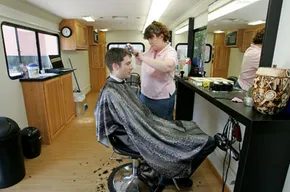
At most companies, you’d have to plan around a 30-minute trip to a salon. At Google? You just book a slot. On-site barbers are part of the roster. No travel time. No waiting. Just a trim, back to the code. It’s a small thing, but it removes a tiny friction point that could break your flow state.
The Infinite Swim
Calories from free lunches need to go somewhere. The standard gym is there, of course. But for those who prefer hydrodynamics over treadmills, Google offers a specific piece of equipment: the swim-in-place pool.
These aren’t Olympic lanes. They’re narrow, short, and equipped with powerful electric pumps. The water rushes in one direction at a steady, forceful current. You swim against it. You stay in place. It’s essentially a stationary bike, but for your upper body. Lifeguards watch over these pools, ensuring that even the most vigorous lap-swimmers don’t push themselves into dangerous territory. It’s a weirdly specific perk, but it solves a problem: how to get a cardio workout without leaving the building.
Table Tennis and Thumb War
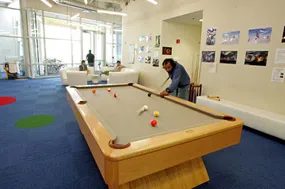
If your brain needs a break from syntax errors, the campus has tables. Ping pong, billiards, foosball. You’ll find them scattered across different buildings. It’s not just for fun. It’s for the five-minute reset. A quick game shifts your focus, wakes up your muscles, and sometimes sparks a solution to a problem you’ve been staring at for hours.
And if you’re not into physical exertion? There are video games. Consoles, arcade cabinets, you name it. For the introverts who prefer letting their thumbs do the heavy lifting, it’s a low-effort way to kill time between commits.
The Bigger Picture
These perks seem trivial. Who cares about a free haircut? But they’re part of a larger architecture of retention. By removing the need to leave for basic needs, Google keeps its workforce in a controlled ecosystem. You eat there. You sweat there. You play there.
It’s not just about being nice. It’s about efficiency. And maybe a little bit of control.
When the office provides everything, the boundary between work and life blurs. You don’t head home because there’s nowhere you need to be.
The result is a workforce that is present. Physically. Mentally. For longer stretches than traditional 9-to-5 models allow. Whether that

Spilled coffee on a crisp button-down? No panic. Google keeps full laundry facilities and dry cleaning services right on the Googleplex campus. It is common to see employees dropping off loads over the weekend to handle their chores while they work.
Healthcare is equally immediate. On-site medical staff are available for anyone who gets sick or hurt during the day. You can just walk in and see a doctor without leaving the building.
But the campus isn’t just about health; it’s about stress relief. Google offers a subsidized massage program. For a small fee, you get a session with a licensed therapist in a private room. These massage rooms, along with the bathrooms, are some of the few spots in the entire Googleplex with opaque walls. Privacy is rare here.
Then there is the famous Google 20 percent time program. Employees can spend up to 20 percent of their workweek on special projects. That equals one full day a week to work on something completely different from their main job. Google says many products in Google Labs started as pet projects under this rule.
These perks appeal heavily to fresh college grads. The Googleplex eases the jump from academia to corporate life. But for those who have outgrown the campus bubble, things have changed.
In 2008, one major perk shifted. The new policy upset many employees. Some were moved to tears. What changed?
The Shift in Google Benefits
Even the bathrooms reflect the company’s culture. Coding tips and puzzles hang above the urinals and on stall doors. It is a small detail, but it shows how deeply the tech mindset is woven into the daily environment.
When it comes to Google benefits and daycare, the landscape has evolved. The initial wave of unrestricted perks didn’t last forever. For employees who stayed longer, the support systems adjusted. The dramatic changes in 2008 forced a reevaluation of what was sustainable.
Some argue the 20 percent time program is now more of a myth than a reality. In practice, tight deadlines often make that extra day impossible to take. Yet, the idea remains a powerful draw for engineers who want to innovate without asking permission first.
The laundry and massage services, however, remain. They serve as reminders of the original promise: that work here should feel different. Not just in the free food, but in the care for the person doing the work.
Did the 2008 changes break the spirit of the place? Or did they just make it more realistic? For many, the loss of certain unrestricted benefits felt like a step back from the utopia they joined. For others, it was a necessary maturation of a company that grew from a startup to a global giant.
The puzzles in the bathrooms are still there. The laundry machines still hum. But the unspoken contract between the company and its workers has shifted. You can still find a doctor on campus. You can still get a massage. But the ease with which you could previously ignore the outside world is gone.
What remains is a mix of genuine support and calculated retention. The 20 percent time is harder to use, but not impossible. The perks are still there, but they come with strings attached now. The Googleplex is no longer a playground. It is a workplace that knows how to treat its staff, even if it doesn’t coddle them quite like it used

The Kinderplex and the Price of Premium Childcare
Rumors swirled as early as 2004 about a Google day care, but the company moved fast. They partnered with Children’s Creative Learning Centers (CCLC), an organization running a school just two miles from the Googleplex, to launch the Kinderplex. It wasn’t a freebie. Google subsidized the cost to make it accessible to employees, covering meals like breakfast and lunch, and used the perk as a heavy hitter in recruitment. The CCLC staff handled the day-to-day, sticking to a play-based philosophy where kids did yoga and engaged in various activities.
Then came the Woods.
Opened a year after the Kinderplex, this program was different. Google managed it directly. It was more expensive to run and took a distinct approach to child care. By 2008, Google decided to fold the Kinderplex into the Woods model, creating a single, unified day care program. The shift was jarring. Tuition jumped. Employees who once paid around $33,000 a year saw their bills more than double to over $57,000.
The reaction wasn’t just grumbling. Reports say some staff were moved to tears. Why the sudden hike?
It came down to educational philosophy. The new program adopted the Reggio Emilia approach, founded by Loris Malaguzzi. Instead of general play, this method focuses on the individual child. Teachers adjust the curriculum based on what interests the kid is showing right then. It’s about communication, interaction, and even the aesthetics of the room—artwork and surroundings matter.
To pull this off, class sizes stayed small. Teachers earned relatively high salaries. But small classes and high wages cost money. The result? A price tag that left many employees shocked.
The Waiting List and the Executive Club
Google didn’t just raise prices. They started charging parents just to get on the waiting list. The list had grown to hundreds of names. Adding a fee to stay on it, coupled with the new tuition rates, did what fees often do: it shrunk the line.
Critics within the company pointed out a troubling trend. The day care was becoming exclusive. Only top-level executives could realistically afford the in-house option. It was a rare internal initiative that drew genuine criticism in a place usually praised for its perks.
Despite the backlash, the Googleplex remained a magnet. The campus, with its bridges and walkways mimicking a university campus, attracted top talent. In 2008, Google landed on Fortune’s list of 100 Best Companies to Work For. People wanted in. And once they were in, they stayed. The day care controversy was a speed bump, not a stop sign.
What is the Googleplex?
The Googleplex is the company’s headquarters. It’s not just one building. It’s a cluster of structures connected by bridges and walkways. The design aims to feel like a loosely structured university campus. Some people try to compare it to a googolplex—the number $10^{10^{100}}$—but that’s just a mathematical curiosity. The physical Googleplex is large, functional, and designed to encourage the kind of random collisions that lead to innovation. It’s where the work happens. It’s where the day care is. It’s where the culture is shaped, for better or worse.
Related HowStuffWorks Articles
- How Google Works
- How Gmail Works
- How Google Calendar Works
- How Google Docs Works
- How Google Earth Works
- How the Google File System Works
- How Google Talk Works
- 10 Useful Google Tools
More Great Links
- The Official Google Blog
Sources
- Arrington, Michael. “Google Lunch?” TechCrunch. Nov. 4, 2005. (July 22, 2008) http://www.techcrunch.com/2005/11/04/google-lunch/
- Brainy-Child.com. “Reggio Emilia Approach.” (July 24, 2008) http://www.brainy-child.com/article/reggioemilia.html
- Chang, Jade. “Behind the Glass Curtain.” MetropolisMag. June 19, 2006. ( July 22, 2008) http://www.metropolismag.com/cda/story.php?artid=2123
- CCLC. “Kinderplex.” (July 24, 2008) http://www.childcareos.com/childcareos/InterestWaitList21/ChildCareProviderdetails.aspx?FLG=300&CID=89b570b0-834c-4d2e-a2fe-fd70b0563eae
- Fortune Magazine. “100 Best Companies to Work For 2008.” (July 24, 2008) http://money.cnn.com/magazines/fortune/bestcompanies/2008/full_list/
- Google. “The Google Culture.” (July 21, 2008) http://www.google.com/intl/en/corporate/culture.html
- Google Finance. “Google.” (July 24, 2008) http://finance.google.com/finance?q=Google
- Helft, Miguel. “Google Plans Major Expansion In Its Backyard.” The New York Times. June 4, 2008. (July 23, 2008) http://bits.blogs.nytimes.com/2008/06/04/google-plans-major-expansion-in-its-backyard/
- Kaiser, Emily. “Former computer science students hit it big working at Google.” Minnesota Daily. May 1, 2007. (July 23, 2008) http://www.mndaily.com/articles/2007/05/01/71788
- Mills, Elinor. “Google buying its Mountain View, Calif., property.” June 14, 2006. (July 23, 2008) http://news.cnet.com/8301-10784_3-6083899-7.html
- Mohney, Chris. “25 things to see at the Googleplex before you die.” Valleywag. Feb. 6, 2007. (July 22, 2008) http://valleywag.com/tech/google/25-things-to-see-at-the-googleplex-before-you-die-234103.php
- Nocera, Joe. “On Day Care, Google Makes a Rare Fumble.” July 5, 2008. (July 22, 2008) http://www.nytimes.com/2008/07/05/business/05nocera.html
- Olsen, Stefanie. “From the Googleplex to the wine bar.” CNet. Jan. 23, 2008. (July 22, 2008) http://news.cnet.com/From-the-Googleplex-to-the-wine-bar/2100-1030_3-6227204.html
- Olsen, Stefanie. “Google’s movin’ on up.” CNet. July 11, 2003. (July 23, 2008) http://news.cnet.com/Googles-movin-on-up/2110-1032_3-1025111.html
- Sagan, Carl. “Googol and Googolplex.” COSMOS. (July 23, 2008) http://www.myitforum.com/absolutevc/avc-view.aspx?v=601
- Sokolov, Raymond. “Googling Lunch.” Wall Street Journal. Dec. 1, 2007. (July 22, 2008) http://online.wsj.com/public/article/SB119646190600409908.html
- Sridharan, Vasanth. “Google’s Ginormous Free Food Budget.” Silicon Alley Insider. April 23, 2008. (July 21, 2008) http://www.alleyinsider.com/2008/4/googles_ginormous_food_budget