Tablets have been used in laboratories and meeting rooms for 20 years. They were niche toys and were ignored by the general public. Things changed in April 2010. Apple didn’t just release a product. It redefined a category with the iPad. It looks like an iPhone. Uses the same iOS. People took to it immediately. Suddenly, tablets are no longer just gadgets. they are a necessity.
Why the sudden obsession? Simple. A physical keyboard doesn’t block your hand luggage. There are no complicated menus buried four levels deep. Just a flat, responsive glass pane. It’s portable. It’s intuitive. It’s cool.
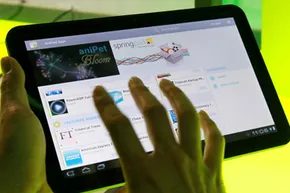
But the tech world doesn’t like monopolies, especially monopolies built on simple foundations. The competition will come sooner than anyone expected. Motorola introduced the iPad with the first mainstream Android tablet, the Xoom.
The user interface paradox
At first glance, there aren’t many differences between Android tablets and iPads. Both rely on touchscreen interfaces. You tap icons. Swipe to scroll. You pinch to zoom. The interaction mechanism is the same.
Both ecosystems offer digital marketplaces. Apple calls it the App Store. Android manufacturers publish their own versions of app stores. In both cases, you can download the program directly to your device. To the casual observer, the differences are invisible. The only difference is the logo on the back.
This similarity leads to a central question in the tablet debate of the mid-2010s: which is the better tablet?
This is a misleading question. This means a fair comparison between two individual entities. It’s not. Comparing the iPad to the market for “Android tablets” is like comparing one particular apple to the entire product section of the grocery store’s entire produce section. Apple makes the iPad. There are currently only two models: the original iPad and the iPad 2. One product. Two iterations.
Android is different. Any manufacturer capable of producing devices that support Google’s operating system can produce Android tablets. Barriers to entry are low. The variety is high. There are companies that make great devices. Some make disasters. Companies like Barnes & Noble are trying to make tablets look like something else. For example, the Nook e-reader is technically an Android tablet with a very limited feature set and few apps to choose from.
So how does the iPad compare to the fragmented ecosystem? You choose your representative. From the beginning, the representative was the Motorola Xoom.
The Specs War
Motorola knows you can’t win with brand loyalty. The iPad was a year ahead. So Motorola wanted raw power. They bet on specifications.
When the Xoom was launched, it had a dual-core processor. The claim was simple: software would run twice as fast as on the iPad. It also has two cameras. The 5-megapixel lens points forward for taking photos. The 2 megapixel lens points to the back of the user for video chats.
This is a direct attack on Apple’s biggest weakness. The original iPad had no camera. Users were frustrated. “Look. Now you know who you’re talking to,” Motorola said.
Then there’s the screen. The Xoom has a 10.1-inch screen. The iPad is slightly smaller. Xoom resolution is 1280×800. That is marginally higher than what Apple offered. What about storage? The Xoom came with 32 gigabytes of internal memory. However, there is also a MicroSD card slot. You can expand your storage space. The iPad has no such option. You were stuck with what you bought.
Software moat
The hardware specs look good on paper. They don’t get people to buy devices. Apps do.
And this is where Apple held the iron grip.
When the Xoom hit store shelves, programmers had been developing apps for the iPad for almost a year. Thousands of applications were available. The App Store was bursting. Developers make money. Developers were staying.
The Android app store is almost empty.
It’s a classic chicken-and-egg problem. Users won’t buy the tablet without apps. Developers don’t build apps without users. Motorola bet on hardware to bridge the gap. They believe that as specifications improve, users will be forced to accept the lack of software.
They were wrong.
Apple wasn’t sitting still, either. Just as the Xoom was launched, Apple struck back with the iPad 2. This is an improvement. Important improvements. To understand why the hardware race isn’t as important as the software moat, we need to take a closer look at the iPad 2 and the real differences between iPad and Android apps.
The battle is not over yet. Just change your position.
Hardware race
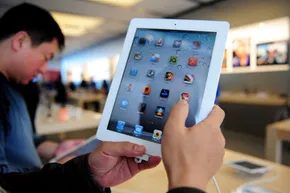
The iPad 2 arrived in March 2011, just a month after the Motorola Xoom hit store shelves, but it quickly usurped the main advantages Motorola’s devices had over Apple’s products. Like the Xoom, the iPad 2 featured front and rear-facing cameras and supports Apple’s FaceTime video chat software. It also packs a dual-core processor into a body that’s significantly thinner and lighter than the original iPad, a physical improvement that Apple heavily promoted in its advertising campaigns.
But Android tablets were flooding the market every few weeks, each trying to beat the iPad 2 in some way. Some models, like the Asus Eee Pad Transformer, compete on price. With an optional keyboard, it costs about $200 less than the iPad 2, effectively transforming it into a notebook. Some compete based on appearance. The Samsung Galaxy Tab is thinner, lighter and slightly cheaper than the iPad 2. While Apple has historically struggled to find stylish models to match, some brands just want to look cool.
Androids unequivocally beat the iPad 2 in several areas. The big difference is in video resolution, as most Android tablets run at 1,280 x 800 pixels, while the two iPad models run at 1,024 x 768 pixels. Android devices are also more user-upgradeable. Apple limits most features to the standard model, while Android offers more flexibility. Also, unlike some Android competitors, Apple did not support USB connectors on the iPad 2.
One area where Android seems to fall short is battery life. Most reviewers agree that the iPad 2 lasts significantly longer on a single charge than its Android counterparts.
App ecosystem war
In the all-important category of software availability, the iPad 2 still leads by a wide margin. At that time, the Apple App Store offered more than 100,000 applications. That number gets even bigger when you consider that there are about 500,000 apps on the iPhone, and most of them also work on the iPad 2, even though it didn’t fully utilize the larger screen real estate.
The exact number of Android apps is hard to determine because Google doesn’t make it public. A July 2011 New York Times blog put this number at a surprisingly low 232. Of course, this number doesn’t include Android phone apps that also work on tablets. It also doesn’t account for other tablet-specific apps from brands like the Samsung Galaxy Tab and Motorola Xoom. Even with all these variables taken into account, Apple is still winning the app war. However, popular games like “Angry Birds” and “Plants vs. Zombies” are available on both platforms.
However, there are fundamental differences in how Apple and Android handle these apps. Apple only allows the sale of apps through the App Store online store, and each app must be approved before it can be sold. Android devices use a more open model. Anyone can publish an Android app without needing a stamp of approval first. Although this difference is more important to programmers than to end users, it provides a strong incentive for developers to switch to Android and could lead to an increase in the availability of Android applications in the future.
Which Tablet Should You Buy?
Ultimately, choosing between an iPad 2 and an Android tablet comes down to what’s most important to you: hardware, software, or price.
If you put hardware specs first, you’ll have to compare the iPad 2’s specs to the specs of every Android tablet on the market, which can be a daunting task. If software is more important to you, you’ll probably stick with the iPad 2, as it was far more likely to have the exact apps you needed.
The situation changes if price is the deciding factor. Unless you’re going for a modified Android tablet like the Barnes & Noble Nook (which can reportedly be modified to behave more like full-fledged Android tablets by savvy users), you probably won’t undercut Apple’s prices by more than about $200. However, if $200 is in your budget, a cheaper Android option like the Asus Eee Pad Transformer may be a better choice.
If you want to learn more about the iPad and other tech-related topics, further information and reviews were available on the next page.