Mobile phone networks are usually divided into three categories: 2G, 3G and 4G. The 2G era is truly an era in which the foundation of technology is laid. It’s not just about making phone calls. The purpose is to find ways to push more people into the same broadcasting area.
These early digital networks used three main technologies to transmit information. Although these names sound scary, they are basically just a description of how the system distributes work.
- Frequency Division Multiple Access (FDMA)
- Time Division Multiple Access (TDMA)
- Code Division Multiple Access (CDMA)
Look at the word and see how it works. The first part explains how. The word “split” in the middle means to split the call based on this method. Finally, “multi-access” is just a technical term that means “several people can use this access point at the same time”.
Let’s disassemble the mechanism.
FDMA: Radio Station Model
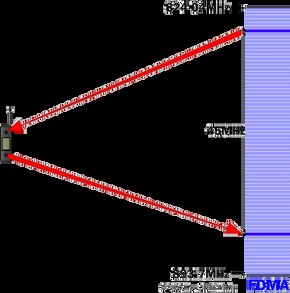
FDMA is the oldest of these. It works by dividing the available spectrum into different audio channels. Imagine a radio dial. Each station has its own frequency range within. This is FDMA.
Mainly used for analog transmission. Yes, you can carry digital data, but it’s not very efficient. If you’re trying to send a text or browse the web, FDMA becomes a bottleneck. It’s like a one-lane highway where every car has to stay in its own lane at all times. One vehicle per lane. no passing. No sharing.
TDMA: Taking Turns on the Frequency
TDMA changes the game by introducing the time element. Instead of giving a constant frequency, it gives a certain frequency for a fixed time.
This is the technology behind the Interim Standard 54 (IS-54) and Interim Standard 54 136 (IS-136) defined by the Electronic Industries Alliance and the Telecommunications Industry Association.
Here’s how it actually works:
A narrow band with a width of 30 kHz and a duration of 6.7 ms is divided in time into three slots. Each conversation gets the radio for one-third of the time. Now you might be wondering why the sound doesn’t cut out. It works by converting audio data into digital data and compressing it. Compressed data takes up much less transmission space than the original analog wave.
result? TDMA has three times the capacity of analog systems using the same number of channels.
It operates on the 800 MHz band (IS-54) or the 1900 MHz band (IS-136). The system switches between users so quickly that you won’t even notice it’s paused. This is similar to a waiter taking one sip from three different drinks in a row.
CDMA: Unique Code Approach
Next is CDMA. Instead of differentiating by frequency or time, CDMA provides a unique code for each call. Send calls simultaneously to available frequencies.
This method is fundamentally different from the other two methods. Does not divide the spectrum into separate channels. Separate each conversation with a digital signature while connecting them all. When two people speak on the same frequency