
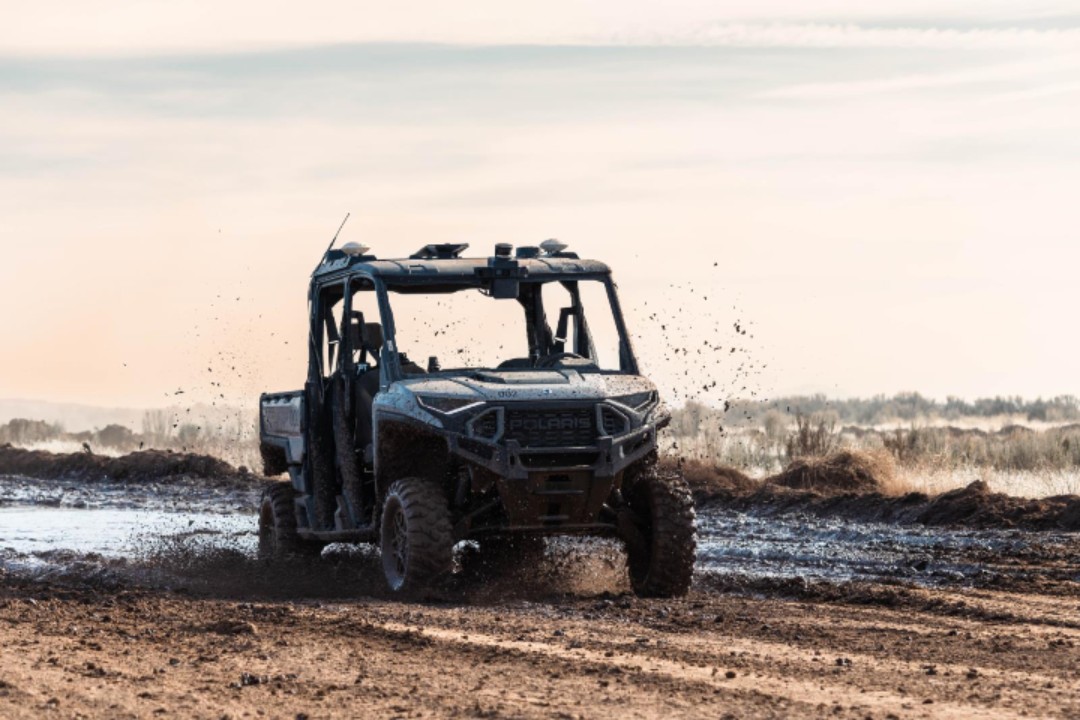
Forterra says more than 100 autonomous ATVs are currently fighting in Ukraine. Nine months of combat. It is likely the biggest deployment of US-built robotic ground vehicles in history. At least for a defense tech company.
Scott Sanders knows war is ugly. Former US Marine, now Chief Growth Officer at Forterra, he says the truth only comes when bullets fly.
“I believe this to be true of everyone… until you hit the realities of combat you just aren’t going to know.”
US money fueled this mission. The goal is obvious: help Ukraine hold back Russian invaders while modernizing the US military playbook. Flying drones got all the hype early on. Now, they created a deadly problem. Constant surveillance means open fields are death traps. No place to hide. Ukrainian commanders had to adapt. They looked down. Not up. Ground-based autonomy became the only option.
Sergeant Major Corey Wilkens explains the terror of it. He leads a program building autonomous tactics for the Army. He says soldiers are vulnerable. Really vulnerable. Drones dropping munitions. Artillery. Mortars.
“There’s nowhere to hide.”
Ukraine has its own uncrewed ground units already. Mostly battery powered. Clunky. They carry 250 kg max. That is it. A US-funded source on the ground, anonymous for security, said Forterra’s Lancers change the game.
Built on Polaris ATVs. Gas engines. Custom sensor stacks. These bad boys haul 750 kg. Three times the payload. Versatility matters here. Logistics matter even more. The soldier said it best: “It’s fucking fantastic… we are dying to get more.”
But the troops didn’t love them at first.
Western tech often feels sterile. Built for polished US bases, not muddy Ukrainian trenches. The fix was simple but critical. A Starlink antenna. Suddenly, the vehicle worked. Really worked.
The stats tell a story since October last year:
– 2,500+ miles driven.
– 1,100+ missions completed.
– 777,44 pounds hauled.
– 52 wounded soldiers evacuated.
Losses happen. Some got stuck in mud. Some took fire. You can’t stop enemy fire easily if you’re immobile. Forterra learned hard lessons about electronic warfare. Software updates from afar. Navigating mud. Not breaking down.
With $500 million raised from backers like XYZ VC, they are sharper now. Better positioned for those juicy government contracts. But the “autonomous” label is half-true.
Ukrainians teleoperate the beasts in hot zones. Two reasons: they are too expensive to lose, and the robots aren’t smart enough yet.
The machines handle the driving fine. Diverse terrain? Easy. Spotting a sniper team crouching behind a tree? No.
“We need to respond to threats live… the autonomy doesn’t know how do to yet.”
Forterra has been at this for two decades. Now they are mixing classic self-driving code with generative AI. The hope is a system that reacts generally to its surroundings. The bottleneck? Data. Real combat data. Open-source models don’t know how to cross a minefield.
Sanders told TechCrunch you can’t just rely on AI. You need classical robotics too. You have to tweak the dials manually.
Competitors are rushing in. Scout AI raised $100 million to build foundation models. Field AI. Overland AI. They are all testing UGVs with the US military. The race is on.
Wilkens thinks we are ready. Ground autonomy works. It exists.
Scott Philips, Forterra’s Chief Innovation Officer, flew to an ops center near the front line. Dangerous work. Russian rockets land close by. He watched the real process. He saw where humans still type data into computers. Where workflows jam up.
“That’s ground truth… you can’t get it from a slide deck.”
The Ukrainians have one demand. Cheap. Make them cheaper.
Lancers rely on Polaris’ supply chain. Not pricey for military gear. But they are still assets. Precious ones. UAVs are expendable. UGVs are not. Not yet.
Attrition is real. The Ukrainian soldier was blunt about the losses.
“We lost a few… it hurt.”
He wants more. And they need to be dirt cheap to justify throwing them into the mud. Until then, the robots will sit tight, waiting for commands that a human mind must provide.