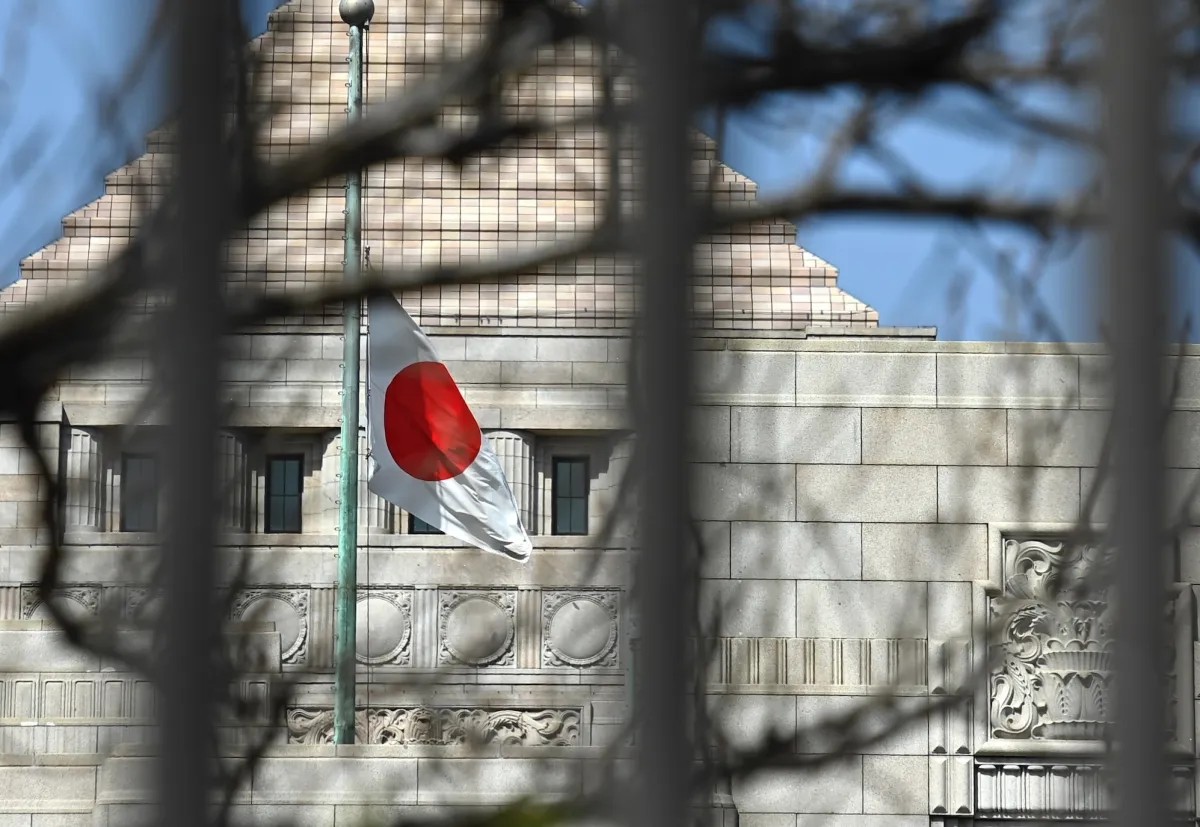
Jensen Huang didn’t come to Tokyo for the cherry blossoms. He came for the contracts.
For two days last week—July 15 and 16—the Nvidia chief was deep in the heart of Japan’s industrial machine. He had already courted Taiwan. He had spent time in South Korea. But Japan? Japan is different. This is where hardware meets muscle. This is where software gets dirty.
Huang left with a handshake across the board. From the nation’s chip-material suppliers to the robots that populate its factories, the deal was sealed. Nvidia is betting everything that the next era of AI won’t just live in the cloud. It will live on the factory floor. It will walk, lift, and build.
Thirty years ago, a mere $5 million investment from Sega kept a struggling Nvidia from folding. Now, the tables have turned. The roles are reversed. Japan’s industrial giants and Nvidia need each other to build what Huang calls the “physical-AI era.”
Japan’s Sovereign AI Play: Inside the Noetra Project
Here is the core question driving this pivot: How does Japan maintain its manufacturing edge without relying on American or Chinese tech stacks?
The answer is Noetra.
It sounds like a secret agency, but it’s actually Japan’s sovereign-AI initiative. The government didn’t leave this to chance. They gathered roughly 44 domestic firms. SoftBank, Sony, NEC, and Honda sit at the core. Tokyo is committing up to 100 trillion yen ($6.2 billion)—no, wait, 1 trillion yen ($6.2B)—over the next five years. They want homegrown “physical AI.” They want foundation models that speak to machines, not just humans.
They want to own the brain.
But who is building the nervous system? Nvidia, obviously.
The U.S. chip giant is constructing “a Vera Rubin AI factory.” This isn’t just a server room. It’s a massive data center slated to launch in 2028. It will house 13,750 Vera Central Processors and 27,500 Rubber Graphics Processing Units. The power draw? A staggering 140 megawatts.
Noetra will oversee this effort. The timeline is aggressive.
- 2026: A reasoning model focused heavily on Japanese-language nuances.
- 2028: An omni-modal version capable of handling text, images, video, and simultaneous audio.
- 2030: “Real-world Native AI” built specifically to run robots on the line.
“The next frontier of AI is in the industrial world, and this is a once in a generation opportunity for Japan.” — Jensen Huang
Japan wants independence. But that independence runs on American silicon. It’s a paradox, but it’s the current reality of global chip politics.
The Robotics Coalition: Why Japan Chose Cosmos 3
Why would companies like Fanuc, Yaskawa, and Kawasaki Heavy Industries join forces with a foreign tech giant? Because they don’t have a choice. The market demands it.
Nvidia unveiled Cosmos 3 Edge in Tokyo. This is the key differentiator. It’s a version of the Cosmos open-model designed to run directly on Nvidia’s Jetson Thor chips embedded inside the machines. It’s not cloud-bound. It’s local. It’s immediate.
Dozens of heavy hitters are lining up behind this. Hitachi. Fujitsu. NEC. Sony. SoftBank. Kubota. And the robotics group AIRoA.
Some are already testing shared control systems. Honda R&D and Omoron are building tools on top of the platform now. It’s a coalition born out of necessity and ambition. They are betting on Nvidia’s Cosmos models to reinvent modern manufacturing.
Japan invented the assembly line. Now, they want to reinvent it for an intelligent age.
Toyota and the Slow Roll of Physical AI
Cars are the obvious hook. And Toyota is all over Nvidia’s stack.
The company committed its next-generation vehicles to Nvidia’s Drive platform at CES in January 2024. The relationship extends far beyond the driver’s seat. Nvidia is helping simulate production lines. They are powering the software that runs the vehicles. They are feeding data to systems that read road traffic in real time.
But there’s a nuance here. A difference that matters.
Toyota’s advanced driver assistance systems steer and brake, but they still require a human driver. It’s conservative. It’s safe. Compare this to Waymo or Tesla, which are pushing for systems that require significantly less human oversight.
Toyota isn’t trying to win the robotaxi race today. They are trying to ensure their cars are intelligent enough for the infrastructure of tomorrow. They are working the whole room—supply chain, software, hardware—slowly but surely.
The Bigger Wager: Sovereignty and Scale
Why does this matter to anyone outside a boardroom in Yokohama?
Because Huang’s visit put physical AI at the absolute center of Japan’s industrial strategy. Tokyo is spending real money to back it up.
The demographic reality is harsh. Japan’s workforce is shrinking. The country aims to deploy 10 million AI-equipped robots across just 18 sectors by the year 2040. Public and private investment in physical AI is projected to hit $65 billion.
The long game is even bigger.
Japan’s AI Robotics Strategy, released in March, sets a target of capturing over 30% of the global AI robotics markets by 2040. That’s a market valued at roughly ¥20 trillion ($133 billion). The Ministry of Economy, Trade and Industry (METI) is funding a domestic foundation model. Noetra’s Nvidia-powered factory in Yokohama is the engine that will train it. Models with trillions of parameters need massive compute. They need scale.
And underneath it all? Sovereignty.
As the U.S. and China race ahead in large-scale AI, Tokyo is sweating. They want their own data. Their own compute. They want to reduce dependence on infrastructure they don’t control.
Jensen Huang stood beside Trade Minister Ryosei Akazawa on July 16. Prime Minister Sanae Takaachi joined via video. The Takaichi administration is chasing ¥370 trillion ($3 trillion) in investment by 2040. AI and semiconductors are the centerpiece.
Noetra’s factory is billed as “the world’s first national AI infrastructure.” It’s the clearest bet so far.
Japan wants independence. For now, that independence rests on the shoulders of American chips.
The Izakaya Factor
You can read the press releases. You can analyze the stock tickers. But the real story might be in the details that don’t make the slides.
In two days, Huang met nearly every name that matters. He sat with the CEOs of Toyota, Fanuc, and Yaskawa over lunch. He broke bread with dozens of supply-chain chiefs later in the week, skewers in hand, whisky pouring, in a Kanda izakaya bar.
These aren’t distant board meetings. These are relationships. Forged over food. Over drink. Over shared anxiety about the future.
Japan is trying to pivot from making things to making intelligent things. Nvidia is providing the brain. Japan is providing the body.
It’s a strange marriage. A necessary one. And one that will define the next decade of manufacturing.
Will Japan succeed? The data suggests yes. But the path is narrow. The competition is fierce. And the chips—literally and figuratively—are on the table.