You probably grab a power strip to plug in your monitor, tower, and router. It’s convenient. But the real reason that block of plastic matters has nothing to do with convenience. It’s about survival.
Your electronics are delicate. They operate on a tight tolerance. When voltage goes haywire, that tolerance vanishes. A good surge protector doesn’t just give you more outlets. It acts as a shield. It diverts dangerous energy away from your gear when the grid misbehaves.
If you ignore the quality of your power strip, you’re gambling with your hardware. Here is how these devices work, why voltage spikes happen, and what you need to know to protect your setup.
Understanding Electrical Pressure
To grasp why protection matters, you have to think like a plumber. Voltage is essentially electrical pressure.
In standard US households, that pressure sits at 120 volts. It’s the force pushing electric current through your wires. Think of a garden hose. Water flows because pressure is higher at one end than the other. Same principle. Electricity moves from high potential to low potential.
Everything works fine as long as the pressure stays steady. But sometimes, it spikes.
A power surge, also known as transient voltage, is a sudden, sharp increase in that pressure. It pushes well above the standard 120 volts. If that excess energy reaches your computer, it doesn’t just glitch. It cooks.
Inside your components, wires behave like the filament in an old light bulb. Too much current, and they heat up. They burn out. It’s an electrical burst. The insulation fails. The chip fries.
Surge vs. Spike: What’s the Difference?
Not all voltage jumps are created equal. The duration matters.
If the voltage increase lasts for three nanoseconds or longer, it’s classified as a surge. This is a sustained overload. It’s like water flowing through a hose at double the pressure for a second. It stresses the system.
If the jump lasts only one or two nanoseconds, it’s a spike. This is a lightning-fast shock. It’s violent and instantaneous.
Both are bad. A spike can puncture insulation instantly. A surge puts continuous strain on capacitors and other sensitive parts. Even if they don’t die immediately, they wear down. You lose performance. You face random crashes later.
How the Protector Steps In
So, what does a surge protector system actually do?
A basic power strip just passes current through. It connects your devices to the wall. No protection.
A real surge protector is smarter. It sits between the wall outlet and your gear. Under normal conditions, it lets power flow freely.
But when it detects voltage rising above the safe limit, it reacts. Fast.
The device diverts that excess electricity into the grounding wire.
Your home’s electrical system has a ground wire. It’s a safety path. It leads back to the earth. By shunting the extra voltage there, the surge protector keeps it away from your expensive components. It’s a controlled explosion. The energy goes into the ground instead of your GPU.
The main job of a surge protector is to divert transient voltage into the grounding wire before it reaches your electronics.
This is why the grounding wire in your outlet is non-negotiable. Without it, the surge protector has nowhere to send the energy. It’s useless.
Why You Can’t Ignore This
You might think your computer is tough. It’s not.
Modern chips are tiny. They run on low voltages. They don’t need much to break. A sudden jump in potential can bridge gaps that shouldn’t be bridged. It causes shorts.
And it’s not just lightning.
Switching heavy loads in your neighborhood can cause surges. A refrigerator compressor kicking on. An air conditioner cycling off. Even routine grid fluctuations can create spikes.
You don’t control the power grid. You can’t stop the weather. But you can control what happens when that power reaches your desk.
A cheap power strip is just a extension cord with multiple holes. It offers zero protection. It’s a fire hazard waiting for a spike.
A quality surge protector has internal components designed to absorb or divert that energy. It’s an insurance policy. Small cost. High stakes.
Check your setup. Is that strip grounded? Does it have a rating? If you aren’t sure, you’re already behind the curve. The next step is knowing which models actually work and which ones are just marketing fluff.
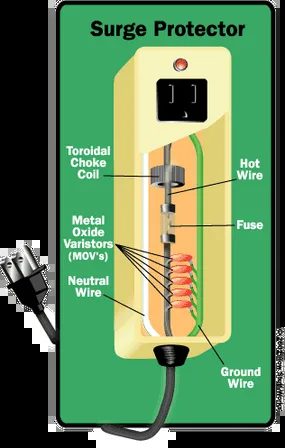
Most standard surge protectors rely on a single component, a metal oxide varistor or MOV to keep the device safe. It sits quietly between the hot power line and the ground line, waiting for problems to occur.
MOVs consist of a metal oxide material sandwiched between two semiconductors. These semiconductors are the key. They have a variable resistance that changes with voltage. Usually the resistance is higher. Electrons flow in a way that blocks current, so a surge protector keeps the surge protector out of your way.
But what happens when the voltage rises?
The behavior of the electrons changes. Resistance drops. Suddenly, a large amount of current conduct a massive amount of current. It diverts the excess voltage directly to the ground line. The hot line stabilizes. The MOV resistance increases again. It shuts off. This device works like a pressure valve and only opens if the pressure gets too high. This allows you to safely combat surges while continuing to power your device with a constant current.
Beyond the MOV: Gas Discharge Arresters
Not all shields use semiconductors. Some systems use a gas discharge arresters also known as a gas tube. They are commonly found in industrial environments, substations and inside transformers in office buildings.
Like the MOV, the gas tube run parallel to the power line. If the voltage is normal, the gas inside is a poor conductor. It is dormant. However, when an overvoltage occurs, the voltage becomes strong enough to ionize the gas. Ionized gases become efficient conductors. Excess current flows to ground until the voltage returns to normal. Then the gas stops conducting.
Parallel vs. Series Design
Both MOVs and gas tubes are designed for parallel circuits. They shunt the extra voltage away from the main path.
Some manufacturers believe that this is not the best way. They like the series circuit model. These installations isn’t dumped to the ground. Instead, it slows down as it passes through the hot wire. The device detects high voltages, temporarily stores the current and then gradually releases it.
Proponents of series protection argue that series protection is reacts faster. We believe it also avoids powering the building’s ground line, which could damage other sensitive equipment.
The Fail-Safe: Built-In Fuses
What happens if the surge is too big for the MOV or gas tube to handle?
Most quality surge protectors contain a built-in fuse. This is a simple resistor designed to allow current to flow up to a certain limit. If the current exceeds this limit, the resistor will heat up. The fuse is blown. The circuit breaks.
This is a disposable safety net. The fuse is destroyed during the process, saving the connected machine from catastrophic damage. If this fuse blows, the protector is dead.
抑制噪音:线路调节
浪涌是大尖峰。 但日常用电很少是完全清洁的。 线路噪声 会导致微小的、持续的波动,随着时间的推移,可能会降低性能。
具有线路调节 功能的基本浪涌保护器试图解决这个问题。 他们使用环形扼流线圈 。 这是一个用金属丝包裹的磁性材料环——电磁体。 当电流通过热线时,它会对线圈充电。 由此产生的电磁力抵消电流的小幅增加和减少。
结果是电源更加稳定。 这对您的电子产品来说更容易。 比原始的、嘈杂的电力更好。
Current spikes are just spikes of electric charge along the line. Voltage jumps. The current flowing into the socket increases. It’s a simple equation with chaotic causes in the real world.
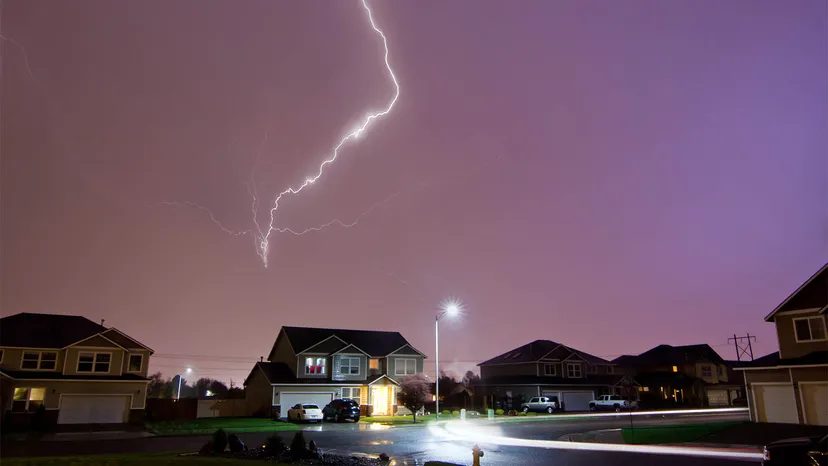
Lightning bears all the blame. It is also the least likely culprit. When lightning strikes nearby infrastructure—underground cables, utility lines, or overhead power lines—millions of volts are injected into the power grid. The surge is massive. It instantly overwhelms standard surge protectors. When a storm hits, your protector won’t save your TV or laptop. Unplug them. This is the only real safety net.
The real problem is more banal. High-power electrical devices are the usual suspects. Think elevators, central air conditioning or large refrigerators. These machines require large bursts of energy to start compressors and motors. This sudden need disrupts the steady flow of voltage in your home’s electrical system.
Air conditioning system voltage spikes are not as serious as a lightning strike. They are shorter. More common. But they are still severe enough to damage components. Sometimes the damage is immediate. Often, gradual wear destroys electronics years later. Most buildings are subject to these regular fluctuations on a daily basis.
Then there is the infrastructure itself. Faulty cabling. Utility company equipment failures. Downed lines. The network is a complex network of transformers and distribution lines. There are dozens of failure points between the power plant and your outlet. Human error, hardware aging, and environmental factors all contribute to uneven power flow. Surge voltages are inevitable in modern electricity distribution.
When to use surge protection
So, if lightning destroys protective devices and small surges occur constantly, which surge protector should you rely on? You need a device that is designed to handle the specific voltage spikes that your home faces. Pay attention to the clamping voltage and joule rating. A lower clamping voltage will react faster. A higher joule rating will last longer before failing.
For valuable electronics, a whole-house surge protector in the main electrical panel provides the best first line of defense. It catches the big hits before they reach your outlets. But it doesn’t save everything. Individual outlet protection devices are still needed for devices that remain plugged in at all times.
Not all extension cords are surge protectors. Many are just extension cables without a protection circuit. Check the label. Look for the UL certification mark. Read the specifications.
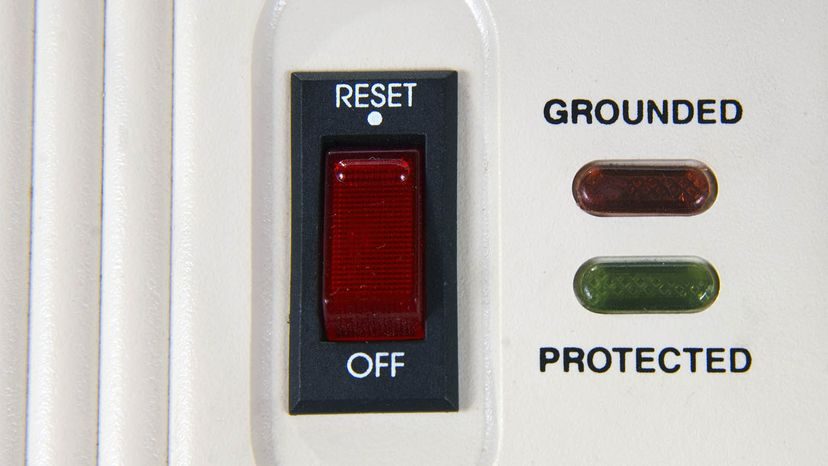
You also need to know when to replace them. Surge protectors have a lifespan. They degrade with each spike they absorb. Many have an indicator light that turns off when the protection is gone. If this LED is off, the device is dead. Replace it. Don’t wait until the electronics give out.
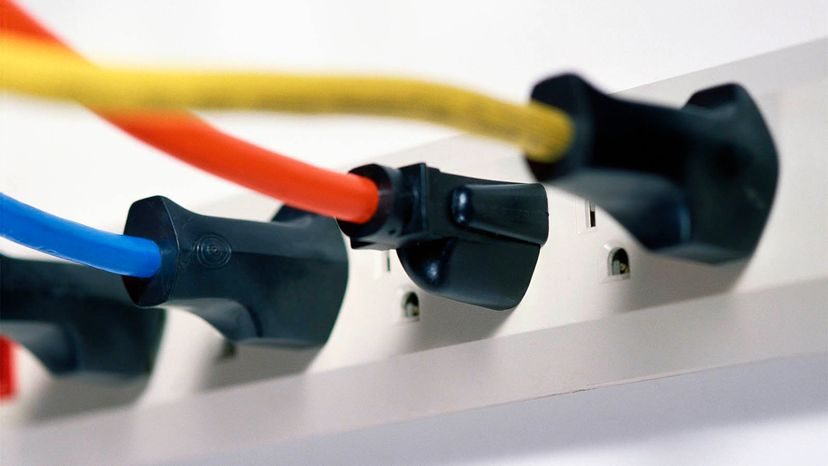
Why modern technology requires more than luck
If power spikes are real, why didn’t our grandparents’ tube televisions and rotary phones need surge protector? The answer in a nutshell is scale. Modern electronics are extremely microscopic compared to the solid-state components of the past. We’re talking microprocessors with razor-sharp margins. It requires a stable voltage to operate. A sudden spike? This is a death sentence for silicon.
So you have to ask yourself what you are really plugging in.
Make sure you use a surge protector for computer equipment. Your computer is a delicate ecosystem of voltage-sensitive components. A surge may not kill it immediately, but it will shortens its lifespan. Your hard drive may be wipe. The motherboard may be brick. It’s not worth the gamble.
Next comes top-of-the-line entertainment devices. If you are setting up a home theater, a surge protector can buy you time. You can extend the life of your receiver, Blu-ray player or expensive TV. A large surge can burn a capacitor in seconds.
But this is where people fail. Do not connect high-absorb devices to the surge protector. I’m talking about your coffee maker, your heater, your refrigerator or your vacuum cleaner. These devices consume large amounts of power. The MOVs (metal oxide varistor) in the protector wears out faster than you can blink. Plug it directly into the wall.
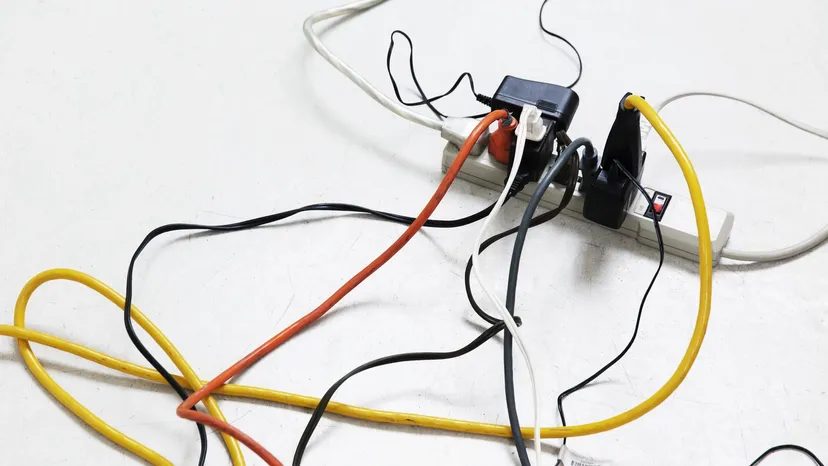
Never connect power strips together. This can cause overheating and fire. When these are chained together, the wrong voltage output is very dangerous.
MOVs Problems and Hidden Dangers
Surge protectors are not magic protectors. They work by absorbing excess voltage. But this absorption comes at a price. MOVs burns out after a significant surge. When the protector dies, the device is exposed.
That’s why you need indicator light. You know if your device is still working. No light? Probably dead. Change it.
Even if you bolted down all the outlets, you may still be vulnerable. Lightning and power grid problems do not only occur through power lines. They come through coaxial cables, phone lines, and Ethernet ports. If you have a cable box or expensive AV equipment, consider a cable surge protector. Coaxial spikes can cause just as much damage as power spikes. To ignore it is to leave the door open.
Surge protection level: What to buy?
Not all strips are created equal. The price range is ridiculous. Strips can be purchased at the grocery register for $5. Doesn’t offer anything at all. On the other hand, you have systems worth hundreds or even thousands to protect you from anything but a direct lightning strike.
It’s like insurance. decide how much coverage you can afford and how much you will lose if you lose your data.
For most people, each outlet requires a separate protector. Here’s the breakdown from the shelves:
- Basic power strip: These are just power strips with 5 or 6 outlets. Provides minimal protection. Good for lamp, bad for computers.
- Better power strip: Prices range from $15 to $25. You can get better ratings and some additional features. A solid middle ground for low-risk devices.
- Surge Station: These are more powerful units that sit under the desk or on the floor. Provides excellent voltage protection and line regulation. Many products have built-in USB ports and switches. Prices start at around $30, but can exceed $100 for advanced models.
- Uninterruptible Power Supply (UPS): This is the heavy hitter. Combines surge protector and battery backup. It converts alternating current to direct current, stores it and converts it again. Even if the power is goes out, the computer stays on. It takes a few minutes to save and shut down your work. It also removes line noise. Expect to pay over $150.
Note the “relocatable power tap”. Cheap strips often use this label to avoid liability. It looks exactly like a surge protector. But they are only splitters. There is no surge protector. Please read the package. If it doesn’t say “surge protector”, it doesn’t.
Here the nuances differ. UPS are great, but don’t rely solely on them. It will absorb surges will be absorbed, but the device itself may fry in the process. *Use a basic surge protector before the UPS. Protect the UPS from itself.
Once you’ve chosen your level of protection, you need to know which specs are really important. That’s where the ratings comes from.
Underwriters Laboratories rating
When you look at the specs, the numbers mean nothing unless you know who certified it. This is where Underwriters Laboratories (UL) comes into play. UL is the gold standard for safety testing in the United States. However, not all UL ratings are the same.
You should look for the UL 1449 standard. This is a specific rating of surge protectors. If a product is not list UL 1449, it has not been tested for surge performance. It might be safe from fire, but it won’t stop a power surge.
UL 1449 there are three key indicator light:
- VPR (Voltage Protection Rating): This indicates the maximum voltage that the device can see during a surge. The lower the better. Look for a VPR rated at 400 volts or less. If it’s higher than that, your gear can still be brick.
- Clamp Voltage: This is the voltage at which the surge protector starts to divert excess energy. It should be shut down to the rated mains voltage (120V in the US). The lower the clamp voltage, the faster the response.
- Surge Current Rating: This measures the amount of current that a device can absorb during a single event. Measured in kiloamperes (kA), higher numbers mean better protection.
Ignore marketing terms like “digital protection” and “gold-plated contacts”. It’s all fluff. Look for the UL 1449 label and VPR. If the manufacturer can’t explain VPR, don’t buy it.
There is also a new standard IEC 61643-11 which is common in Europe and increasingly used in products around the world. They use similar metrics but are tested differently. Select this if you want to bring gear.
Most consumers stop at the price tags. But a poorly rated $10 comic is worse than useless. It gives you a false sense of security. You need to know exactly what you are buying. The next section explains how to read these specifications without touching your eyes.
The market is full of cheap plastic boxes that promise the world but deliver nothing. Buying a surge protector can feel like navigating a minefield of low-value products. You can spend hours researching a particular model, but you can also find the right device today by looking for a few key indicators.
Price is the first filter. If the device costs less than $10, walk away. At this price point, manufacturers use basic and low-cost metal oxide varistors (MOVs) with very limited functionality. It might handle small flickers, but it fails miserably at real peaks.
High price is not the same as high quality. You need to check the hard data. In particular, check the Underwriters Laboratories rating. UL is an independent, non-profit organization that tests electrical safety. If a plug board doesn’t have a UL mark, it’s probably junk. It is more likely that it contains no protection components at all. If it does have MOVs, they are probably inferior. Cheap MOVs can have plastic housings that can overheat and cause a fire.
Even UL certified products can be mediocre. You are guaranteed minimum safety, but not necessarily the best performance. Make sure the label clearly says Transient Voltage Surge Suppressor. This ensures that it meets the strict performance standards UL 1449. Many of the extension cords on the shelf are UL listed, but only for their function as extension cords. There is no internal surge protection equipment.
No equipment is bulletproof. Even the most expensive equipment has its limits. Experts discuss the best approach to power management. Manufacturers claim that other technologies are flawed. This is a confusing area.
Description of surge protector classification
When you find a unit listed, check the fine print. You need to know the specifications before paying.
- Clamp Voltage : This figure represents the threshold at which the MOV bypasses excess power to ground. The lower the better. UL defines three protection levels: 330V, 400V and 500V. Over 400 V, too much voltage enters the device.
- Energy Absorption/Dissipation : Measured in joules, it indicates how much energy the strip can absorb before breaking. The higher the better. Aim for at least 200-400 joules. If you need serious protection, go for 600 joules or more.
- Response Time : These devices are not immediate. They have a small delay before they react. A longer delay means that the electronics can endure the surge longer. Look for devices with response times below 1 nanosecond.
A guarantee is important when you’re spend real money. Better surge protectors often have a equipment guarantees. If the device cannot stop the surge and fries your laptop, the manufacturer will replace the laptop. Check the terms.