
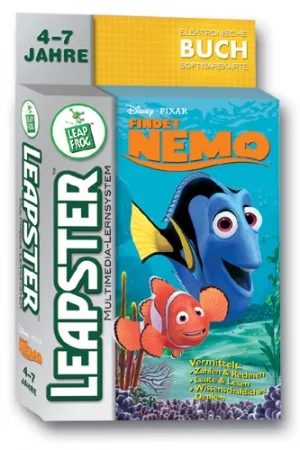
Nemo is gone. The little clownfish has vanished into the deep, and suddenly, a group of clever kids has the keys to bringing him home. This isn’t just another cartoon tie-in. It is a genuine educational tool disguised as an adventure.
The game “Findet Nemo” merges the familiar underwater journey with core academic tasks. It targets children aged four to seven. That is a critical window for developing foundational skills. The app demands reading comprehension, basic arithmetic, and logical reasoning. You do not just watch the story. You solve it.
Why This Approach Works for Early Learners
Most children in this age bracket are transitioning from play to structured learning. They need engagement, not drills. By embedding math and reading problems inside the narrative of finding Nemo, the pressure disappears. The child wants to help the characters. The learning becomes a means to an end, not the end itself.
This specific integration addresses a common pain point for parents: getting kids interested in homework without a fight. The underwater setting provides a consistent theme. The tasks vary in difficulty, ensuring the child stays in the flow state rather than hitting a wall of frustration.
What Exactly Are the Kids Doing?
The core mechanics are straightforward but effective. Players must complete specific types of tasks to progress:
- Reading comprehension: Users answer questions about the story to unlock new areas or items.
- Math problems: Simple addition and subtraction challenges appear as obstacles or puzzles.
- Understanding logic: Puzzles require interpreting visual cues or sequences to advance the plot.
These are not random quizzes. They are gatekeepers. You cannot move forward until you demonstrate understanding. This forces active participation. Passive viewing is replaced by active problem-solving.
Timing Matters
The release coincides perfectly with the lead-up to summer holidays. Parents are often looking for activities that keep young minds sharp while minimizing screen-time guilt. This app offers a compromise. It is digital, yes, but it reinforces school-readiness skills. It serves as a practical warm-up for the upcoming school year, even if that feels distant.
For families navigating the age of four to seven, the value lies in the seamless blend of entertainment and education. The technology behind the interface is designed to be intuitive for small hands. The content aligns with early childhood curriculum standards without feeling like a classroom.
The quest to find Nemo continues. Each solved equation brings the little clownfish one step closer to safety. The real question is whether your child will notice they are practicing math, or if they will just be too busy saving their new friend.
Learning to Dive: The Leapster’s Nemo Update
Finding Nemo isn’t just a movie anymore. It’s a lesson plan.
LeapFrog updated the classic story for its Leapster multimedia learning system. The goal? Turn a chaotic ocean adventure into a structured exercise in literacy and numeracy. Marlin and his son aren’t just swimming away from predators. They are practicing counting, reading comprehension, and sensory awareness.
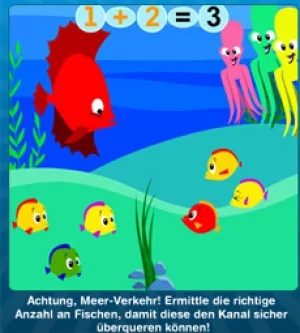
The gameplay is specific. At one point in the story, the characters encounter a dangerous stretch of water. A school pilot needs help. The player must count and add a specific number of fish. Get it right, and the small fish cross safely. Get it wrong, and the lesson stalls.
Reading skills get a workout too. There is a bubble-screen game hidden in the narrative. Nemo is behind a curtain of air. Each bubble contains a character from the film. The narrator asks questions. Answer correctly, and the bubble pops. The bubbles keep bursting until Nemo reveals himself.
Hardware and Software Integration
The Leapster is portable. You can take it on car rides. You can take it on train rides. The device combines games with educational content. The interface is simple enough for young children to handle without constant adult supervision.
It uses swappable game cards. LeapFrog has built a large library of software covering various topics. The cards slide in easily. There is no complicated setup required.
The device features a touchscreen. You can use a stylus to navigate. You can also use directional arrow keys. The stylus is key here. It requires precision. That precision helps develop fine motor skills. It prepares children for the physical act of writing.
Beyond Basic Entertainment
These games do more than teach facts. They train reaction speed. They build memory. They require dexterity.
The technology is straightforward. The hardware is rugged. The software is content-heavy. It is a tool for learning disguised as a toy.
Is it effective? Parents seem to think so. Children seem to enjoy it. The line between play and study blurs. That is the point.
The ocean is dangerous. The learning is safe.

How Nemo’s Underwater Friends Make Learning Stick
Every session starts with a clear walkthrough. The Leapster doesn’t just throw kids into the deep end. It explains the mechanics first. Get it right? You get praise. Mess up? The game doesn’t punish. It uses animations to guide you toward the correct path. It’s gentle correction, not failure.
Difficulty isn’t one-size-fits-all. Kids pick the level that fits their brain. They adjust the speed too. Fast? Slow? You decide. This isn’t passive watching. It’s active discovery. The Leapster lets children uncover new facts or reinforce what they already know. They build the knowledge themselves.
Then there’s the hook: Nemo. Millions of moviegoers loved him. Now he’s in the learning game. The lovable sea creatures turn education into play. It’s not a chore. It’s fun.
Curious about the system? You’ll find more details on the Leapster multimedia learning platform. The tech is solid. The appeal is undeniable.