

You pick up the phone. You dial a number, or tap a contact from your smartphone’s address book. You hit the green button. The call connects.
It takes less than a second.
To you, it’s magic. To the industry, it’s just standard protocol. But most people have no idea what’s happening behind the scenes to make that connection possible. Germany’s telecommunication infrastructure is complex, layered, and far from simple.
We often take the reliability of the fixed-line network and mobile services for granted. Until it fails. Which is why understanding the basics of how telephone calls are routed, billed, and maintained matters. Especially now.
“The majority of users have no idea what happens between the press of a button and the ringing of an earpiece.”
This isn’t about nostalgia for rotary dials. It’s about the modern reality of voice transmission in Germany. How does a signal jump from your handset to a stranger three cities away? Why do some calls drop while others stay crisp? And what role do legacy systems play in a 5G world?
Let’s pull back the curtain. No jargon. Just the facts.
How the German phone number structure actually works
The German telephone network isn’t just a random collection of digits. It is a hierarchy. Specifically, it is broken down into distinct types of phone numbers, each serving a different slice of the population and geography.
The logic behind local area codes
Most calls you make within Germany start with one of those leading zeros: 02xx, 03xx, 04xx, 05xx, 06xx, 07xx, 08xx, or 09xx. These aren’t random. They are regional area codes (Ortsnetzkennzahlen).
There are more than 5,000 distinct area codes in Germany. That is a lot of granularity. After the area code, you get the subscriber’s individual number. So, if you see a number starting with 030, you know you are dealing with Berlin. If it starts with 040, it’s Hamburg. The structure is rigid. It tells the switching centers exactly where the call needs to go before the final digits even matter.
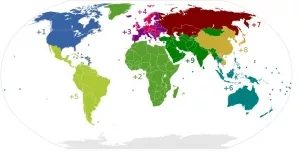
Dialing from abroad and neighboring countries
If you are outside of Germany, those leading zeros disappear. You don’t dial 030 for Berlin. You dial 0049 (the international exit code plus Germany’s country code).
Knowing which country code to use prevents billing shock.
This applies to everyone with a German line. But what about your neighbors? The rules are similar, but the codes differ.
- Switzerland: 0041
- Austria: 0043
You might know these if you’ve ever visited or made international business calls. For other countries, you don’t memorize the code. You look it up online. The system relies on databases, not human memory, to route calls across borders.

The structure behind German phone numbers is a rigid code. It tells you exactly where a call originates and what it might cost. But that clarity is disappearing.
Mobile Number Clarity Is Gone
Five specific blocks are reserved for mobile networks. Look closely at a mobile prefix and you will see the pattern. It starts with zero. Then comes a service digit like 17 or 16. Finally, there is the block identifier.
In the past, this sequence revealed your carrier instantly. That logic no longer holds. Porting rules have blurred the lines between providers. You keep your number when switching companies. The old prefix-based assumptions are dead.
Still, knowing the provider matters for billing. Flat rates often target specific networks. If you want to check the current owner of a mobile line, dial 01805-001133 from a landline. The service isn’t free. But it saves you from accidental overage charges if you have a restricted contract.
For most users, all-net flats make this distinction irrelevant. Why bother with porting checks when you can call anyone for free?
The Cost of Special Numbers
Special rate numbers follow the same structural logic. They split into a prefix, a service code, and a tariff key. But here the stakes are financial.
| Prefix Type | Cost Structure | Common Use Case |
|---|---|---|
| 0800 | Free for caller | Customer service hotlines |
| 0900 | Premium rate | Voting, adult content, diagnostics |
| 0180- / 0190- | Variable per minute | Information services, chatlines |
The 0800 prefix is the only truly safe bet for callers. These numbers are free from the phone.
The 0900 prefix is a different story. These are premium services. Companies charge high rates per minute. You pay for access to information or entertainment. The cost can add up quickly.
Numbers starting with 0180 or 0190 occupy a middle ground. They are often charged at standard rates but sometimes carry surcharges depending on your contract. Always check the fine print before dialing.
Short Numbers for Emergency and Admin
Short numbers exist for speed. They bypass the standard routing delays. The most critical ones are reserved for life-saving interventions.
112 is the European emergency number. It connects you to police, medical services, and fire departments. This number works across borders in the EU. It is universal.
110 serves only one purpose in Germany. It connects exclusively to the police. Fire and medical calls on 110 are automatically redirected.
Bureaucracy has its own short codes. The unified government service number is 115. It has been the standard for administrative inquiries for eight years. Use it for permits, registrations, and general public inquiries.
Social and health services use the 116 range. The specific three-digit extension determines the service.
- 116 117 connects you to the on-call doctor service outside regular hours.
- 116 117 also covers the telephone seclusion service.
- 118 xx is reserved for directory assistance
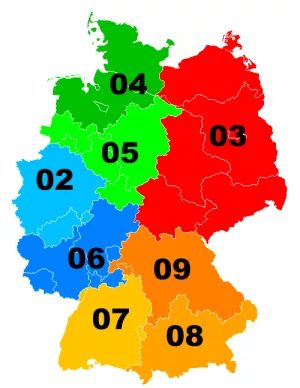

How Germany’s Area Codes Map to the Bundesländer
You probably already have a sense for where a phone call is coming from just by looking at the number. It’s not magic. It’s the two-digit prefix. In Germany, numbers starting with 02xx through 09xx are tied to specific regions. You can almost guess the state of origin without even picking up the receiver.
The logic here isn’t about neat borders. It’s about geography.
09xx covers parts of northern Bavaria, Hessen, and Baden-Württemberg.
08xx is strictly southern Bavaria.
07xx hits Bavaria, Baden-Württemberg, and the southern Palatinate.
06xx is a mix: Bavaria, Baden-Württemberg, Hessen, Rhineland-Palatinate, and Saarland.
05xx points to Hessen, Lower Saxony, or North Rhine-Westphalia.
04xx is the north: Lower Saxony, Bremen, Hamburg, and Schleswig-Holstein.
03xx covers the east and central north: Lower Saxony, Thuringia, Saxony, Saxony-Anhalt, Brandenburg, Berlin, and Mecklenburg-Vorpommern.
02xx lands in Hessen, Rhineland-Palatinate, or North Rhine-Westphalia.
Why the 02xx Starting Point Exists
Notice the gap before 02xx. There are no area codes starting with 01xx for regular landlines. That range is reserved. It’s set aside for service numbers, special rates, call-back services, and mobile networks.
This creates a clear hierarchy. The 02xx codes aren’t just random. They were assigned based on physical location on the map. They don’t follow state lines perfectly. The distribution shows how the telecommunications infrastructure grew organically rather than politically.
If you see a 02xx number, you’re looking at the western part of the country, specifically the mix of Hessen, Rhineland-Palatinate, and North Rhine-Westphalia. It’s a dense area. The networks are old. The codes are established.
Why This Matters for Security
Knowing the region helps. It’s useful context. But it’s not a guarantee. The area code tells you where the exchange is located. It doesn’t tell you who owns the line.
Scammers know this. They spoof numbers. They mimic local prefixes to gain trust. If you get a call from a 03xx number while you’re in Bavaria, it might be legitimate. It might also be a robot trying to trick you into pressing a button.
You can’t rely on the first two digits for identity. You need the full number.
How to Verify an Unknown Caller
If the caller ID shows a number you don’t recognize, don’t guess. Look it up.
Use a caller ID service. Enter the full number. You’ll get back the registered location or the service type. This step is critical. Fraud attempts are increasing. People are being phoned by bots pretending to be banks, tax offices, or tech support.
The 01xx range is the giveaway. If it starts with 01, it’s not a person in a house. It’s a service. Or a mobile. Or a scam.
The Bigger Picture
The German numbering plan is a relic


