
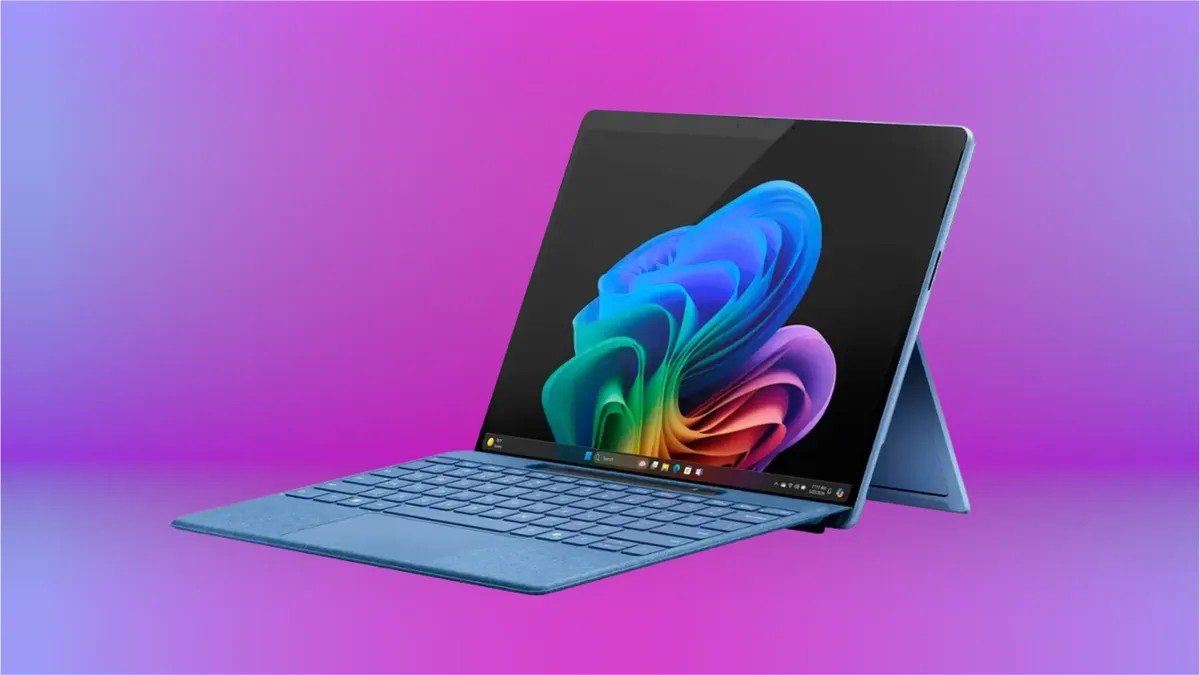
Two years ago. Microsoft rolled out Copilot Plus PCs with the pomp of a royal coronation. The Surface Pro and Surface Laptop were the kings and queens. Today? The crown fits a little looser. Tuesday’s announcement added new models to the mix, cheap ones that don’t meet Microsoft’s own criteria for the Copilot Plus badge. Why the hypocrisy? Money. They wanted to get the starting price under $1,000 again.
Everything costs more now. We know this. RAMageddon hit us like a freight train, driving up the cost of memory globally. Last year the cheapest Surface Pro started at $1,049. The Laptop was worse at $1,149. Those came with 16GB of RAM, the standard for performance. Microsoft looked at Apple’s cheaper options and the spiraling component costs. They decided 16GB was too expensive.
So they cut it in half.
The Math
Here’s the new bottom rung of the ladder:
- Surface Pro 12″ with Snapdragon X Plus
- Surface Laptop 13″ with same chip
Both come with 8GB of RAM. Both have a 256GB SSD.
The price drop is $200. The Pro lands at $849. The Laptop sits at $949. Not bad numbers for entry points. But notice what isn’t new: the bigger screens. The 13-inch Pro and the larger Laptop models keep their 16GB baseline. Unchanged. Untouched by budget constraints.
Microsoft calls this “another entry point for everyday productivity.”
It’s not a replacement for the powerful machines. It’s an option. For people who mostly browse the web and reply to emails. Maybe stream Netflix. But let’s call it what it is: a compromise.
Not a Copilot PC
You want the AI marketing halo? You won’t get it here. These new cheap machines aren’t Copilot Plus PCs. Confusing, right?
Look at the specs. The processor, the Snapdragon X Plus, has an NPU (Neural Processing Unit) that handles 45 TOPS. That checks the box. The 256GB drive? That hits the minimum storage requirement. Everything passes except one thing: memory.
Microsoft drew the line at 16GB.
Their own rules say local AI needs heavy lifting power, which requires memory. These devices only have 8GB. So they don’t qualify. Microsoft is effectively saying “Our AI future costs extra” while trying to sell you the past as the present.
Fixing Windows on the Fly
Can you run modern Windows on 8GB? Microsoft thinks yes. They are tweaking the OS to be stingy with resources. They claim to be optimizing based on how you act. Apps you use daily load faster, sitting quietly in the background. Apps you ignore? Isolated. Windows can kick them out to reclaim space.
It sounds smart. Efficient, even. But have they fixed the fundamental problem or just swept the dust under the rug? I wonder why a supply shortage of this scale was required to make Windows stop being a resource hog.
Should I buy it?
I wouldn’t. Maybe. If your budget is strictly locked and you refuse to go higher, fine. But 8GB feels archaic. Open ten browser tabs. Launch a document. Try to multitask. The system will sputter. Windows has to read data from the drive instead of the RAM. Drives are fast these days, sure, but RAM is lightning. This gap will feel.
The machine works. The price is tempting. But the experience? That remains to be seen. And honestly, do we really need another reason to watch a loading spinner spin?