Noise.
It’s the default state of the digital landscape right now. We drown in data. We scroll through endless feeds seeking meaning and finding only engagement bait.
The self-help and esoteric sectors have followed the same broken model as everyone else. You’ve seen the apps. Generic horoscopes recycled from 2019. Tarot reads that could apply to anyone. Content stripped of emotional weight, packaged for scale.
Most of these platforms are designed to churn content. They optimize for impressions. They ignore the user as a human being.
“We don’t need another prediction engine. We need an emotional mirror.”
That’s the core premise here. Quintessence Way is building against that grain.
This isn’t another app where you input your birthday and get a cookie-cutter daily tip. The architecture is flipped. It prioritizes depth over breadth.
The Personalization Gap
Let’s be blunt. Current market leaders treat personalization as a marketing term, not a technical challenge.
You fill out a questionnaire. They tag you as “Type A” or “Leo Rising.” Then they serve you content that fits the label, ignoring your actual context.
Quintessence Way rejects this taxonomy.
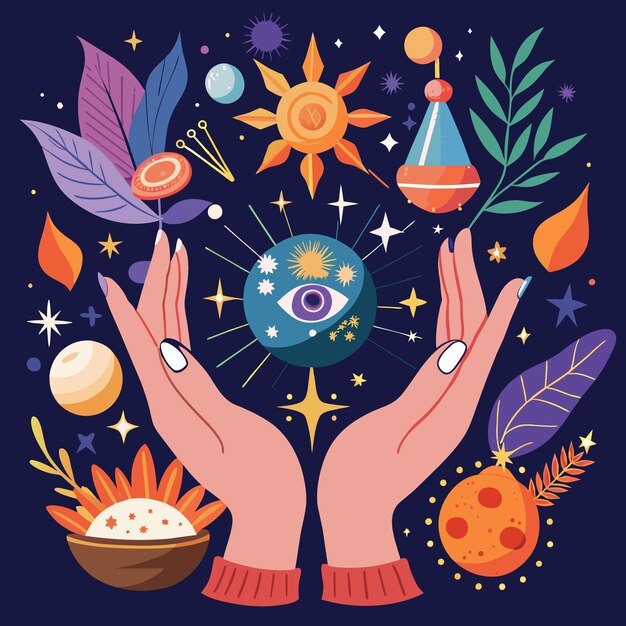
The platform builds immersive environments. The goal isn’t just to tell you what will happen. It’s to help you understand how it feels.
The focus shifts to three pillars:
– Emotional relevance
– Relationship dynamics
– Self-reflection loops
Instead of a static reading, the experience evolves. You don’t just get a report. You go through a journey.
This matters. Because users don’t churn because they dislike the topic. They churn because they feel invisible.
Why This Architecture Holds Water
Traditional astrology platforms are static. The content is written once, distributed infinitely, and decays in value daily.
Retention is low because the connection is superficial. Once you’ve read “mercury retrograde might cause miscommunication,” you’re done. The dopamine hit is gone.
Quintessence Way aims for recurring emotional insight.
The system uses compatibility analysis and symbolic interpretation not as one-off outputs, but as inputs for a continuous dialogue. The user returns not for a fact. They return for clarity.
It’s a subtle difference.
It moves the value proposition from information to processing. You’re paying for a framework to make sense of your chaos. Not for a prediction of it.
Is astrology even the point here? Not really. It’s a vehicle for psychological projection and self-exploration.
The Long-Game Ecosystem
The business model reflects this shift.
We aren’t looking at one-off purchases. We are looking at a subscription to an emotional ecosystem.
The features support long-term retention:
1. Evolving personalized experiences that adapt to your life stages.
2. Relationship-centered content that looks at dynamics, not just individuals.
3. A progression system for your own self-knowledge.
This is a sticky product. By definition. If you stop engaging, the model fails to reflect you accurately. It rewards consistency.
Critics might say it’s manipulative.
Maybe. But so is a social media algorithm designed to keep you angry. The difference is the intent. This system claims to offer clarity rather than conflict.
The interface combines digital storytelling with compatibility analysis. It feels less like a spreadsheet and more like a guided meditation session that knows your name.
The Verdict
Quintessence Way positions itself at the intersection of self-development and digital personalization.
It acknowledges a simple truth: people are lonely for meaning.
They don’t want to know if they’ll win the lottery. They want to know if they are being heard.
This platform bets that the next wave of growth in the wellness/tech space comes from emotional AI. Not generative AI for text. AI for empathy.
The bar is high.
If they pull off the nuance, this disrupts the entire category of generic horoscope sites. If it stays surface level, it’s just another skin for old algorithms.
For now, it looks promising. The tech stack is built for depth.
We’ll see if the output matches the promise.
The question remains: when you look for guidance, do you want to be right?
Or do you want to be understood?