
The tech industry is currently gripped by an unprecedented wave of optimism regarding Artificial Intelligence. Executives speak of limitless productivity, and companies are pouring billions into infrastructure. Yet, beneath this corporate euphoria lies a growing, palpable hostility from the general public.
Recent polling reveals a stark reality: AI is becoming increasingly unpopular. In the United States, favorability ratings for AI are trailing behind much more controversial entities, and Gen Z—the demographic most likely to use these tools—is showing rising levels of anger and hopelessness toward the technology.
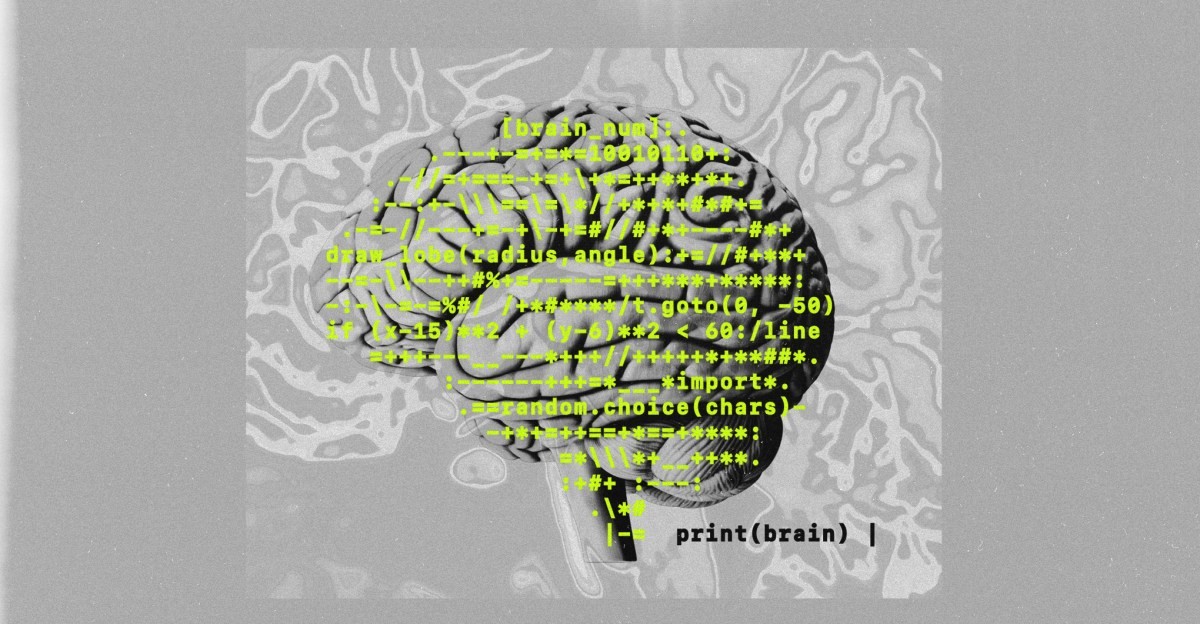
This disconnect isn’t a simple misunderability or a failure of marketing. It is a fundamental clash between two different ways of perceiving reality: “Software Brain” and the lived human experience.
Understanding “Software Brain”
To understand why the tech industry is so bullish on AI, one must understand the concept of “Software Brain.” This is a cognitive framework where the world is viewed as a collection of databases, algorithms, and loops.
In this worldview:
– Zillow is a database of houses.
– Uber is a database of cars and riders.
– YouTube is a database of videos.
If you view the world this way, it seems logical that if you can control the data, you can control reality. This mindset has driven the modern economy, but it has a critical blind spot: it assumes that everything can be digitized, structured, and automated.
The Collision of Code and Reality
The friction arises because human existence is not a database. The tech industry often operates under the assumption that if people dislike AI, they simply need better “marketing” or more seamless integration. However, you cannot “advertise” your way out of a fundamental experience.
The “Software Brain” approach fails when it encounters systems that are inherently non-deterministic or messy, such as:
1. The Legal System
There is a tempting parallel between software engineering and law. Both rely on precedent, structured language, and “libraries” of existing rules to guide behavior. This leads many in tech to believe that the law can be “solved” by AI—that we can replace lawyers with automated arbitration systems.
However, while code is deterministic (if X, then Y), the law is built on ambiguity. The heart of the legal system is the ability to argue gray areas, interpret intent, and navigate nuance. A computer can process a statute, but it cannot navigate the human complexity that makes a legal outcome “just.”
2. Governance and Society
The attempt to apply “Software Brain” to government—treating social policy like a series of data tweaks—often results in failure. Society is not software; it is a collection of unpredictable, emotional, and autonomous human beings. When tech leaders suggest that AI will “wipe out all jobs,” they are viewing the workforce as a series of inefficient loops to be optimized, rather than a foundation of human dignity and livelihood.
Why the Public is Pushing Back
The growing resentment toward AI stems from the feeling that the technology is “flattening” the human experience.
When businesses use AI to automate entry-level white-collar work or use consulting-style AI to justify mass layoffs, they are treating human roles as mere data points to be pruned for efficiency. For the average person, this doesn’t feel like progress; it feels like being reduced to a line of code in someone else’s database.
Furthermore, the “Smart Home” era proved that automation isn’t a universal desire. While tech giants have spent decades trying to automate every facet of domestic life, most people remain largely indifferent to it. We do not naturally yearn to live in an automated loop; we yearn for agency and connection.
The core issue is not a lack of “social permission” or better branding; it is a fundamental mismatch between how tech companies see the world and how people actually live in it.
Conclusion
The “Software Brain” is a powerful tool for building efficient systems, but it is a flawed lens for understanding humanity. Until the tech industry recognizes that the real world cannot be fully captured in a database, the gap between technological advancement and public acceptance will only continue to widen.