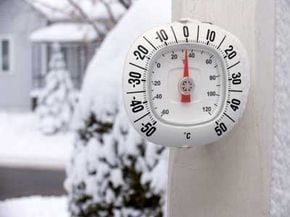
Natalie Merchant might get the chills just thinking about winter, but for the rest of us, checking the forecast doesn’t require bundling up before peeking out the window. The weather is simply the state of the atmosphere, a massive gaseous layer wrapping our planet. Solar radiation, geography, and even urban heat islands influence it. Measuring these atmospheric phenomena allows meteorologists to make educated guesses about what’s coming next.
Temperature and air pressure drive air circulation. Hot air rises. Cold air sinks. This relationship dictates cloud formation and wind patterns. We use thermometers to track temperature and barometers for pressure. Moisture is another critical factor. A hydrometer measures humidity, while rain collectors quantify precipitation. An anemometer determines wind direction and speed.
You don’t need professional gear to stay informed. Modern wireless indoor/outdoor thermometers bridge the gap between your living room and the elements outside.
Why Temperature Matters
Our lives hinge on temperature. It tells us how much to heat a home or how long to cook chicken to avoid food poisoning. It helps diagnose fevers and decide if a scarf is necessary.
Classic bulb thermometers rely on liquids that expand or contract with temperature changes. Mercury is common here because it resists boiling and freezing. As it warms, the liquid rises in a sealed tube. Lines on the glass mark specific temperatures.
Bimetallic thermometers use two bonded metals that expand at different rates when heated. These often appear in ovens or refrigerators, triggering electric circuits at set points. Electric thermometers use thermoresistors, tiny computerized parts that change electrical resistance based on heat.
The problem with traditional setups is location. A thermometer on your dresser reads the room, not the porch. You can’t measure outdoor conditions from indoors without some help.
The Wireless Advantage
Wireless transmitters solve this. A wireless indoor/outdoor thermometer lets you check both temperatures from bed. The device has an indoor unit and an outdoor sensor. The outside sensor transmits data to the main display. It works similarly to a baby monitor, receiving signals from one location and displaying them in another.
These remote sensors typically operate within a 100-foot range. Many models support additional sensors to monitor multiple zones. For around $20, you can track temperatures in the garage, basement, and yard. All you need is fresh batteries.
No more rolling out of the warmth to check a window. The data comes to you.
Weather Forecasting Devices

Detectives piece together past crimes. Meteorologists predict future ones. The tools are similar, but the stakes involve tomorrow’s commute, not a criminal’s alibi.
We already looked at thermometers. Now let’s look at the rest of the evidence kit. How do these devices actually measure what’s happening in the air?
Measuring Atmospheric Weight
Barometers don’t just guess. They measure air pressure using a glass tube and mercury. It’s a simple setup. An airless tube sits in a pool of mercury. The top is sealed. The bottom is open to the atmosphere.
Air pushes down on the mercury pool. This pressure forces the liquid up the evacuated tube. Think of it like a scale. One side has the weight of the atmosphere. The other side has the rising mercury. The height of that column tells you the current pressure. High pressure usually means clear skies. Low pressure? Rain is likely on the way.
Gauging Moisture Levels
Humidity matters. If you want to know if the air feels sticky or dry, you need a hygrometer. There are a few ways to do this.
A psychrometer is the classic approach. It uses two thermometers. One bulb is dry. The other is wet. You swing it around to move air over both bulbs. Evaporation cools the wet bulb. The difference between the two temperatures reveals the relative humidity.
Then there is the dew point hygrometer. It uses a cooled metal plate. You cool it until condensation forms. The temperature at that exact moment is the dew point. It’s the temperature at which air becomes saturated.
Electrical hygrometers take a more modern route. They use semiconductors. Moisture changes the electrical resistance. The device measures that change to calculate humidity. It’s fast. It’s precise.
Mechanical versions still exist. They use human hair. Hair expands when humidity rises. It shrinks when it drops. The machine grips the hair and registers the tension changes. It sounds archaic. It works.
Catching the Wind
Wind speed and direction are tracked together. A weather vane points the way. An anemometer measures how fast.
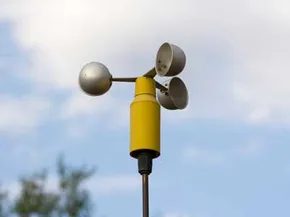
Traditional anemometers use cups. They spin in the wind. The faster they spin, the faster the wind blows. Some use propellers.
Sonic anemometers are more advanced. They don’t have moving parts. They shoot ultrasonic waves between transducers. These are mounted inches apart. Wind affects the speed of these sound waves. If the wind blows with the wave, it arrives faster. Against the wind, it slows down. By measuring these time differences, the device calculates speed and direction. It’s accurate. It requires no maintenance.
Collecting Precipitation
Rain collectors are straightforward. A simple gauge is just a measuring cup left outside. You read the water level after a storm.
Advanced models automate the process. They record precipitation mechanically. Once a certain amount accumulates, a mechanism tips or empties the collector. It resets. It starts measuring again. This allows for continuous data logging without human intervention.
These standard tools give you the basics. But professional meteorologists need more. They need reliability across harsh conditions. They need data that integrates with massive computer models.
Professional Weather Stations
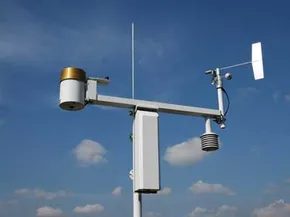
If you are ready to spend between $2,000 and $4,000 on meteorology gear, you are moving past hobbyist territory. You are now looking at professional weather stations. These are not just toys with better sensors. They are serious data collection tools designed for accuracy and integration.
Modular vs All-in-One Designs
There are two main types of professional stations. You have modular systems. These consist of mounted clusters of separate electronic sensors. You get the standard thermometer, barometer, hygrometer, anemometer, and rain collector. Some models add ultraviolet light sensors, solar radiation detectors, and visibility sensors.
Then there are all-in-one designs. These bundle all sensors into a single streamlined housing. It is a trade-off. Modular allows for customization and easier replacement of individual components. All-in-one offers a cleaner look and potentially fewer wiring issues. Which one you choose depends on your specific data needs and installation constraints.
Beyond the Hardware
A professional system involves more than just high-tech assembly. It includes the programming and equipment needed to catalog statistics. You are not just seeing numbers. You are analyzing them. Users can program these systems to alert them of hazardous weather conditions. This turns raw data into actionable intelligence.
The data export options are robust. You can network the station with other stations. You can integrate it into existing local area networks. The data can be streamed to multiple recipients simultaneously. This is not a one-way street. It is a hub for information.
Mobility and Use Cases
Just because you dropped a few grand on your weather station does not mean you have to mount it on top of a building. Portable versions exist. Vehicle-mounted options are available. You can take the data with you.
These systems are typically employed by airports, construction companies, and emergency rescue departments. They need real-time, accurate atmospheric data. But there is nothing stopping you from operating one on your own property. If you have the budget, you can have professional-grade oversight of your immediate environment.
The links on the next page lead to more gadgets. But for now, the choice is yours. Modular complexity or all-in-one simplicity. The hardware is there. The software is waiting. The data is just beginning to flow.