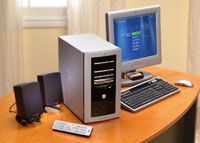
The promise was simple: technology would liberate us. Early personal computer ads promised a two-hour workday. We were told email and digital filing would kill the paper trail and end miscommunication forever.
It didn’t happen.
The reality is messier. Predicting IT failures is nearly impossible. Hardware and software evolve so fast that committing to one platform feels like a trap, especially when you are wiring a whole network. Individual tasks might be faster now. But keeping the machines alive is a nightmare.
Many companies burn millions on IT support just to keep applications from crashing. Add a new app to the network? Good luck. You might introduce unexpected bugs.
Some executives are tired of fixing broken servers. They are looking outward. They are adopting utility computing.
This model outsources computer support. It’s not just tech advice. It’s renting processing power. It’s buying data storage. It’s buying peace of mind.
Why Is It Called Utility Computing?
The name isn’t accidental. It mimics public utilities. Think about your electric bill. You pay a metered rate. You use water or electricity. You pay for what you consume.
Utility computing works the same way. You pay another company for access to computer resources. You don’t buy the server. You rent the compute.
The Basics of Utility Computing
The principle is straightforward. One company pays another for services. These services vary. They might include hardware rental. They might include data storage space. It depends on what the client needs and what the provider offers.
Many providers bundle these resources. A comprehensive package might include:
- Computer hardware : Servers, CPUs, monitors, input devices, and network cables.
- Internet access : Web servers and browsing software.
- Software applications : From word processors to niche industry tools. This specific subset is known as Software as a Service or SaaS.
- Supercomputer processing power : Financial firms often need to crunch rapidly changing stock market data. A standard PC might take hours. A supercomputer finishes in minutes.
- Grid computing systems : These use middleware to detect idle CPU power across a network. The software allows one application to borrow processing power from another computer. It breaks large computational problems into smaller chunks.
- Off-site data storage : Also called cloud storage. Companies with massive data needs often lack physical server space. Off-site backups protect against catastrophes. If the building burns down, the data survives elsewhere.
Pricing varies by provider. Most charge based on usage, not a flat fee. Use more, pay more. Some offer bundled discounts, essentially selling services in bulk.
Supply and On-Demand
Companies like IBM allow clients to rent services as needed. This flexibility has led some to call it on-demand computing.
The scope varies. Some providers offer a limited menu. Others form deep partnerships. They study how you do business to tailor a comprehensive service.
But is it worth the switch? The pros and cons are complex. We will explore that next.
The Convenience Trap and Compatibility Wins
The main draw isn’t technical prowess. It’s the sheer relief of not having to manage hardware. For most businesses, utility computing means handing off the keys. You stop buying servers. You stop buying software licenses. Instead, you rent the capability from a third party. The provider handles the maintenance. They handle the administration. Your team stays focused on actual business logic rather than patching servers.
There is a secondary benefit that often gets overlooked: compatibility. Large organizations are messy. The marketing department uses one suite of tools. Engineering uses another. The files don’t talk to each other. Silos form. Data gets stuck. Utility computing offers a single subscription. One software stack. One interface. Everyone uses the same tools. Friction drops. Collaboration becomes easier because the digital furniture is standardized across the floor.
When the Bill Gets Weird
Cost is a double-edged sword. If the math works, it’s cheap. You don’t need expensive on-premise hardware. You can run on simpler, cheaper client machines. The provider absorbs the maintenance costs. Your IT budget shifts from capital expenditure to operational expense. It’s cleaner.
But if the alignment is off, it’s a disaster.
Imagine a small startup. They need basic processing power. The provider offers access to supercomputers. The fees are hefty. Why pay for a Ferrari to go to the grocery store? If the client’s needs don’t match the provider’s inventory, utility computing becomes a money pit. You end up paying for capacity you don’t use. Or worse, you can’t get the specific resources you do need, forcing you to go back to the in-house model anyway.
The Reliability Gamble
Then there is the question of uptime. When you outsource your infrastructure, you are betting on someone else’s stability. If the provider has financial trouble, they might cut corners. If their equipment fails frequently, you get cut off. You’re paying for a service that isn’t there.
This risk is magnified if the provider goes under. Clients can fall victim to the same fate. Data vanishes. Operations halt. Many companies hesitate to hand over critical duties to smaller providers. The fear is real. If the business suffers, your business suffers. It’s a dependency chain that you can’t always control.
Security and the Human Factor
Utility computing systems are big targets. Hackers love them. They want free access. They want to snoop. They want your data.
Yes, the provider is responsible for keeping the system safe. They build the walls. But the client has to hold the door. If your workforce isn’t educated on proper access procedures, the walls don’t matter. A simple phishing email can bypass firewalls. If an intruder finds a way in through your negligence, the provider’s security is irrelevant. The breach is on you.
The Awareness Gap
There’s another hurdle. Awareness. Many consumers still don’t really get what utility computing is. It’s hard to sell a service people don’t understand. They see the bills. They don’t see the value.
As the services get more sophisticated, more corporations will likely join in. We’re moving toward a world where computers in distant data centers handle all the heavy lifting. Your local machine becomes just a terminal. A window.
But until the awareness gap closes, the adoption will be uneven.
Who’s Actually Doing This?
You can’t talk about the model without looking at the players. Several major names have staked claims in this space:
- Amazon
- Enki
- IBM
- Joyent
- Layered Technologies
- Sun Microsystems
These aren’t just random names. They are the infrastructure backbone for countless businesses.
Defining the Model
It helps to be precise about what this actually is.
What is utility computing with an example?
It is a cloud computing variant that bills based on consumption. You pay for storage used. You pay for compute cycles used. You pay for bandwidth. If you use zero, you pay zero.
How is it used?
As a pay-as-you-go model. IT resources are metered. On-demand. You request what you need. You get billed for exactly that. No long-term hardware commitments.
What is meant by utility computing?
A service provisioning model. The provider makes infrastructure management available on a pay-per-use basis. It turns IT into a utility, like electricity or water. You turn it on. You use it. You pay the meter.
The lines between cloud computing and utility computing are blurring. The terminology shifts. But the core idea remains: pay for what you use, when you use it. The rest is just negotiation.
The Infrastructure Behind the Hype
The conversation doesn’t end with the buzzwords. To really grasp what is happening in the background of your digital life, you have to look at the mechanics of the systems making it all possible. This isn’t just about marketing decks; it’s about how shared computing resources actually function under the hood.
Think about the difference between holding a file on your hard drive and having it live on a remote server. That shift is the core of cloud computing. It moves the burden of maintenance away from you. You no longer need to worry about the physical security of the machine or its software updates. The provider handles that. They sell you access instead of ownership.
This model relies heavily on utility computing. The term sounds dry, but the concept is simple. You pay for what you use, like electricity or water. If you need more processing power for a week, you pay for that week. When you stop, the billing stops. This elasticity is what allows startups to launch without buying expensive server racks.
How the Pieces Fit Together
It helps to break down the layers.
- Shared Computing : Multiple users run processes on the same physical hardware. Isolation is key here. One person’s crash shouldn’t take down another’s application.
- Grid Computing : This connects disparate computers across a network to solve a single large problem. It’s like pooling resources from a thousand laptops to simulate a weather pattern.
- Cloud Storage : Data lives off-site. Redundancy is built in. If one server fails, another picks up the slack instantly.
- Virtualization : This is the magic trick. Software creates a virtual version of a resource, like a server or storage device. It allows one physical machine to act as many distinct virtual machines.
When you stream a video or check email, you are interacting with this web of virtualized resources. The semantic web aims to make this data machine-readable, but we are still navigating the early stages of that transition. Meanwhile, encryption keeps the data secure as it travels between your device and the cloud. Without strong encryption, this model collapses. Trust is the currency.
The Human Element and the Risks
Who is watching the servers? The sources point to a mix of tech giants and specialized firms. IBM and Google are pushing hard to define the standards. Their research papers and press releases suggest a future where cloud computing is the default, not the exception.
But it’s not all smooth sailing.
Critics like Nicholas Carr have raised alarms. He worries about the “world wide computer” becoming a monolith. If everything relies on a few major providers, what happens when they stumble? Or worse, when they change the rules? Middleware acts as the glue between applications, but it can also become a bottleneck or a single point of failure.
“Software via the Internet” is no longer a novelty. It is the primary mode of operation for modern business.
Security remains a top concern. Hackers are constantly adapting their methods to exploit the complexity of these distributed systems. As the attack surface expands with every new connected device, the defenses must evolve. It’s an arms race played out in code.
Why It Matters to You
You might not see the servers, but you feel their impact. Apps load faster. Services are available 24/7. Your data is accessible from anywhere. These are the benefits of cloud storage and web servers working in tandem.
However, there is a trade-off. You are giving up control. If the provider has an outage, you have no workarounds. You wait. The convenience is real, but so is the dependency.
The industry is shifting from selling boxes to selling services. This is utility computing in action. It lowers the barrier to entry for developers. A small team can now access the same compute power as a Fortune 500 company. This democratization of technology is driving innovation. New ideas can be tested and scaled without massive upfront investment.
Looking Ahead
The sources indicate a rapid acceleration. Reports from early 2008 suggest a “big shift in IT delivery.” This wasn’t a trend then; it was an inevitability. The infrastructure is being built today.
We are moving toward a model where internet infrastructure is so robust that the location of the data becomes irrelevant. Your device is just a window. The brain is out there, in the cloud