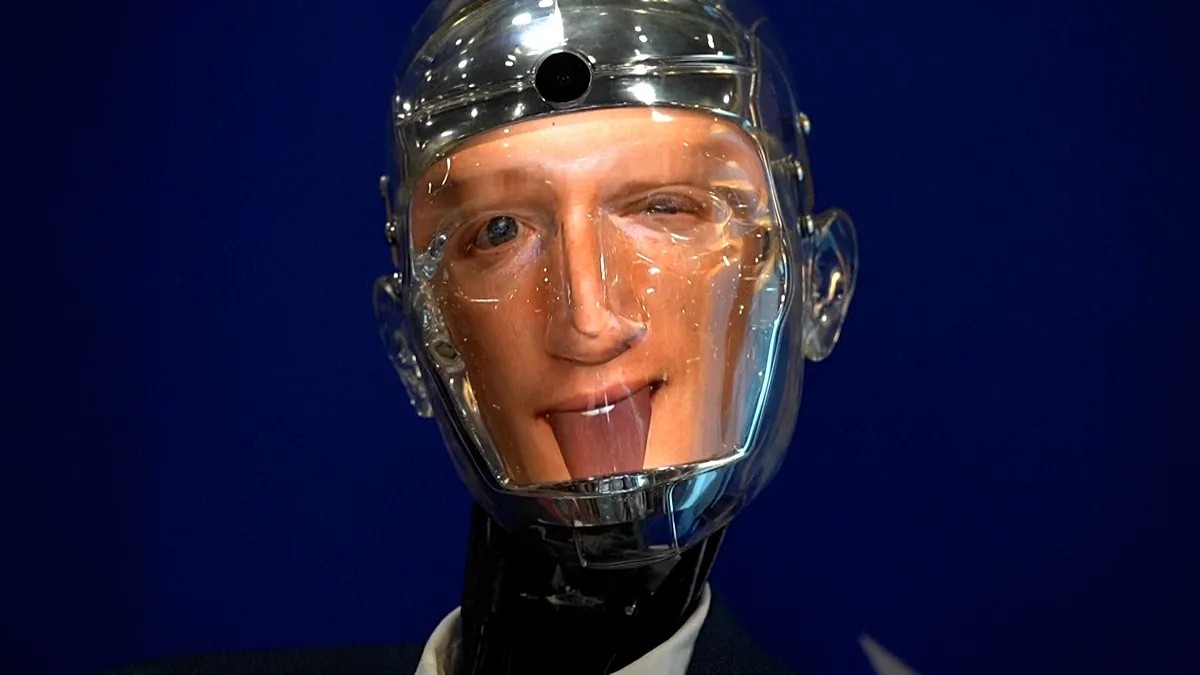
A robot wearing Mark Zuckerberg’s mask winks. Seconds later, its face shifts. Barack Obama stares back.
This is not a joke. This is a convention hall in Geneva. 12,00 people are packed inside. They come from 170 countries.
They are here for the AI for Good summit. It broke all previous visitor records this year. Why the panic? Governments are rushing. Industries are scrambling. They are trying to catch a technology that runs faster than their laws can be written.
The urgency is real.
Geneva is hosting something bigger, too. The UN is pushing for global standards. Delegates from 193 nations are discussing the first ever Global Dialogue on AI Governance. This is where the rubber meets the road. It is not just about chatbots. It is about who controls the future.
Beyond the Screen: When AI Gets Physical
Walk across the expo floor. The software era is over. Now we live in the age of bodies.
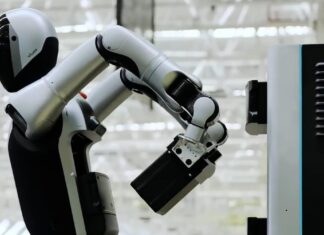
Robert the humanoid stands near the entrance. RB Labs, a Geneva company, built him. Nearby is Ling Xi. It looks like a dog. It moves like a robot guide dog. China Mobile sells them for $4,000. The goal is simple. Let blind people live without barriers.
We are seeing a shift. AI is leaving the screen.
Fred Werner knows this. He runs strategic engagement for the International Telecommunications Union (ITU). He started AI for Good back in 2017. That feels like forever ago. Not in tech time.
“In AI years? It is an eternity,” Werner said. “We are hitting a zero-click world.”
He did not explain. Let’s translate. It means your AI agent is no longer waiting for you to type a prompt. It is acting for you. Autonomously. Meanwhile, the hardware is catching up. We are looking at advanced robotics. Brain-computer interfaces. Even computing in space.
But the health applications hit home hard.
How AI Restores Function (and Who Builds It)
Look at the Swiss booth. Ability Neurotech displays a implant. It sits on the brain’s surface. It does not pierce the skin. Yet.
Patients with ALS or strokes often lose control. Their bodies break down. The signals get stuck. This device reads those neural sparks. It sends the data to a processor. The processor decodes it in real time.
The result? Speech. Or movement.
Rotem Kopel, the CEO, sees the potential. Human speech averages 140 words per minute. This system captures about 70 to 80. It is imperfect. It is slow by comparison. But it is life. It is independence.
In real-time. For those who cannot speak today.
Further down the aisle, South Korea’s KAIST offers a different fix. A hip brace. It looks like gear. It feels like science.
“We use AI to customise the algorithms,” says Kim Jongwon, a researcher there. The device learns how you walk. It helps when you have gait disabilities.
Not every innovation goes to the cloud. Adwait Shinde knows this better than most. He teaches mechatronics. He built a prototype wheelchair.
It runs on local AI. It uses camera sensors and mics. No cloud server touches that data.
“This is a medical device,” Shinde explained. “We don’t want user data online.”
Security first. Privacy next. Control always.
Who Wins the Robotics Race?
While experts debate ethics, the youth are building machines.
The youth zone smells like solder and determination. 250 kids are competing. The theme is food security. That is a heavy weight for ten-year-olds. But they are up for it.
Teams bring robots they built from scratch. Cardboard. Local parts. Code.
Fifty national teams hope to make the finale. Lithuania’s crew is sharp. They are refining their moves.
They are fighting for one prize. And a handshake from Will.i.am. The American musician and tech enthusiast is handing out the awards.
He loves tech. He loves music. He probably wants these robots to start a band. Or feed a city.
The gap between code and concrete is closing. It used to be text on a page. Now it is walking, talking, seeing, moving.
Will the regulators catch up before the machines decide for themselves? Probably not. The speed is too great.
But for the kids with cardboard robots and the patients waiting for neural signals to decode… the future is already here. It is just waiting for them to turn it on.