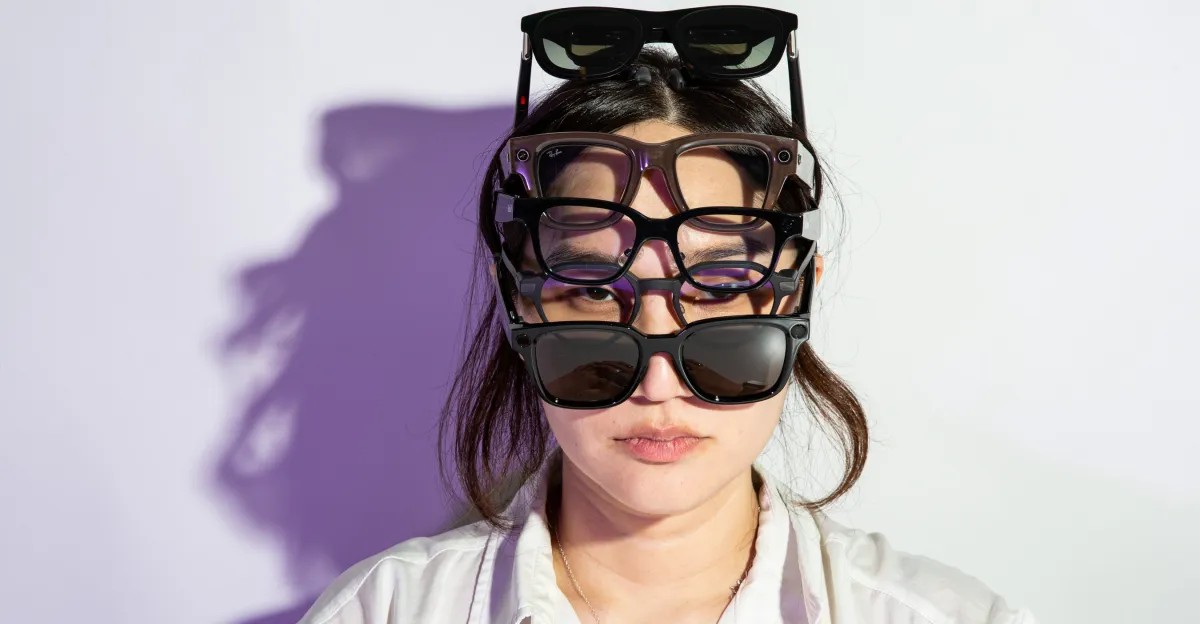
The smart glasses market is experiencing a gold rush. From Even Realities and Rokid to Meta’s Ray-Ban collaborations, the shelves are flooded with devices promising to revolutionize how we interact with the world. Yet, despite the hardware becoming sleeker, lighter, and more affordable than ever before, a critical question remains unanswered: Why do you actually need these on your face all day?
After extensive testing of numerous models, the consensus is clear. The technology has improved significantly, but the use cases remain forced, the AI is often unreliable, and the social friction is high. Until manufacturers solve the fundamental problems of utility and privacy, smart glasses will remain a niche novelty rather than a mainstream essential.
The “James Bond” Effect vs. Social Reality
On paper, smart glasses offer the ultimate blend of convenience and style. They allow users to listen to audiobooks, read texts, and navigate streets without pulling out a phone. For a brief moment, wearing chunky Ray-Bans with hidden displays feels like living in a spy movie. You can secretly control an invisible interface or capture candid moments without drawing attention.
However, this “stealth” factor is a double-edged sword.
- The Social Cost: The primary metric for a “good” pair of smart glasses seems to be how well you can hide them. If people notice, it’s a failure. But this invisibility creates anxiety. Wearing camera-equipped glasses in public spaces—like bathrooms or concerts—raises immediate privacy concerns for those around you.
- The Privacy Backlash: As public awareness grows, so does suspicion. Venues like cruise ships and courtrooms have already banned them. The fear of being perceived as a “creep” or a “glasshole” is a significant psychological barrier to adoption.
- The Verdict: While the tech allows for discreet interaction, it also creates a sense of deceit. Users find themselves nervous about unintentional recordings, worrying less about the utility of the device and more about the potential social fallout.
The AI Hype vs. The Daily Reality
Big Tech is betting heavily on AI as the killer app for smart glasses. The promise is that these devices will act as intelligent assistants, identifying objects, translating languages, and providing context-aware suggestions. In practice, however, the AI often falls short.
- Unreliable Performance: Features like object recognition are hit-or-miss. In tests, AI failed repeatedly to identify common car models or struggled with poor connectivity in places like museums.
- Forced Scenarios: Tech companies demo idealized scenarios—identifying a book on a neatly organized shelf or generating recipes from a curated kitchen. Real life is messy. Most people’s bookshelves are chaotic, and their fridges are sparse. Asking an AI for a playlist based on a painting feels inorganic and unnecessary.
- Battery and Utility Drain: Advanced AI features often drain batteries quickly and provide little value beyond basic tasks like weather updates or music control. For many users, the “smart” features are more trouble than they are worth, leading them to abandon the glasses for simpler alternatives.
The Prescription Problem
A fundamental oversight in the smart glasses revolution is the basic function of eyewear: vision correction.
Most current smart glasses do not support complex prescriptions, bifocals, or high-index lenses. This forces users into an uncomfortable choice: wear contacts and smart glasses, or stick with their regular “dumb” glasses. While a few brands like Even Realities have made strides in accommodating prescriptions, the industry as a whole lags behind traditional optometry.
This limitation highlights a deeper issue: smart glasses are not yet ready for mass adoption because they don’t solve the primary need of the majority of wearers. Until the hardware can seamlessly integrate with diverse vision needs without compromising comfort or style, it will remain a gadget for the tech-savvy few, not the general public.
Durability and the Right to Repair
Another significant hurdle is durability and repairability. Traditional glasses are robust and easily fixable; a loose screw or broken nose pad can be replaced in minutes. Smart glasses, with their integrated electronics, are fragile and expensive to replace.
- No DIY Fixes: If a smart glass breaks, users cannot simply swap out a part. They must send the entire device to the manufacturer or buy a new pair, which can cost hundreds of dollars.
- Comfort Issues: Prolonged wear can lead to dry eyes and fatigue, forcing users to switch back to regular glasses. The lack of modularity means that if one component fails, the entire device is often rendered useless.
A Niche Future, Not a Mainstream Revolution
Despite these challenges, there is a glimmer of optimism. Smart glasses are no longer “bad” technology; they are just solving the wrong problems. The hardware is comfortable, stylish, and capable. The issue is not the tech itself, but the lack of a compelling, everyday use case.
- Niche Success: Smart glasses excel in specific scenarios: travel, content creation, and fitness tracking. For runners, they provide hands-free audio and data without the bulk of a phone. For travelers, they offer navigation and translation on the go.
- The Need for “Off” Modes: Users want control. They don’t want to be “on” 24/7. There is a demand for modes that easily disable smart features, allowing the glasses to function as simple eyewear when needed.
- Privacy Boundaries: The public may accept temporary privacy sacrifices for clear benefits (like museum tours or workplace communication), but they reject constant surveillance for corporate data harvesting.
Conclusion
Smart glasses are currently in a transitional phase. The technology has matured, but the value proposition has not. Until manufacturers prioritize prescription support, durability, and genuine utility over AI gimmicks, these devices will remain niche tools for early adopters. The future of smart glasses lies not in making them smarter, but in making them more useful, more repairable, and more respectful of user privacy.