
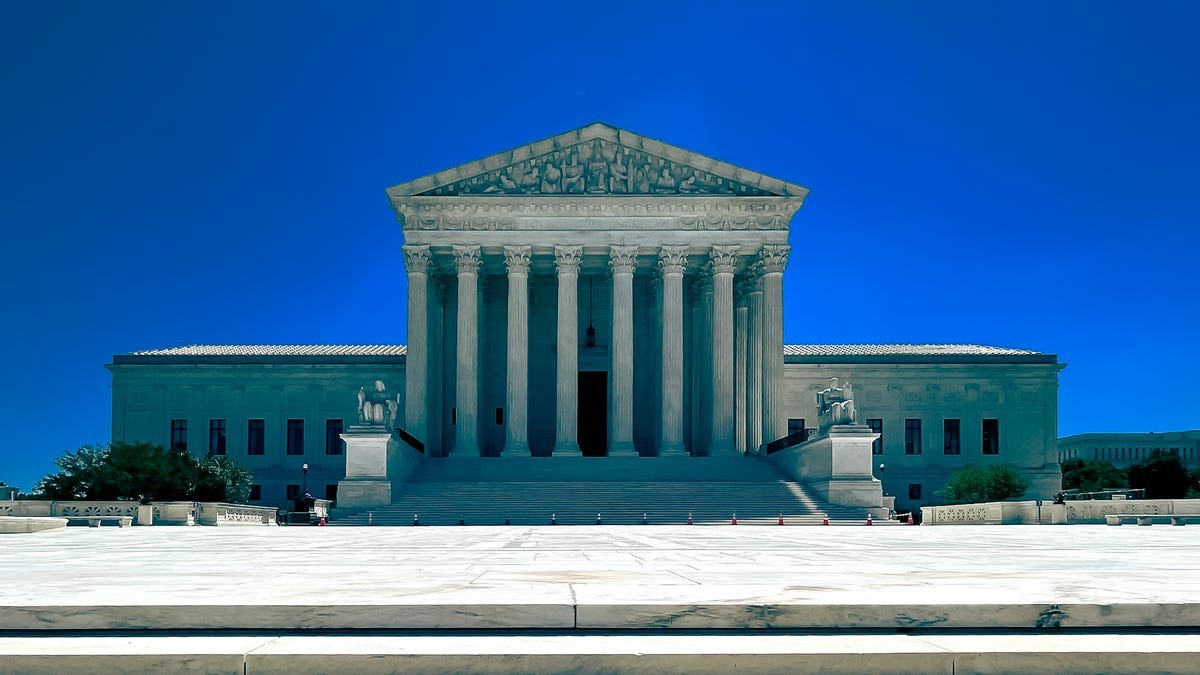
The US Supreme Court has effectively ended a decade-long legal battle over whether artificial intelligence can be credited as an author for copyright purposes, by refusing to hear an appeal in the case of Stephen Thaler’s AI-generated artwork, “A Recent Entrance to Paradise.” The decision leaves existing copyright law unchanged, requiring human authorship for protection, but does little to resolve the escalating debate surrounding AI-created content.
The Core Dispute: Human vs. Machine Creativity
Thaler, a computer scientist, created both the artwork in 2012 and the AI system (DABUS) that produced it. He argued that, as the creator of the tool, he should be recognized as the author. This claim was rejected by the US Copyright Office and upheld by a district court, with officials stating that copyright law explicitly requires human involvement.
The argument hinges on a fundamental question: If an AI creates something original, who owns the rights? Some countries, including the UK and China, already allow for AI-generated works to be copyrighted, but the US remains firm on the necessity of human authorship. This discrepancy matters because it creates legal uncertainty in a rapidly evolving technological landscape.
The Rise of AI Content and Legal Uncertainty
This case isn’t just about one image; it’s about the future of copyright in an age where AI tools like Google’s Nano Banana 2 and OpenAI’s Sora 2 are capable of producing increasingly sophisticated art, music, and writing. The influx of AI-generated content is already overwhelming the internet, creating a “flood of slop” as Thaler describes it, and straining tech companies’ ability to manage and filter it.
The practical implications are significant:
– The legal vacuum could stifle AI development by discouraging investment in creative tools if works cannot be legally protected.
– It also raises the specter of copyright infringement lawsuits, with humans potentially claiming ownership over AI-generated material they didn’t directly create.
A Philosophical Milestone, Not a Defeat
Thaler acknowledges the court’s decision but frames it as a philosophical turning point. “By bringing DABUS into the legal system, I confronted a question long confined to theory: whether invention and creativity must remain tied to humans or whether autonomous computational processes could genuinely originate ideas,” he said in an email to CNET.
He believes the current legal framework is outdated and actively excludes non-human creators. While future legal challenges aren’t ruled out, Thaler asserts the court’s ruling confirms that existing law does not recognize AI as an inventor.
“The law is lagging behind what technology can already do… The court addressed what the statute currently allows. It did not address what technology has already achieved.” – Stephen Thaler
The Supreme Court’s inaction underscores a critical gap between legal precedent and technological reality. This decision doesn’t resolve the underlying issues; it merely postpones them, leaving the question of AI copyright open for future debate and potential legislative action. The debate over AI authorship is far from over, and its resolution will shape the future of creativity, ownership, and intellectual property in the digital age.