
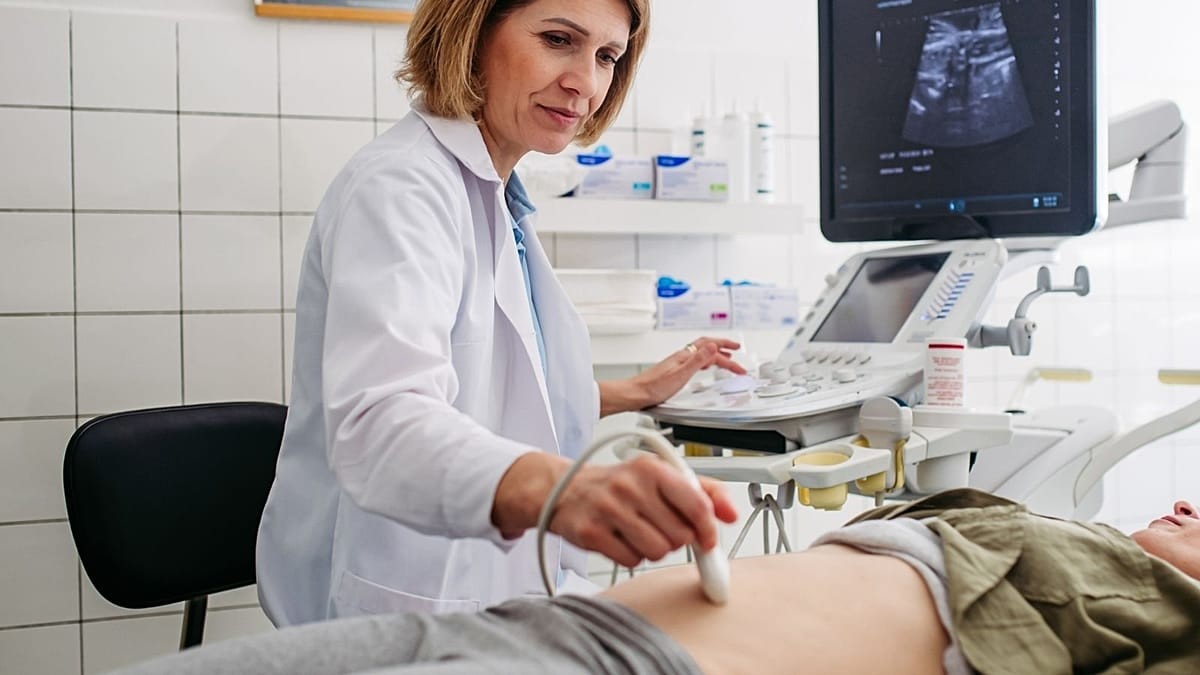
The U.S. Food and Drug Administration (FDA) has granted approval to an artificial intelligence (AI) software designed to dramatically improve the accuracy and efficiency of fetal ultrasound screenings. Developed by the startup BioticsAI, this tool is poised to reshape prenatal care by providing real-time analysis of ultrasound images, detecting fetal malformations, and flagging potential issues for medical professionals.
How AI Is Changing Prenatal Care
Traditional prenatal ultrasounds are a cornerstone of modern obstetrics, used to assess fetal development and identify structural abnormalities. However, the process relies heavily on human interpretation, which can be subjective and time-consuming. BioticsAI’s software addresses these limitations by automating much of the analytical workload.
When an ultrasound image is captured, the AI immediately assesses its quality, suggesting adjustments for better clarity. Critically, it verifies that all essential fetal structures are visible, flagging any missing elements for review. Leveraging data-driven pattern recognition, the system can detect anomalies—such as heart defects or limb abnormalities—with increasing precision. The AI then compiles these findings into a concise report for the physician.
The FDA’s clearance confirms that the software meets stringent performance standards and is safe for integration into clinical workflows. BioticsAI claims the tool will save doctors up to eight minutes per patient, streamlining documentation and improving efficiency.
The Scale of Congenital Anomalies
The need for better prenatal diagnostics is underscored by the prevalence of congenital anomalies. According to the European Commission, major birth defects occur in approximately 23.9 out of every 10,000 births across Europe. While current ultrasound practices are effective, they are not foolproof.
A comprehensive review by Cochrane, a leading independent healthcare research organization, analyzed studies involving over seven million pregnancies. The findings reveal that a single early scan (11-14 weeks) detects only 38 percent of birth defects. A mid-pregnancy scan (18-24 weeks) improves detection to 51 percent, and combining both scans increases accuracy to 84 percent. These statistics demonstrate that even with standard practices, a significant number of anomalies remain undetected.
Europe’s Competitive Landscape
The United States isn’t alone in advancing AI-driven prenatal screening. European companies like Diagnoly and Sonio Detect have also received regulatory approval for their respective AI ultrasound tools. These solutions similarly focus on automated detection of fetal structures and cardiac abnormalities, indicating a global trend towards more precise and efficient prenatal diagnostics.
The integration of AI into prenatal ultrasound represents a pivotal shift in fetal health monitoring. By automating key analytical steps, these technologies have the potential to reduce diagnostic errors, improve patient outcomes, and alleviate the burden on healthcare professionals.
The widespread adoption of AI-enhanced ultrasounds promises to reshape prenatal care, providing earlier and more accurate detection of fetal abnormalities while reducing the workload on medical staff.