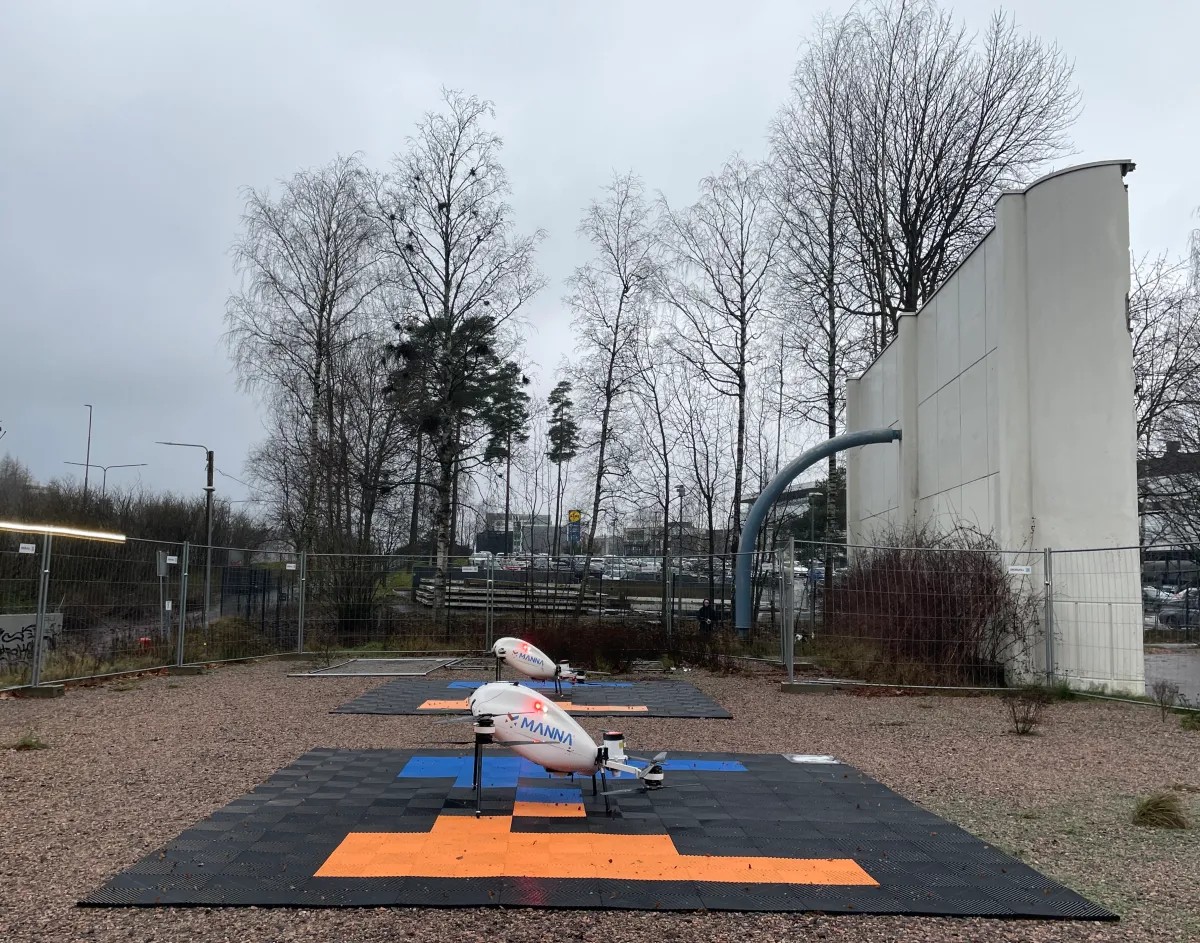
Finland, despite its challenging climate, is quietly becoming a testing ground for the future of food delivery: drones. A three-way collaboration between Irish drone delivery firm Manna, DoorDash-owned Wolt, and Finnish startup Huuva is already operational in Espoo, a suburb of Helsinki, bringing faster, potentially cheaper food delivery to customers. This pilot program isn’t just a novelty; it highlights a growing trend in last-mile logistics, driven by convenience and the search for more efficient delivery models.
The Rise of Drone Delivery
Huuva, originally a cloud kitchen company, sees drones as a way to extend its reach beyond urban centers. While sprawling suburbs aren’t the norm in Europe, customers in areas like Espoo often lack the same dining options as those in larger cities. Drones help bridge this gap, delivering meals from Huuva’s partner restaurants, and even groceries from Wolt Market, directly to customers’ doors.
This isn’t just about speed; it’s about scalability. Manna has already completed over 50,000 deliveries in Dublin, proving the viability of drone delivery. The Finnish operations, launched after securing necessary permits, have been fully operational for two months, operating from a shared launchpad with Wolt Market. Drones can carry around 4.4 lbs and Manna can deploy two at once, increasing efficiency.
Economic and Operational Realities
The economic benefits are clear. While traditional deliveries currently cost €5-6 ($6-8), drone deliveries are estimated to potentially drop to just €1 ($1.16). This efficiency is crucial for Huuva, as it looks to optimize its unit economics. The drones also bypass traffic congestion, ensuring food arrives fresh.
However, the Finnish weather does present challenges. While Manna’s drones are already tested in wind and rain, icing requires fallback delivery methods, such as scooters or sidewalk robots (already in use by Wolt). Using de-icing chemicals on food deliveries isn’t an option.
Safety and Future Expansion
Safety is paramount. Manna employs multiple layers of redundancy, including battery swaps, weight balancing, regulator-approved packaging, and even parachutes as a last resort. Mission Control, based in Ireland, remotely assesses flight paths using LiDAR maps, with final human confirmation before each delivery.
Huuva is already considering expanding the drone delivery program to another location in Espoo, where closer proximity between the kitchen and launchpad could allow for direct handoffs through a window. The startup even hopes to brand the regulator-approved delivery bags with its logo.
“The goal is seamless integration,” says Makar Nalimov, Manna’s local operations lead. “We’re handling double-digit deliveries a day and preparing for our first operational winter.”
The broader implications are significant. As DoorDash explores its own drone delivery programs and partnerships with Alphabet-owned Wing, direct collaborations like the one between Manna and Huuva could become increasingly common. Drone delivery is no longer a futuristic concept; it’s a rapidly developing reality, reshaping last-mile logistics and food delivery as we know it.