
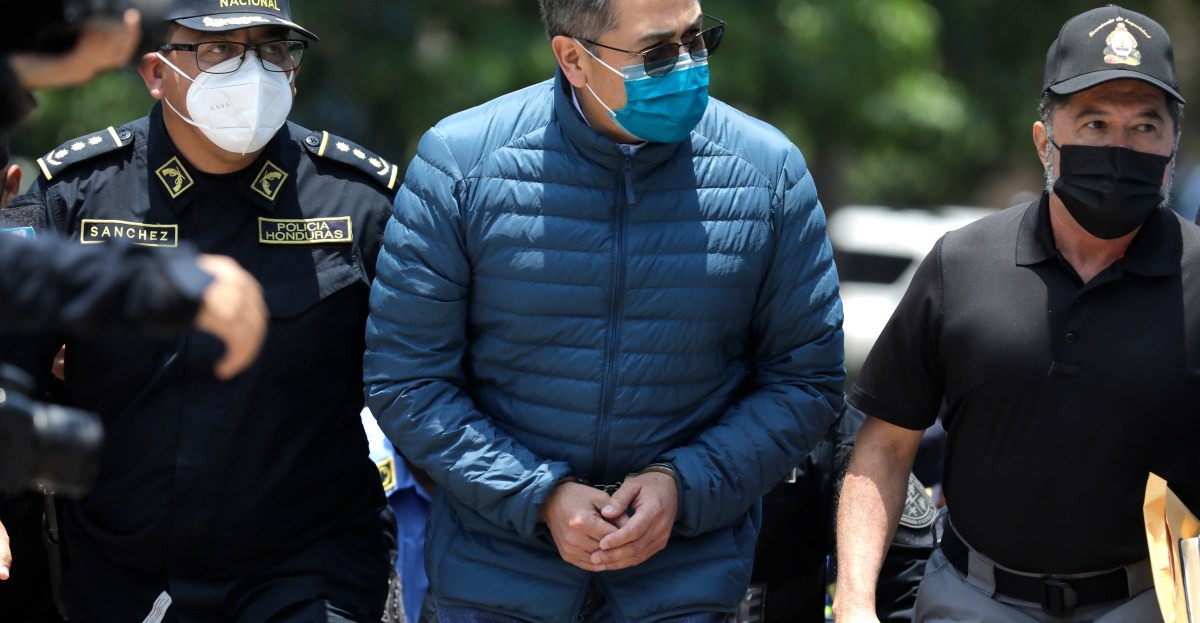
Former President Donald Trump has pardoned Juan Orlando Hernández, the ex-president of Honduras who was serving a 45-year sentence for drug trafficking and firearms offenses. The move, confirmed on Tuesday, raises serious questions about the application of presidential clemency and highlights inconsistencies in US foreign policy.
The Case Against Hernández
Hernández was convicted in a New York federal court last year for abusing his presidential powers to facilitate the trafficking of over 400 tons of cocaine into the United States. Prosecutors also presented evidence of him accepting bribes from drug lords, including Joaquín “El Chapo” Guzmán. The pardon was granted after Hernández sent Trump a letter claiming “political persecution” under the Biden administration.
Why This Matters: Double Standards in US Policy
The pardon is especially notable given the Trump administration’s aggressive stance against Venezuela, which it often labels a “narco-state.” While criticizing Venezuela’s leadership for alleged drug trafficking, Trump has now freed a convicted high-level perpetrator from Honduras. This inconsistency undermines the US credibility on drug enforcement and suggests selective application of policy.
Trump’s Pattern of Controversial Pardons
Hernández is not the only controversial figure Trump has pardoned. His clemency record includes convicted fraudsters, corrupt politicians, the founder of an online drug marketplace, and numerous participants in the January 6th Capitol attack. The pardon of Changpeng Zhao, the founder of the Binance cryptocurrency exchange, has also raised questions about potential self-dealing, given the Trump family’s business ties with the company.
Broader Context
Presidential pardons are a legal tool, but their use can be highly politicized. Trump’s record demonstrates a willingness to exploit this power in ways that defy traditional norms. The pardon of Hernández not only raises ethical concerns but also highlights the potential for abuse within the clemency system.
This pardon underscores a disturbing trend: the selective enforcement of justice based on political favor rather than legal principles.
This decision is unlikely to be isolated and will likely fuel further debate over the limits and responsibilities of presidential authority.