
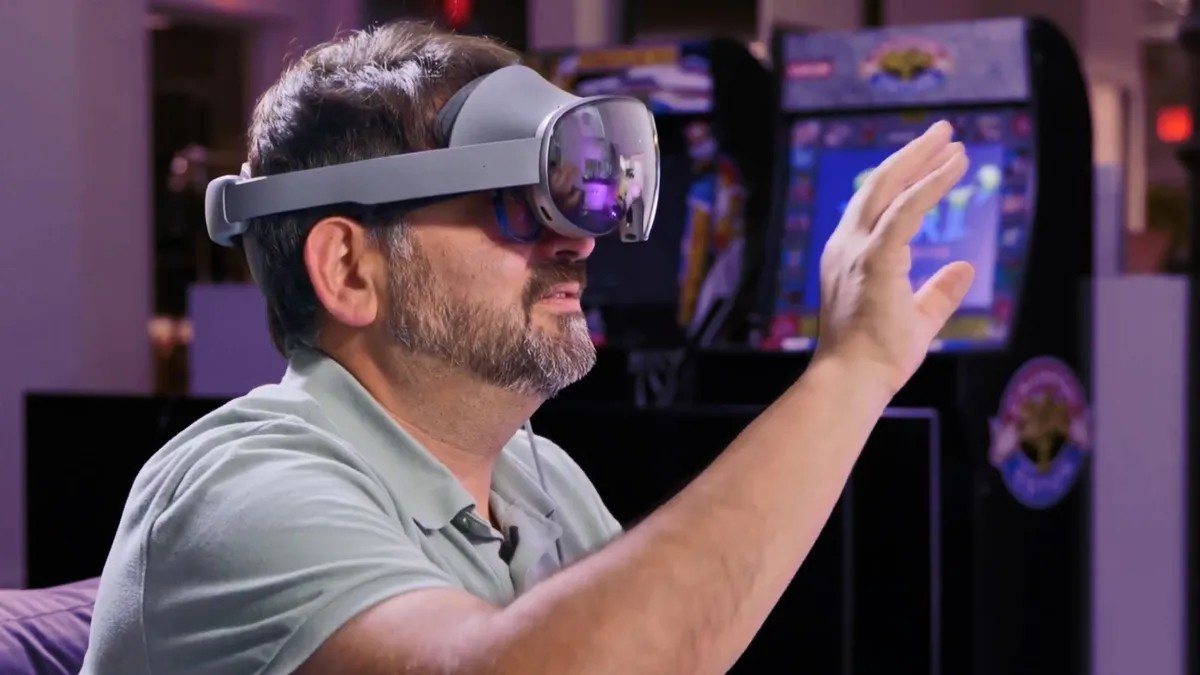
Tech giants Samsung and Google are collaborating on the next evolution of wearable technology: everyday smart glasses infused with advanced artificial intelligence. While their current mixed-reality headset, the Samsung Galaxy XR, resembles a bulkier version of Meta’s Quest or Apple’s Vision Pro, the long-term vision centers on sleek, practical glasses designed for continuous wear.
This shift isn’t just about miniaturization. The Galaxy XR serves as a testing ground for AI integration, demonstrating how Gemini AI can perceive both the real and virtual worlds simultaneously. The implication is clear: this technology will soon migrate into more discreet eyewear. Samsung’s COO of Mobile Experiences, Won-Joon Choi, and Google’s head of Android, Sameer Samat, confirmed that this is the explicit direction of their partnership.
The Rise of Contextual AI
The core innovation lies in “contextual AI” : systems that understand not only what you’re looking at but also how you’re interacting with your environment. Meta and Google are both racing to develop AI that tracks apps in use, locations visited, and the user’s immediate surroundings. Gemini AI, already demonstrated in the Galaxy XR, is capable of processing real-world scenes, virtual displays, and open applications concurrently.
This level of awareness has significant implications. Smart glasses won’t simply overlay digital information onto your vision; they will interpret your actions and respond accordingly. This raises questions about data privacy and the potential for always-on surveillance, but the companies are pushing forward regardless.
Partnerships and Ecosystem Integration
To compete with Meta’s collaboration with Ray-Ban and Oakley, Samsung and Google are partnering with Warby Parker and Gentle Monster. The goal is to create fashionable, functional AI glasses that seamlessly integrate into a broader ecosystem. Both companies emphasize that Android XR—the operating system powering these devices—will extend beyond headsets to encompass glasses, phones, watches, and even rings.
The synergy between glasses and smartphones is critical. Google anticipates that phones will handle much of the processing power for glasses, similar to how smartwatches rely on mobile devices. Qualcomm’s Snapdragon Spaces platform will play a key role in this connectivity.
Beyond Displays: Wearables as Interfaces
Smart glasses lack the intuitive touch interfaces of smartphones, so Samsung and Google are exploring alternative control mechanisms. Meta’s neural band for gestures is one example, but the companies hint at deeper integration with existing wearables. Smartwatches and rings could serve as secondary displays or input devices, making glasses more usable without cumbersome controls.
Health and Fitness Applications
Health tracking is another key focus. Samsung and Google envision glasses that monitor fitness activities, provide nutritional information, and integrate with existing health platforms like WearOS and Fitbit. Meta is already forging partnerships with Garmin and Strava, indicating the industry’s growing interest in health-focused AR applications.
The Developer Platform and Future AI Models
The Galaxy XR, despite its current impracticality for everyday use, serves as a developer platform to refine AI integration. Google plans to encourage third-party developers to experiment with Android XR, potentially opening the door for competing AI models beyond Gemini. While Gemini is currently the primary focus, Android’s open nature suggests that other AI technologies may emerge in the future.
In short, Samsung and Google are betting heavily on AI-powered smart glasses as the next major computing platform. The technology is still in its early stages, but the companies are laying the groundwork for a future where AI is woven into the fabric of our daily lives.