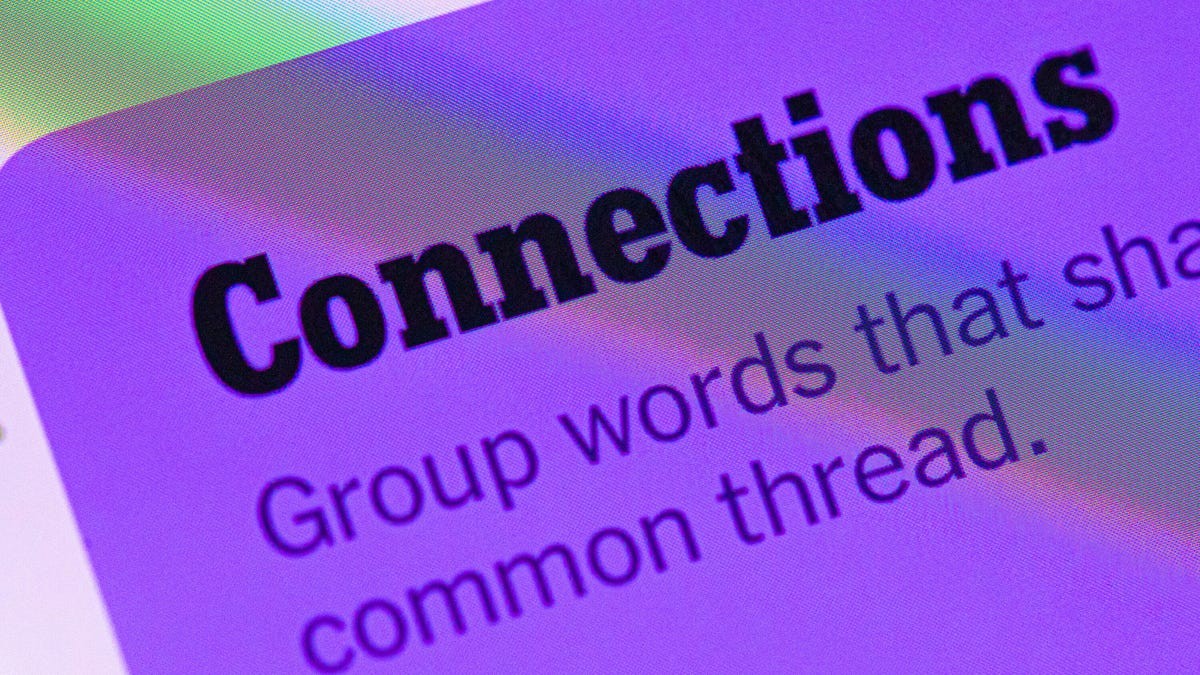
The New York Times’ daily word game, Connections, challenges players to categorize sixteen words into four distinct groups based on shared themes. For the May 5 edition (Puzzle #1059), players encountered a mix of straightforward vocabulary and a particularly tricky “purple” category involving hidden linguistic patterns.
This puzzle highlights the game’s evolution from simple association to complex lateral thinking. While the yellow and green categories rely on common synonyms and biological responses, the blue and purple groups require deeper knowledge of nautical terminology and word construction, respectively.
🟡 Yellow Group: Shades of Light and Presence
The easiest category, marked in yellow, focuses on words that describe a faint or partial appearance. The theme is Glimmer.
The four words in this group are:
* Flicker
* Hint
* Suggestion
* Whiff
Context: These words all connote something that is barely there or only partially perceived, whether it is a light, a smell, or an idea.
🟢 Green Group: Uncontrollable Body Movements
The green category deals with physical reactions that happen without conscious effort. The theme is Involuntary Actions.
The answers are:
* Blink
* Hiccup
* Shiver
* Sneeze
These are all reflexive bodily responses, distinguishing them from voluntary movements like walking or waving.
🔵 Blue Group: Nautical and Utility Knots
The blue group requires specific knowledge of tying techniques. The theme is Kinds of Knots.
The four correct terms are:
* Bend
* Bowline
* Hitch
* Sheepshank
While “bend” and “hitch” can have other meanings in English (such as bending down or hitching a ride), in this context, they refer to specific ways of joining ropes or securing lines.
🟣 Purple Group: Hidden Competition Units
The most difficult category, marked in purple, relies on wordplay rather than direct meaning. The theme is Words Starting with Units in Competitions.
The answers are:
* Gamelan (starts with Game )
* Matchstick (starts with Match )
* Pointer (starts with Point )
* Setback (starts with Set )
Why this matters: This category exemplifies the “zany” nature of the purple group. Players must look past the entire word to identify the first few letters, which correspond to units used in scoring sports or competitions (Game, Match, Point, Set). This type of puzzle tests pattern recognition over vocabulary breadth.
Tracking Your Progress
The New York Times has enhanced the player experience with a Connections Bot, similar to the analytics available for Wordle. After completing a puzzle, users can receive a numeric score and a detailed analysis of their performance.
Registered users can track long-term metrics, including:
* Total puzzles completed
* Win rate
* Number of perfect scores
* Current win streak
This data allows players to monitor their improvement and identify patterns in their solving strategies over time.
Historical Context: The Toughest Puzzles
To appreciate the difficulty of Puzzle #1059, it helps to compare it with historically challenging puzzles. The following puzzles are noted for their complexity and misleading categories:
- #1: “Things that can run” (Candidate, Faucet, Mascara, Nose)
- #2: “Power ___” (Nap, Plant, Ranger, Trip)
- #3: “Streets on screen” (Elm, Fear, Jump, Sesame)
- #4: “One in a dozen” (Egg, Juror, Month, Rose)
- #5: “Things you can set” (Mood, Record, Table, Volleyball)
These examples illustrate how Connections often uses homonyms, idioms, and multiple definitions to create confusion. Understanding these past patterns can help players approach new puzzles with a more critical eye.
Conclusion
Puzzle #1059 demonstrates the balance of skill and luck required in Connections. While basic vocabulary skills handle the yellow and green groups, success depends on recognizing niche terminology (knots) and abstract word structures (hidden units). As the game continues to gain popularity, these analytical tools and historical comparisons provide valuable context for players aiming to improve their scores.