
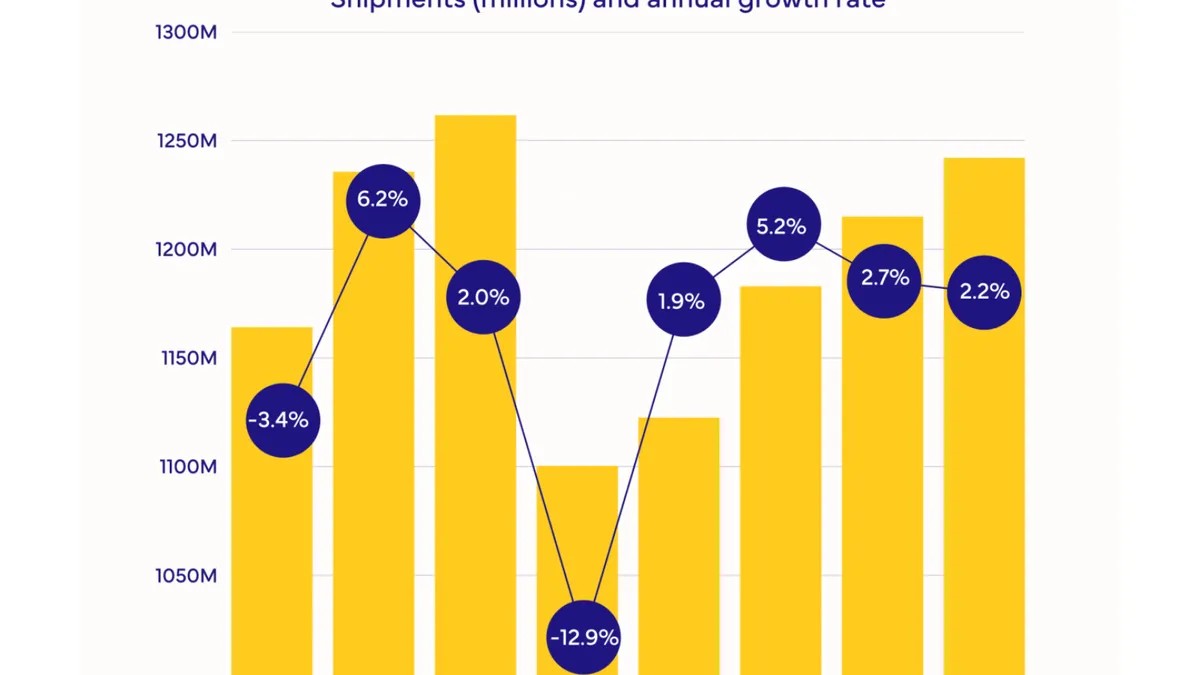
Global smartphone sales are on track for a dramatic 12.9% decline in 2026, according to recent projections from the International Data Corporation (IDC). This downturn is driven by a severe shortage of memory chips, fueled by the explosive demand from the artificial intelligence (AI) sector. The crisis is far beyond a temporary supply squeeze – IDC analysts describe it as a “tsunami-like shock” rippling through the consumer electronics industry.
The Core of the Problem: AI’s Insatiable Appetite
The root cause is simple: memory chip production cannot keep pace with demand. Generative AI, including the rapid growth of graphics processing units (GPUs) and related hardware, has cornered the market. Western Digital already sold out its entire 2026 supply in February, signaling the severity of the bottleneck. This isn’t just about high-end devices; the shortage impacts all tiers of smartphone manufacturing.
Impact on Manufacturers and Markets
The decline will not be uniform. Lower-end smartphone brands, which operate on thin margins, are most vulnerable. They will either raise prices (reducing affordability) or absorb the cost (cutting into profits). The Middle East and Africa, where inexpensive smartphones dominate the market, are forecast to experience the steepest drop – a staggering 20.6% year-over-year.
By contrast, Apple and Samsung are positioned to weather the storm. Their financial strength allows them to secure supply and potentially gain market share as smaller competitors struggle. The crisis could accelerate consolidation within the industry, forcing weaker players to exit.
Price Surge and the End of Ultra-Budget Phones
The average smartphone price is expected to jump by 14% to $523. More significantly, IDC predicts the sub-$100 smartphone segment (approximately 171 million units) will become “permanently uneconomical.” This means the ultra-cheap devices that many consumers rely on may disappear entirely.
Recovery Timeline and Lasting Changes
Memory prices are expected to stabilize by mid-2027, but will likely remain higher than pre-shortage levels. The industry is facing a new normal: supply constraints and higher costs are likely to persist long-term. IDC’s analysis suggests that the era of low-cost, high-volume smartphone sales is over, and neither vendors nor consumers can expect a return to previous market conditions.
The current situation demonstrates how heavily the entire tech ecosystem depends on a single, critical component. The AI boom has inadvertently triggered a crisis with far-reaching consequences, reshaping the smartphone market for years to come.