
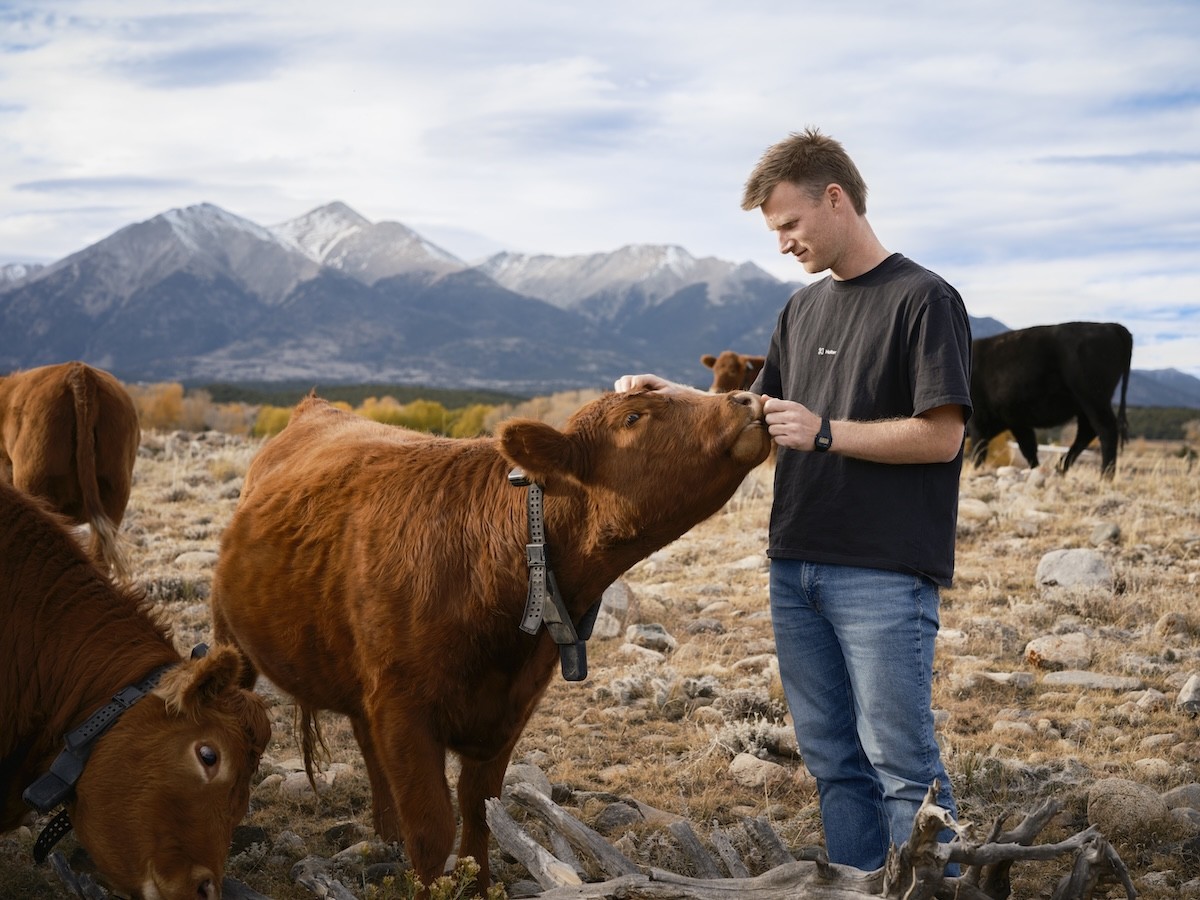
Peter Thiel’s Founders Fund has invested heavily in disruptive technologies, from social media giant Facebook to aerospace innovator SpaceX. Their latest bet: Halter, a New Zealand startup deploying solar-powered smart collars on cattle, raising $220 million at a $2 billion valuation. This isn’t about flashy AI or robots; it’s about solving a fundamental challenge in agriculture: managing livestock across vast, remote landscapes without relying on traditional methods like dogs, horses, or helicopters.
The Problem with Traditional Cattle Management
For generations, ranchers have relied on physical infrastructure – fences – to control grazing patterns and land productivity. This system is labor-intensive, costly, and struggles to scale effectively. Modern agriculture demands efficiency, and Halter proposes a virtual solution. Their collars use low-frequency towers and smartphone apps to create virtual fences, allowing farmers to monitor and move herds remotely.
How Halter Works: Collars, Data, and Behavioral Training
Halter’s system doesn’t force cattle; it trains them. The collars deliver audio and vibration cues, much like a car’s parking sensors, teaching animals to respect virtual boundaries within just a few interactions. More importantly, these collars gather continuous behavioral data. This provides unprecedented insights into animal health, fertility cycles, and early disease detection. With each generation of hardware, the system grows smarter, providing increasingly valuable data-driven insights.
Beyond Fencing: Productivity and Financial Returns
The core value proposition is simple: increased productivity. By optimizing grazing patterns, Halter can improve land efficiency by up to 20%. Some ranchers have even reported doubling output. The return on investment is so compelling that farmers are quickly adopting the technology.
Competition and Long-Term Vision
While Halter isn’t the only player in this space – Merck offers its own virtual fencing solution, and startups are exploring drone-based alternatives – founder Craig Piggott believes collars remain the most reliable form factor. He argues the bigger hurdle isn’t competition but inertia: convincing farmers to abandon established practices.
Scaling Globally: A Billion-Cattle Opportunity
Halter is already deployed on over a million cattle across New Zealand, Australia, and 22 U.S. states. However, this represents a tiny fraction of the one billion cattle worldwide. The company is aggressively expanding into South America and Europe, prioritizing financial returns and long-term reliability. Piggott’s relentless focus on ROI, rather than just technological innovation, has positioned Halter for sustained growth in a traditionally slow-to-adopt sector.
Halter demonstrates that sometimes, the most impactful innovations aren’t about inventing something entirely new, but about applying cutting-edge technology to age-old problems with a clear financial incentive.