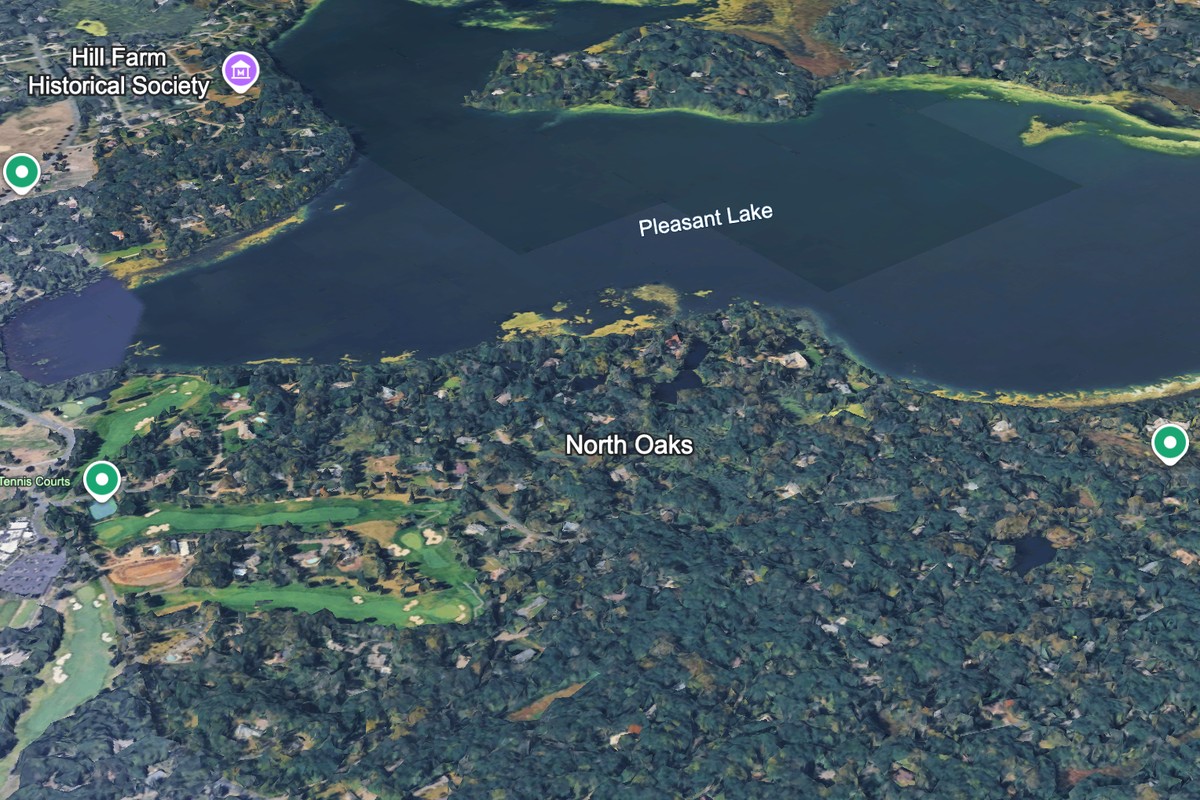
For years, one affluent suburban community in Minnesota has remained a blank spot on Google Maps: North Oaks. Unlike nearly all other areas of the United States, this city of roughly 13,000 people has successfully avoided being fully mapped by Street View—a feat achieved through a unique combination of local law, shrewd negotiation, and, eventually, a determined content creator.
A City Built on Private Property
North Oaks’ resistance to Google mapping dates back to 2008 when the city threatened legal action against the tech giant. The key lies in an unusual property deed rule: residents’ property lines extend halfway into the street, effectively making all roads technically private land. This allowed city officials, including then-mayor Thomas Watson, to argue Google lacked authorization to photograph the area.
“They really didn’t have any authorization to go on private property.” — Thomas Watson, former mayor of North Oaks
Google promptly removed all Street View images of North Oaks after receiving the city’s notice. This stands out because most municipalities willingly cooperate with Google for the convenience of digital mapping. North Oaks, however, prioritized maintaining its de facto privacy.
A Drone-Based Workaround
Despite the ban on ground-level photography, the city did not explicitly prohibit aerial mapping. Minnesota-based content creator Chris Parr exploited this loophole, using a drone launched from outside city limits to capture the area from above. To gain access legally, he even posted an ad on Craigslist offering to pay for an invitation, eventually securing entry for $10.
Parr’s resulting YouTube video reveals a meticulously maintained city of grand homes and snow-plowed streets, where properties sell for as much as $2.9 million. The city’s exclusivity extends beyond its geography: North Oaks has historically been home to Minnesota business leaders, including former Vice President Walter Mondale.
A Global Rarity
North Oaks’ resistance to mapping is rare. While some areas remain unmapped due to government restrictions (like parts of North Korea) or logistical challenges (vast stretches of rural China), the deliberate and sustained effort by a single American city to stay off the grid is unique. Even highly restricted sites like Area 51 are not entirely invisible on Google Maps.
The case raises questions about digital infrastructure and the extent to which private interests can shape public access to information. Parr argues that “incomplete maps are a disservice to humanity,” but North Oaks’ residents clearly value their privacy over digital completeness.
This standoff between a tech giant and a determined community highlights the power dynamics at play in the digital age, where even the most comprehensive maps can be incomplete by design.