
The artificial intelligence industry has reached a critical inflection point. After years of unprecedented capital infusion, the era of “growth at any cost” is meeting a harsh new reality: the urgent need for profitability. As companies like OpenAI and Anthropic prepare for potential historic IPOs, they are facing a looming “monetization cliff”—the moment where massive investments in chips, data centers, and infrastructure must finally yield significant returns, or risk a market-wide collapse.
The Compute Crisis: Why “Agents” Change Everything
A major driver of this tension is the shift toward AI agents. Unlike standard chatbots that simply answer questions, agents are designed to perform complex tasks autonomously. While these agents represent the next frontier of value for customers, they come with a massive hidden cost: they consume compute resources at an exponentially higher rate.
This surge in “token burn” is forcing AI leaders to make difficult, and sometimes controversial, strategic pivots. To protect their margins and manage limited computing power, companies are beginning to prioritize certain products over others, often at the expense of user experience or previous partnerships.
Recent Strategic Shifts
We are already seeing the fallout of these resource constraints in real-time:
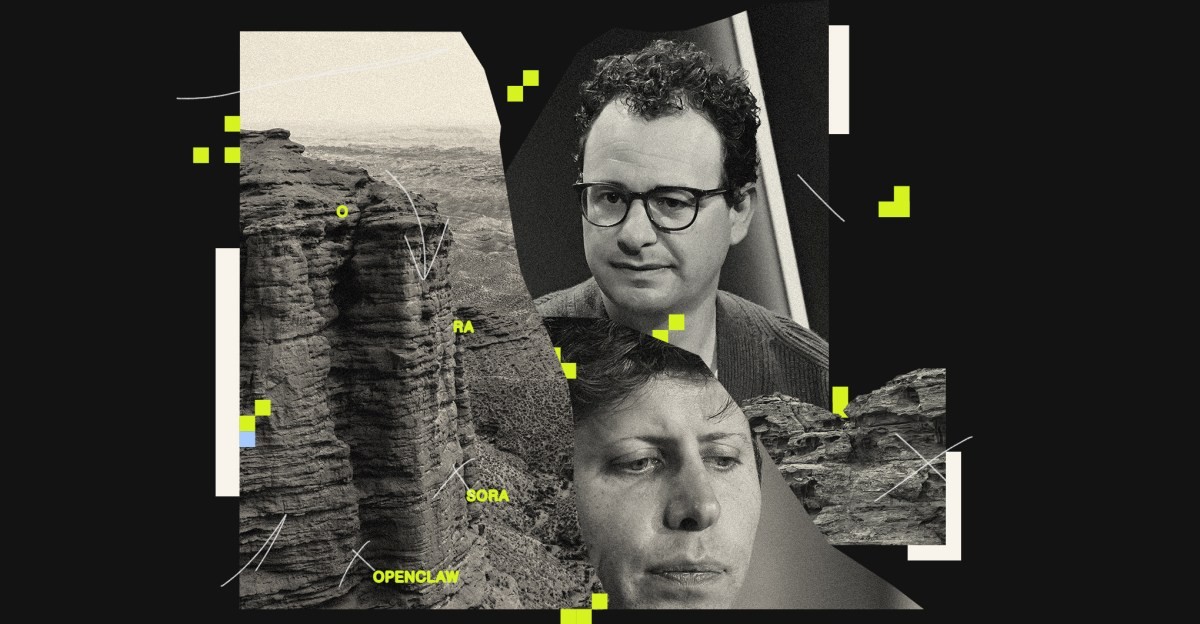
- OpenAI and the Sora Pivot: OpenAI recently made the abrupt decision to discontinue its video-generation model, Sora. This move reportedly involved walking away from a significant $1 billion licensing deal with Disney. The reasoning is purely mathematical: Sora is too expensive to run, and OpenAI is redirecting that precious compute power toward Codex, a tool more central to their immediate revenue goals.
- Anthropic’s Tiered Access: Anthropic has taken similar steps with its Claude models. To prevent users from exhausting compute resources via the OpenClaw agent framework, the company has moved these users away from standard subscription plans and onto much more expensive pay-as-you-go models.
The High-Stakes Race to the IPO
The pressure to prove the business model is intensifying because the scale of investment is unprecedented. The industry is built on hundreds of billions of dollars in forward-looking capital. For the bubble to avoid popping, these companies must transition from research labs into highly efficient, profitable enterprises.
Leaked projections suggest a future of staggering scale, with some firms forecasting hundreds of billions in revenue and profitability by the end of the decade. However, the path to these numbers requires navigating a minefield of trade-offs.
The central question for the industry is no longer just “can the technology work?” but “can the business model survive the cost of the technology?”
The Path Ahead
As OpenAI and Anthropic move toward what could be some of the largest initial public offerings (IPOs) in history, their every move will be scrutinized by investors. They are caught in a paradox: they must innovate aggressively to stay ahead of the curve, yet every breakthrough in capability (like autonomous agents) threatens to increase their operational costs and strain their bottom lines.
The industry is currently deciding which products are worth the cost of intelligence and which must be sacrificed to keep the lights on.
Conclusion: The AI industry is transitioning from a phase of pure innovation to one of ruthless economic prioritization. Success will be defined by whether these companies can balance the massive computational costs of next-generation AI with the necessity of generating sustainable, investor-grade profits.