
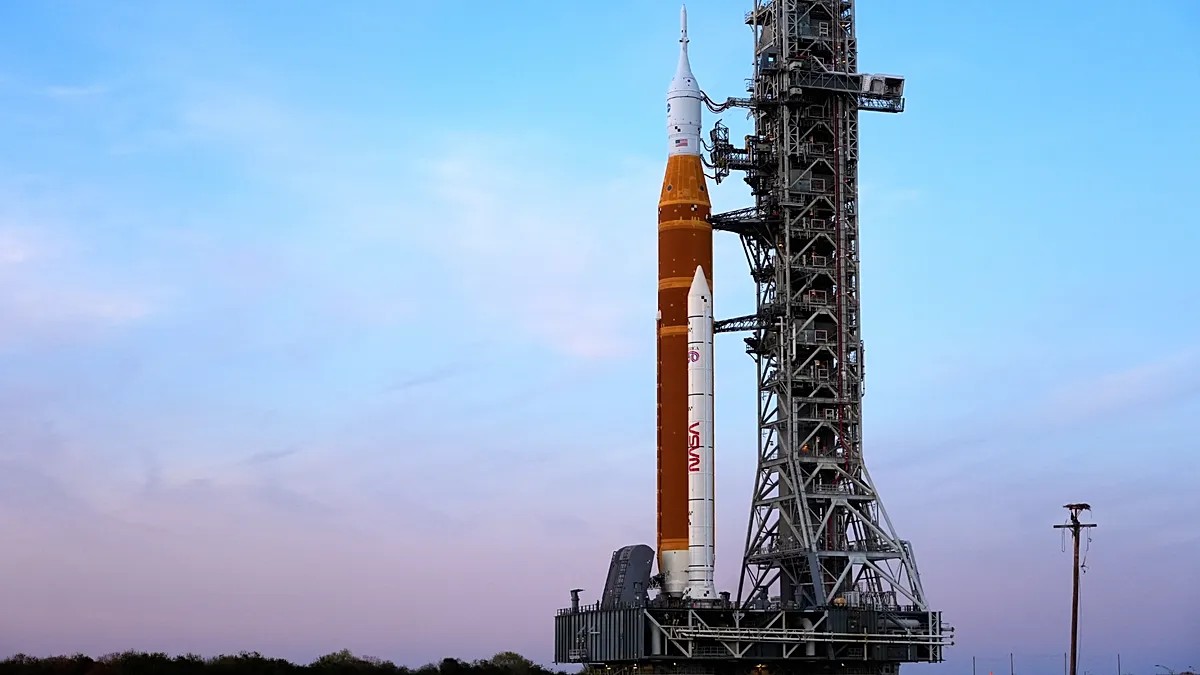
NASA is preparing to launch its first crewed mission to the Moon in over 50 years, with a potential launch window opening as early as April 1st. The Artemis II mission will send four astronauts on a lunar flyby, marking a pivotal moment in space exploration. The launch has been delayed multiple times due to technical issues, including hydrogen fuel leaks and helium flow problems, requiring the 98-meter Space Launch System (SLS) rocket to undergo repairs at the Kennedy Space Center in Florida.
Artemis II: A Long-Awaited Return to Lunar Orbit
The Artemis II mission is a crucial step in NASA’s ambition to establish a sustainable human presence on the Moon. The original launch date was pushed back due to the complexities of the SLS rocket, a new and powerful system with inherent risks. According to NASA officials, this is not a routine flight; new rockets historically have a 50% chance of success.
“It’s a test flight and it is not without risk, but our team and our hardware are ready,” said Lori Glaze, Deputy Associate Administrator for NASA’s Exploration Systems Development Mission Directorate.
The agency has a six-day launch window in early April, and failure to launch within this period will result in a delay until late April or early May. The extended gaps between flights exacerbate risks, as the SLS rocket hasn’t flown with a crew before, making precise risk assessment difficult.
Program Overhaul and Future Missions
NASA’s new administrator, Jared Isaacman, has initiated a major overhaul of the Artemis program to accelerate the pace of lunar missions. The revised plan includes an additional orbital test flight in 2025 (now Artemis III) before the first crewed landing (Artemis IV), with a goal of two lunar landings by 2028. This shift reflects a push to reduce delays and establish a more regular cadence for lunar exploration.
However, the accelerated timeline is not without concerns. A recent audit from NASA’s Office of Inspector General highlighted the lack of a clear rescue strategy for lunar crews. Landing near the Moon’s south pole presents unique challenges due to the rough terrain, and the report identified lunar landers as a significant contributor to potential crew loss, estimating risks at 1-in-40 for lunar operations and 1-in-30 overall.
Private Sector Involvement and Technical Hurdles
SpaceX and Blue Origin, contracted by NASA to provide lunar landers, are working to meet the 2028 target. The inspector general’s office points out that substantial technical challenges remain, particularly in refuelling landers in Earth orbit before their lunar journey.
Despite these obstacles, NASA has a strong history of success with human spaceflight. During the Apollo program, 24 astronauts visited the Moon, with 12 landing on its surface. Only one mission, Apollo 13, experienced a major in-flight emergency, but still returned the crew safely to Earth. The Artemis program seeks to build on this legacy, but with the added complexity of modern technology and the imperative to operate more efficiently.
The Artemis II mission represents a significant leap forward in lunar exploration. The risks are real, but NASA is determined to push the boundaries of human spaceflight and establish a permanent presence on the Moon.