
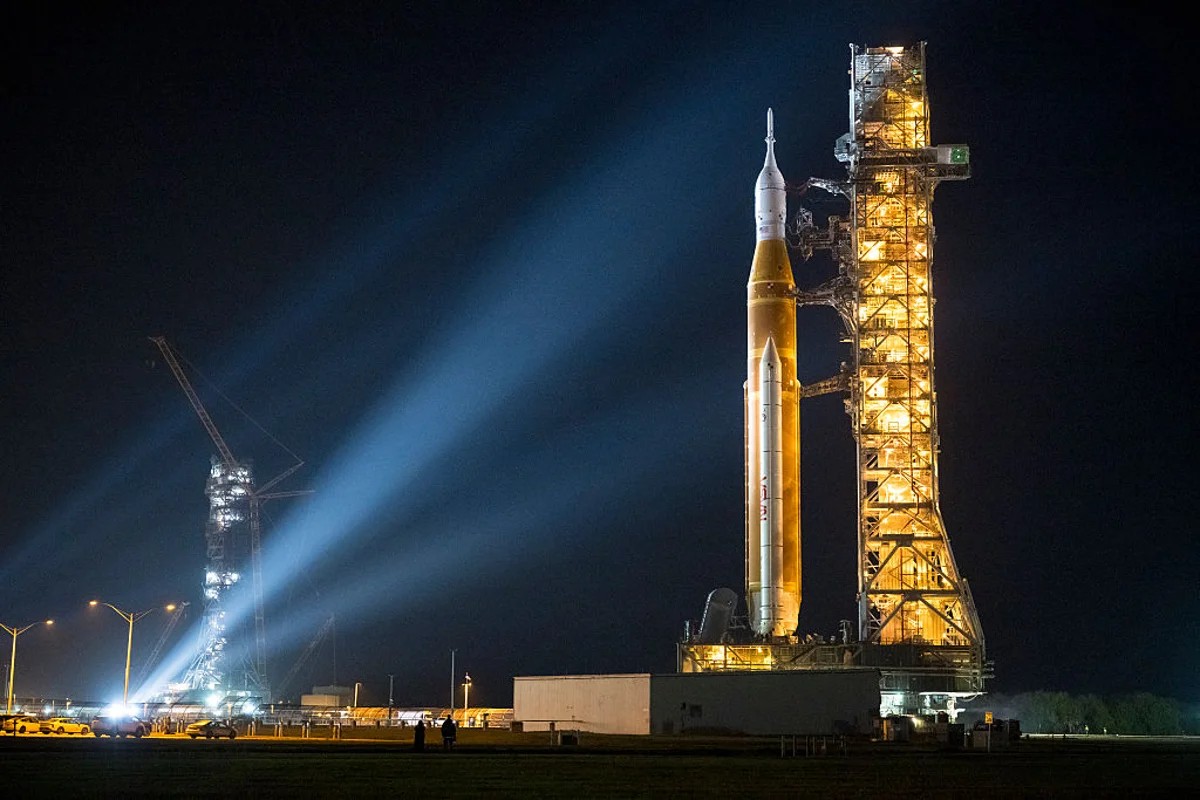
NASA has given the final go-ahead for the launch of Artemis II, a landmark mission set to send a four-person crew on a 10-day journey around the Moon this Wednesday. This mission represents the most ambitious human spaceflight since the Apollo program over half a century ago, marking a pivotal step toward sustained lunar exploration.
Mission Details and Crew
The Artemis II crew consists of NASA astronauts Reid Wiseman (commander), Victor Glover, and Christina Koch, along with Canadian Space Agency astronaut Jeremy Hansen. The team completed quarantine protocols in Texas beginning on March 18th before arriving in Florida on Friday to finalize preparations at the Kennedy Space Center.
The mission will push the boundaries of human space travel, taking the crew approximately 400,000 kilometers (250,000 miles) from Earth – further than any human has ventured before. This trajectory, a high-altitude flyby of the Moon, exceeds the distance reached by Apollo 13 in 1970, which was forced into a similar path due to in-flight complications.
Historical Significance and Future Goals
Artemis II is not just a test flight; it breaks several barriers. It will carry the first woman, the first person of color, and the first non-American to travel to the Moon. The mission serves as a critical stepping stone toward NASA’s goal of landing astronauts on the Moon again by 2028 with the Artemis IV mission.
“The nation and the world has been waiting a long time to do this again,” Wiseman said, highlighting the broader impact of the mission.
The Orion spacecraft is also projected to achieve a record-breaking reentry speed of approximately 40,000 kph (25,000 mph). This high-speed return adds another layer of technical complexity and demonstrates NASA’s commitment to pushing the limits of spacecraft capabilities.
Launch Schedule and Viewing Options
Current forecasts indicate an 80% chance of favorable weather conditions for Wednesday’s launch. Live coverage will begin at 7:45 AM EDT (12:45 PM BST) on NASA’s website and YouTube channel, with the scheduled launch time at 6:24 PM EDT (11:24 PM BST).
The Artemis II mission isn’t just about revisiting the Moon; it’s a demonstration of renewed space exploration ambitions and technological advancement. It sets the stage for future lunar landings and could lay the groundwork for more ambitious missions, potentially including crewed expeditions to Mars.