
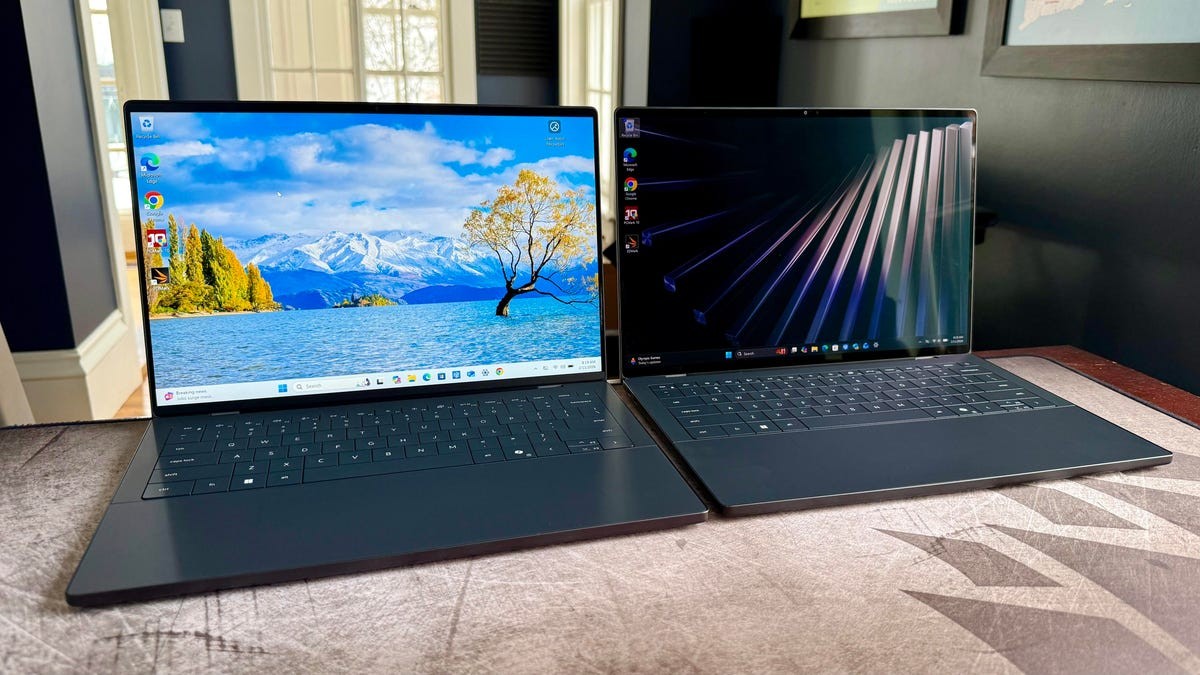
Dell has reintroduced its highly regarded XPS laptop series, correcting a recent branding shift that alienated many users. The company briefly replaced the XPS lineup with models labeled Plus, Premium, and Pro, a decision that now appears to have been a mistake. Dell has acknowledged this misstep and has now brought back the XPS brand with the new XPS 14 and XPS 16, with an XPS 13 following later this year.
The XPS 14: Initial Impressions
Dell sent out two configurations of the XPS 14 for review, both powered by Intel Panther Lake processors. The primary distinctions between the models lie in their CPUs and displays – one featuring an IPS LCD, the other a touchscreen OLED. The return of the XPS line addresses key complaints from the previous Premium models, notably their excessive weight and unpopular touch-sensitive Function row.
Key Specifications
The two XPS 14 models tested are configured as follows:
Model 1:
– CPU: Intel Core Ultra 7-355 (8 cores)
– RAM: 16GB LPDDR5-7467
– Graphics: Intel Arc (4 Xe cores)
– Storage: 512GB SSD
– Display: 1,920×1,200 IPS LCD
– Price: $1,700
Model 2:
– CPU: Intel Core Ultra X7-358H (16 cores)
– RAM: 32GB LPDDR5-9600
– Graphics: Intel Arc B390 (12 Xe3 cores)
– Storage: 1TB SSD
– Display: 2,880×1,800 touchscreen OLED
– Price: $2,200
The XPS 14 starts at $1,600 with a Core Ultra 5-325 CPU, 16GB of RAM, and a 512GB SSD with an IPS LCD. Upgrades to memory (up to 64GB) and storage (up to 4TB) are available.
Weight and Design Improvements
The previous Dell Premium laptops were criticized for being excessively heavy, with some models weighing over 3.8 pounds. The XPS 14 rectifies this issue, weighing in at just under 3.2 pounds for both configurations tested (3.18 lbs for the IPS model, 3.15 lbs for the OLED model). Dell has also reintroduced physical Function keys, replacing the divisive touch-sensitive icons of the Premium line.
The XPS 14’s construction features CNC-machined aluminum, providing a solid feel without the bulk of its predecessor. The design has shifted from a tapered look to a more slab-like appearance, resembling the MacBook Pro in some respects, though it remains slightly lighter at around 3.2 pounds versus the MacBook Pro’s 3.5 pounds.
Display and Keyboard Enhancements
The XPS 14 features a 14-inch display, slightly smaller than the 14.5-inch panel found in the Dell 14 Premium. However, thinner bezels contribute to a comparable overall visual experience. The haptic touchpad returns with subtle etched lines to delineate its active surface, a minor adjustment for those who preferred the minimalist look of the previous model. The keyboard has also been refined, with firmer keys offering improved tactile feedback.
The XPS 14 maintains a trio of Thunderbolt 4 ports and an audio jack but omits the microSD card slot present in the Dell 14 Premium.
A Welcome Return
The XPS 14 represents a significant improvement over the prior Premium models, addressing key usability concerns with weight reduction, functional keys, and a refined design. Initial impressions are positive, and full performance and battery testing will follow. The OLED model, equipped with the Intel Core Ultra X7-358H and Arc B390 graphics, will be subjected to gaming benchmarks to assess its handling of demanding AAA titles.
Dell’s decision to revive the XPS line suggests a responsiveness to consumer feedback, prioritizing usability and build quality over experimental design choices. The XPS 14 appears to be a strong contender in the premium laptop market, delivering a refined experience that addresses the shortcomings of its predecessor.